
Battery sweepers offer eco-friendly operation with zero emissions, lower ongoing costs, and simpler maintenance, but they need reliable charging infrastructure and may face logistical challenges for quick turnaround. LPG or diesel sweepers cost less upfront and can be quickly refueled, supporting continuous use, but they emit pollutants and have higher long-term operational costs. Understanding these pros and cons helps you choose the best option for your needs—more details can help clarify your decision.

Get cleaning gear delivered free with Prime
- Fast, free delivery on millions of items
- Prime Video, Amazon Music and more included
- Member-only deals all year
Key Takeaways
- Battery sweepers offer zero emissions and environmental benefits, while LPG/diesel models emit pollutants but support faster refueling.
- Battery sweepers have higher upfront costs but lower operational and maintenance expenses compared to LPG/diesel sweepers.
- Infrastructure for charging battery sweepers is essential, whereas LPG/diesel sweepers rely on existing fueling stations for quick refueling.
- Battery sweepers are ideal for urban areas with strict emission standards, whereas fuel-based sweepers suit large-scale, continuous cleaning needs.
- Advances in battery tech improve range and recharge times, making electric sweepers more viable for future operations.
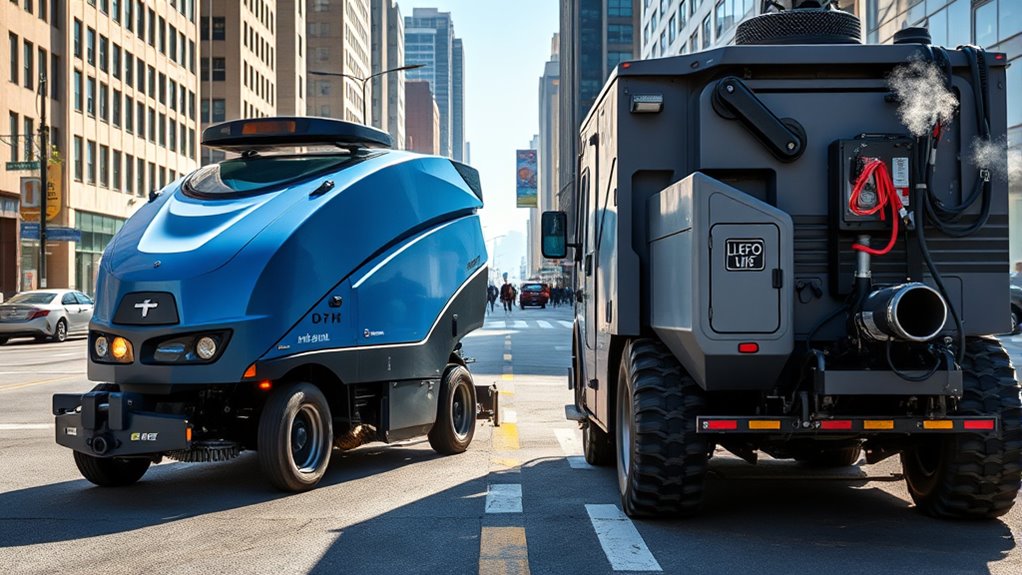
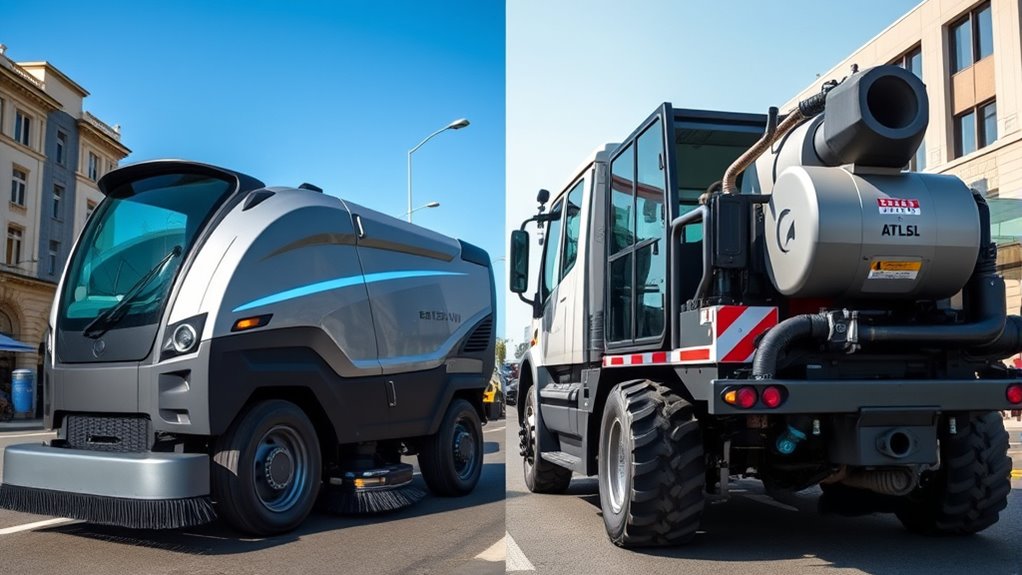
When choosing a street sweeper, you might wonder whether a battery-powered model or one fueled by LPG or diesel is the better option. The decision hinges on several factors, including operational needs, environmental impact, and infrastructure. Battery sweepers are increasingly popular because they produce zero emissions during operation, helping you meet strict emission standards. Since they run on electricity stored in batteries, they don’t emit fumes or greenhouse gases, making them ideal for urban areas with tight air quality regulations. However, you need to consider the charging infrastructure. Do you have reliable access to charging stations? Can your team efficiently recharge the batteries during shifts or between operations? If your area has limited charging facilities, or if quick turnaround times are vital, battery sweepers might pose logistical challenges. But if your city or facility invests in robust charging infrastructure, battery sweepers can be highly cost-effective over time, with lower maintenance costs and fewer parts that wear out compared to combustion engines.
On the other hand, LPG and diesel sweepers often have an advantage when it comes to operational flexibility. They can be refueled quickly at existing fueling stations, minimizing downtime and allowing you to cover larger areas efficiently. This is particularly beneficial for large-scale or continuous cleaning needs. Yet, these sweepers face increasing pressure to meet stringent emission standards, which are tightening worldwide to reduce air pollution. Diesel engines, in particular, emit particulate matter and nitrogen oxides, contributing to smog and health issues. Although modern diesel models incorporate technologies to reduce emissions, they still don’t match the zero-emission profile of battery-powered units. LPG sweepers produce fewer emissions than diesel but still release certain pollutants, so they’re a better choice environmentally than traditional diesel engines but may not fully align with future emission standards. Additionally, advancements in battery technology continue to improve range and recharge times, making them an even more viable option.
Cost considerations also matter. Battery sweepers tend to have higher upfront costs but lower operational expenses because electricity is cheaper than fuel, and maintenance is simpler. Conversely, LPG and diesel sweepers might be less expensive initially but can incur higher ongoing costs due to fuel prices, engine maintenance, and compliance with evolving emission standards. Ultimately, your choice depends on your operational environment, available infrastructure, and commitment to environmental standards. If your area emphasizes clean air policies and has invested in charging stations, battery sweepers can be a forward-looking investment. If you need rapid refueling and greater range, LPG or diesel sweepers might serve you better, provided you’re prepared to manage their environmental impacts.
As an affiliate, we earn on qualifying purchases.
Frequently Asked Questions
How Long Does Each Type of Sweeper Typically Last?
You can expect battery sweepers to last around 3 to 5 years, depending on battery lifespan and usage. They typically require less maintenance and are more fuel-efficient, which extends their overall lifespan. Lpg/diesel sweepers tend to last longer, often 7 to 10 years, but their fuel efficiency drops over time due to engine wear. Proper maintenance is essential to maximize each type’s longevity.
Are There Specific Environments Where One Type Outperforms the Other?
Think of your cleaning environment as a battlefield where each sweeper fights differently. For indoor cleaning, battery sweepers shine like a swift, silent ninja, maneuvering easily without emissions. On rough terrain, LPG/diesel sweepers stand tall like rugged explorers, offering power and endurance where batteries might falter. Choose accordingly: quiet and clean for indoors, tough and reliable for outdoor, uneven surfaces. Your environment dictates the champion in this sweeping duel.
What Are the Maintenance Costs Associated With Each Sweeper Type?
You’ll find that battery sweepers generally have lower maintenance costs since they lack complex engines, reducing parts to service and replace. They also have a smaller environmental impact and quieter operation, making them ideal for sensitive environments. In contrast, LPG/diesel sweepers tend to have higher maintenance costs due to engine upkeep, but they can offer longer run times. Noise levels are higher with LPG/diesel models, which may affect nearby workers and surroundings.
Can Battery Sweepers Operate in Extreme Weather Conditions?
Battery sweepers are like fragile glass in a storm—they struggle in extreme weather. You might find their weather resilience and temperature adaptability limited during very hot or cold conditions. They typically perform well in moderate climates, but harsh environments can reduce battery life and efficiency. If you’re working in unpredictable weather, consider additional protective measures or alternative options to keep your cleaning operations smooth and effective.
How Do Upfront Costs Compare Between Battery and Lpg/Diesel Sweepers?
You’ll find that battery sweepers generally have a higher initial investment compared to LPG/diesel models. However, they often come with better financing options and lower operating costs over time. While the upfront cost for battery sweepers might seem steep, many companies save on fuel and maintenance expenses, making them a more economical choice in the long run. Consider your budget and financing plans to decide which fits best.
Conclusion
As you weigh the options, imagine the quiet efficiency of a battery sweeper silently gliding across the surface, or the powerful roar of an LPG or diesel sweeper ready to tackle any challenge. Each has its strengths, but the decision isn’t just about today — it’s about what’s next. Will you embrace the clean, quiet future, or stick with the tried-and-true? The choice you make now could shape the landscape of your cleaning needs forever.
Fall Picks
fall essentials
As an affiliate, we earn on qualifying purchases.