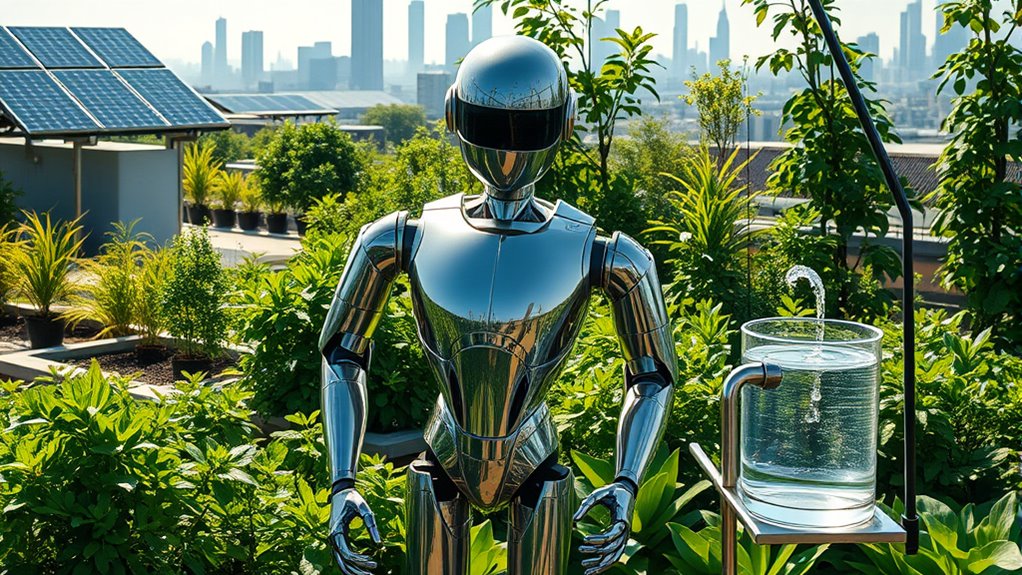

To evaluate the sustainability of robots, focus on their energy and water use. You can optimize algorithms to reduce power consumption and choose low-power components, ensuring less environmental impact. Incorporate renewable energy sources and smart power management for better efficiency. While water use is minimal, designing for recycling and modularity helps extend component lifespans. Keep exploring to discover ways to make robotic systems even more eco-friendly and sustainable in the long run.
Open a free Amazon Business account
Business pricing, bulk buying and tax-exempt orders.
As an affiliate, we earn on qualifying purchases.
Key Takeaways
- Robots optimize energy consumption through efficient algorithms and low-power components to reduce overall power use.
- Incorporating renewable energy sources in robotic systems enhances sustainability and decreases reliance on fossil fuels.
- Water use in robots is minimized via water-efficient cooling systems and design choices that reduce unnecessary consumption.
- Modular and recyclable materials in robot manufacturing promote resource conservation and facilitate end-of-life recycling.
- Improving energy and water efficiency in robots supports environmental goals and reduces their ecological footprint.

As robots become more integrated into daily life and industry, guaranteeing their sustainability is increasingly important. One of the key areas to focus on is their energy efficiency. Robots consume significant amounts of power, especially those operating continuously in manufacturing plants or autonomous vehicles. Improving energy efficiency means designing robots that use less power without sacrificing performance. This involves optimizing algorithms, employing low-power components, and developing smarter power management systems. When robots operate more efficiently, they not only reduce the environmental impact associated with energy production but also lower operational costs. This is essential as robot deployments expand globally, where energy sources vary and often rely on fossil fuels. Additionally, energy-efficient robots help in decreasing greenhouse gas emissions, contributing to climate change mitigation efforts. Incorporating renewable energy sources into their operation further enhances their sustainability profile.
Alongside energy efficiency, material recycling plays an important role in making robots more sustainable. Manufacturing robots requires various materials, including metals, plastics, and electronic components, most of which can be recycled. Incorporating material recycling into the design process means selecting components that are easier to disassemble and reuse. For example, modular designs allow for parts to be replaced or upgraded without discarding the entire robot. This approach minimizes waste and reduces the demand for raw materials, which are often limited and environmentally costly to extract. Recycling materials also extends the lifespan of robotic components, delaying the need for new production and lowering the environmental footprint.
Furthermore, end-of-life management of robots is essential for sustainability. When robots reach the end of their operational life, proper recycling guarantees that valuable materials aren’t wasted. Recycling programs should be integrated into the lifecycle planning of robotic systems, encouraging manufacturers to develop environmentally friendly disposal methods. This process not only conserves resources but also prevents hazardous materials, like batteries and electronic waste, from polluting the environment. Understanding the importance of sustainable material use can drive innovations in eco-friendly robot design and manufacturing practices.
energy-efficient robotic components
As an affiliate, we earn on qualifying purchases.
As an affiliate, we earn on qualifying purchases.
Frequently Asked Questions
How Do Robotic Energy Needs Compare to Traditional Industrial Processes?
You’ll find that robot energy efficiency is generally higher than traditional industrial processes, meaning they often use less energy for the same tasks. In an industrial energy comparison, robots can reduce overall energy consumption and cut costs. However, their energy needs depend on the robot type and application. When properly designed and optimized, robots contribute positively to sustainability by lowering energy use and enhancing productivity.
What Are the Most Eco-Friendly Materials Used in Robot Manufacturing?
You might be surprised to learn that biodegradable plastics and recycled metals are among the most eco-friendly materials used in robot manufacturing. These materials help reduce environmental impact and promote sustainability. Recycled metals lower mining demands, while biodegradable plastics break down naturally, preventing pollution. By choosing these materials, you’re supporting greener technology, ensuring robots are not only innovative but also kinder to the planet.
How Can Robot Water Use Be Minimized During Operation?
You can minimize robot water use by implementing water recycling systems, which reuse water during operations, reducing waste. Additionally, choose water-efficient actuators that require less water to perform tasks. Regular maintenance ensures peak performance, preventing leaks and unnecessary water consumption. By integrating these solutions, you cut down on water use, making robot operations more eco-friendly and sustainable, ultimately conserving essential water resources.
What Renewable Energy Sources Power Robotic Systems?
Your robotic systems are powered by renewable energy sources like solar power and wind energy, making them nearly unstoppable in their sustainability efforts. Solar panels capture sunlight efficiently, while wind turbines harness the power of gusts to generate electricity. By integrating these clean energy sources, you considerably reduce carbon footprints, ensuring your robots operate sustainably and contribute to a greener future. This approach truly transforms the way technology supports our planet.
Are There Regulations for Sustainable Robotic Design Worldwide?
Yes, there are regulations for sustainable robotic design worldwide. You should look for robots with eco-friendly certifications, which guarantee they meet environmental standards. Additionally, consider robot recycling programs, which promote responsible disposal and reuse of robotic components. These regulations aim to reduce environmental impact, encouraging manufacturers to adopt sustainable practices and develop robots that are energy-efficient, recyclable, and eco-friendly throughout their lifecycle.
Conclusion
While robots promise efficiency and innovation, their energy and water demands remind you of nature’s delicate balance. You might marvel at their capabilities, yet overlook the resources they consume. It’s a stark contrast—cutting-edge technology versus environmental sustainability. As you embrace automation, remember: true progress isn’t just about advancement but ensuring your creations don’t undermine the planet that sustains us all. Balance innovation with responsibility, or risk tipping the scales irreparably.
Pool season Picks
robotic pool cleaners
As an affiliate, we earn on qualifying purchases.