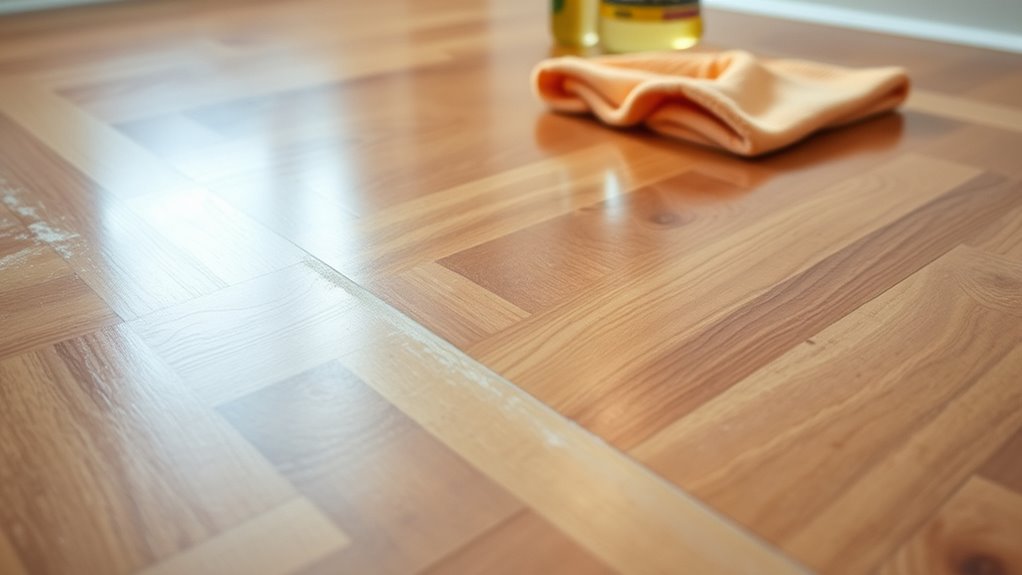

To avoid floor hazing and whitish residue, make sure you use the right cleaning solutions and techniques. Always follow manufacturer instructions and use a soft buffer for even polish application. Don’t over-polish or layer products, as this can cause buildup. Regularly clean with pH-balanced solutions and avoid harsh chemicals. Keep a consistent cleaning schedule, inspecting floors often to catch issues early. If you want to maintain a flawless finish, the key points to explore are right here.
Listen free for 30 days with Audible
Thousands of audiobooks and originals — cancel anytime.
As an affiliate, we earn on qualifying purchases.
Key Takeaways
- Use proper cleaning solutions and avoid harsh chemicals that can leave residues.
- Apply polish evenly with a soft buffer to prevent buildup and hazing.
- Follow manufacturer instructions for cleaning and polishing products carefully.
- Establish a regular cleaning schedule including gentle damp mopping to remove dirt.
- Conduct periodic deep cleaning or stripping to eliminate stubborn residues and maintain clarity.
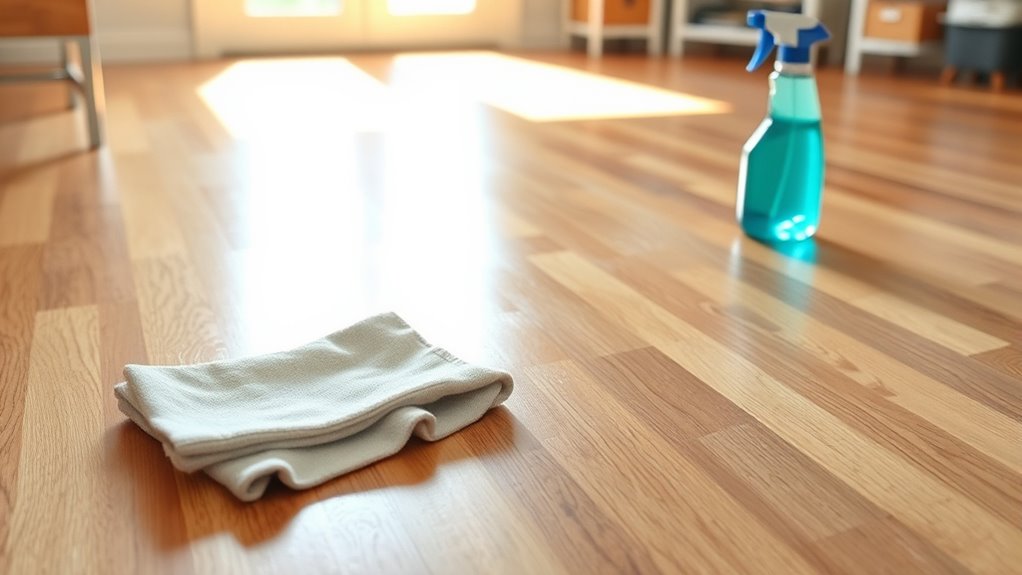
Have you ever wondered how to prevent floor hazing and create a safer environment? It all begins with understanding the importance of proper maintenance and the right cleaning practices. Floor hazing often results from improper cleaning methods or using the wrong products, leading to a whitish residue that can be both unsightly and slippery. To effectively combat this, you need to focus on polishing techniques and establishing consistent cleaning schedules. These are key elements in maintaining a pristine, safe floor surface.
Polishing techniques play an essential role in preventing hazing. When you polish a floor correctly, you not only enhance its shine but also create a smooth, protective layer that resists dirt and residue buildup. Using the right polishing products and tools ensures that you don’t leave behind streaks or cloudiness that can later turn into hazy patches. For example, applying a high-quality floor polish with a clean, soft buffer helps distribute the product evenly, reducing the risk of uneven residue. Remember, over-polishing or using the wrong polish can lead to buildup, so follow manufacturer guidelines carefully and avoid excessive layers. Regularly inspecting your floors and adjusting your polishing techniques helps maintain clarity and gloss, preventing dullness and haziness over time. Incorporating proper maintenance techniques can further extend the lifespan and cleanliness of your flooring.
Equally important is establishing and maintaining a consistent cleaning schedule. This schedule should include routine sweeping or vacuuming to remove loose debris that can scratch the surface or trap dirt, followed by damp mopping with appropriate cleaning solutions. Avoid harsh chemicals that can leave residues or react negatively with the floor finish. Instead, opt for gentle, pH-balanced cleaners designed specifically for your flooring type. Consistency is vital—cleaning too infrequently allows dirt and grime to settle, making it harder to remove and increasing the chance of hazing. Conversely, over-cleaning or using excessive moisture can also cause problems, so strike a balance by adhering to a well-planned schedule. Incorporate periodic deep cleaning or stripping when necessary to remove stubborn residues and restore the floor’s clarity.

Mothers Microfiber Polishing Pad and Cleaning Pads for Car Detailing, 5 Inch Diameter, Yellow, 6 Pack
- Pack of 6 microfiber polishing pads: Includes six 5-inch pads for versatile use
- Smooth, even application: Ensures professional-quality results at home
- Multi-surface compatibility: Suitable for wax, polish, cleaner, and tire shine
As an affiliate, we earn on qualifying purchases.
As an affiliate, we earn on qualifying purchases.
Frequently Asked Questions
Can Using Hot Water Prevent Floor Hazing?
Using hot water can be effective in preventing floor hazing because the higher surface temperature impacts residue removal, making it easier to clean. Hot water helps break down stubborn residues and reduces the likelihood of whitish streaks forming. Just make certain the water isn’t too hot, as excessive heat may damage some surfaces. Overall, hot water’s effectiveness depends on maintaining the right surface temperature for ideal cleaning.
What Types of Cleaning Products Cause Whitish Residue?
Imagine a sparkling floor suddenly clouded by a dull, whitish film. Certain cleaning products, like bleach or harsh detergents, cause chemical reactions that leave behind stubborn residue. To combat this, you should focus on residue removal techniques that involve rinsing with water and using gentle cleaners. Avoid products with strong chemicals that can react and leave behind a film, ensuring your floor stays clean and gleaming.
How Often Should Floors Be Sealed to Avoid Hazing?
You should seal your floors every 1 to 3 years, depending on foot traffic and wear. Regular sealant maintenance helps prevent hazing and whitish residue buildup. Keep an eye on your floors’ appearance; if they start looking dull or hazy, it’s time for resealing. Consistent sealing frequency maintains the protective layer, reduces residue issues, and keeps your floors looking their best.
Are There Specific Mop Types Better for Preventing Residue?
Think of your mop as a trusted brushstroke in your cleaning masterpiece. Microfiber mops are your best bet for preventing residue, as their fine fibers trap dirt without spreading it around. Choose a mop material suited for your floor type, and use a gentle, efficient cleaning technique—like sweeping away debris before mopping. This combo keeps your floors spotless and haze-free, making your space shine like a well-polished gem.
Does Humidity Affect the Formation of Floor Hazing?
Humidity impact definitely influences floor hazing because higher moisture levels can cause residues to form more easily. When humidity is high, moisture prevention becomes vital; you should ensure proper ventilation and control indoor humidity to reduce the risk. Using appropriate cleaning products and avoiding excess water during mopping also helps prevent residue buildup. Keep humidity levels in check, especially in humid environments, to maintain a clean, haze-free floor surface.
Conclusion
To keep your floors spotless and hazing-free, always clean promptly and use proper products. Regular maintenance can prevent that stubborn whitish residue and keep your floors looking brand new. Did you know that neglecting spills can lead to permanent damage, reducing your floor’s lifespan by up to 50%? Don’t let small mistakes turn into costly repairs. Stay vigilant and care for your floors—it’s a simple step towards maintaining a beautiful, long-lasting shine.
Summer Picks
summer essentials
As an affiliate, we earn on qualifying purchases.