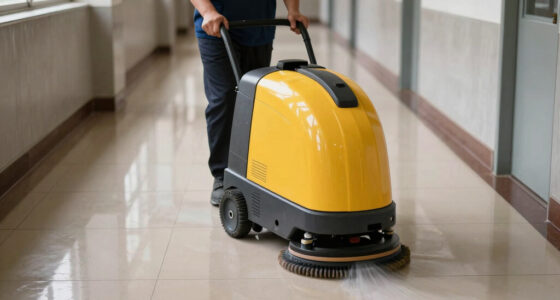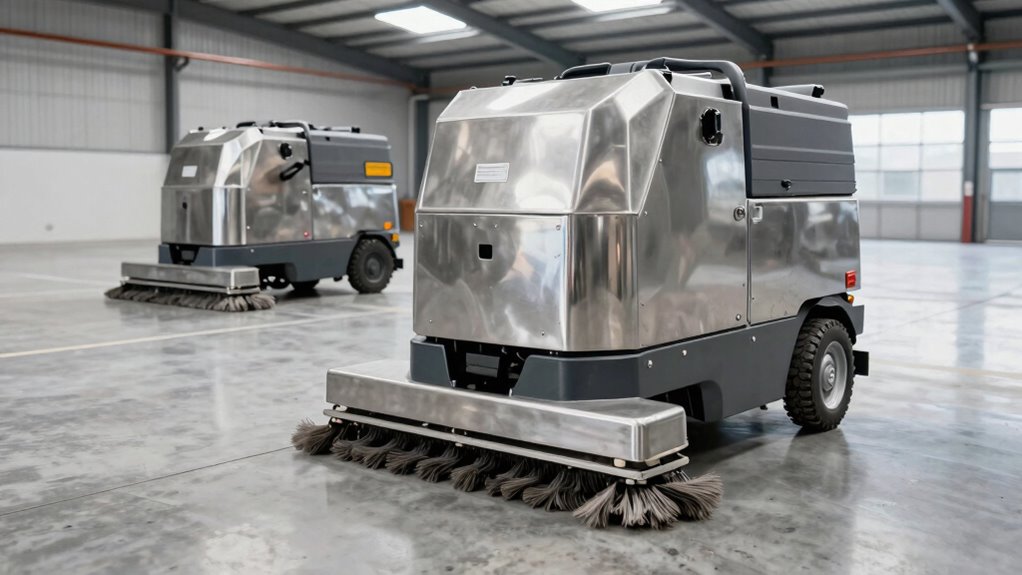

A larger deck on your floor scrubber lets you cover more surface area quickly, meaning fewer passes to finish cleaning. This speeds up your work and boosts productivity, especially in big, open spaces. However, bigger decks may consume more power and generate more noise. Smaller decks are quieter and better for tight, complex areas but may take longer to clean. To discover how to choose the best deck size for your needs, keep exploring the details.

Get cleaning gear delivered free with Prime
- Fast, free delivery on millions of items
- Prime Video, Amazon Music and more included
- Member-only deals all year
Key Takeaways
- Larger decks cover more surface area per pass, reducing overall cleaning time.
- Bigger decks require fewer passes, increasing efficiency on large, open floors.
- Increased deck size may lead to higher power consumption, impacting operational duration.
- Smaller decks operate quietly and are suitable for confined or noise-sensitive environments.
- Deck size should match floor type and space complexity for optimal cleaning speed.
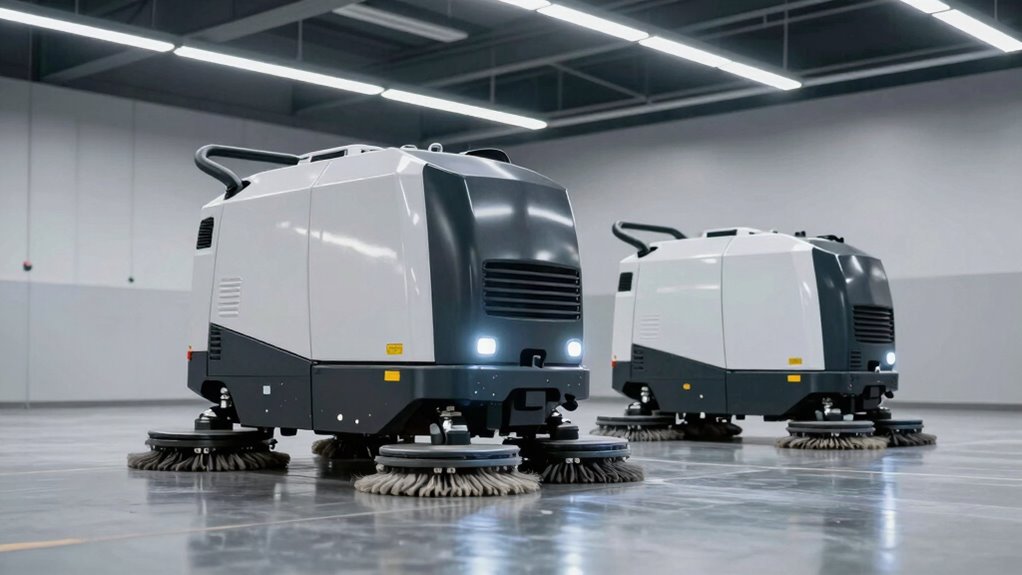
Have you ever wondered how the size of a floor scrubber’s deck impacts its cleaning speed? It’s a vital factor that can markedly influence your efficiency, especially when balancing productivity with operational costs. A larger deck covers more surface area in less time, allowing you to finish cleaning jobs faster. This means fewer passes across the floor and less time spent on each task. However, you also need to think about other factors like battery life and noise levels, which are directly affected by deck size.
When you opt for a scrubber with a bigger deck, you might notice that it consumes more power. This increased energy demand can lead to shorter battery life, meaning you may need to recharge more frequently or have spare batteries on hand. If your cleaning schedule involves large, open areas, this trade-off might be worth it because the larger deck speeds up the overall process. Conversely, if you’re working in tight spaces or have limited access to charging stations, a smaller deck could be more practical. It’s all about finding a balance that aligns with your specific cleaning needs.
Noise levels are another factor that ties into deck size. Larger decks often require more robust motors to handle the increased surface area, which can result in higher noise levels during operation. If you’re cleaning in noise-sensitive environments—like hospitals, schools, or offices—you might prefer a smaller deck with a quieter motor, even if it takes a bit longer to complete the job. Conversely, in industrial or warehouse settings where noise isn’t as much of an issue, a bigger deck makes more sense to maximize speed. Additionally, deck size and its impact on performance can influence the overall operational costs and maintenance considerations. Understanding the relationship between deck size and efficiency can help you choose the right equipment for your specific environment.
Furthermore, considering deck size and environmental factors can help optimize your cleaning routines, especially in diverse settings where conditions vary. Being aware of how deck size and cleaning efficiency are connected can lead to better decision-making when selecting your equipment. Moreover, selecting the appropriate deck size also involves evaluating floor type and surface complexity, which can impact the effectiveness of the scrubber regardless of deck size.
Products Worth Considering

Blueair Blue Pure 211i Max Air Purifier for Large Rooms

LG 77-Inch OLED evo C6 4K Smart TV

Bose Lifestyle Ultra Compact Wireless Smart Home Speaker Bundle, Black
As an affiliate, we earn on qualifying purchases.
Frequently Asked Questions
How Does Deck Size Impact Maneuverability in Tight Spaces?
A larger scrubber deck can make maneuverability challenges worse in tight spaces because it’s harder to navigate narrow areas. You might find it difficult to turn or fit into tight corners, slowing down your cleaning process. Smaller decks are more agile, making tight space navigation easier and more efficient. If you frequently clean in confined areas, choosing a machine with a smaller deck size helps you maneuver smoothly and complete tasks faster.
Are Larger Decks More Durable Than Smaller Ones?
Larger decks tend to be more durable because they often use stronger deck materials like stainless steel or heavy-duty plastics. However, they come with higher cost considerations due to material and manufacturing expenses. You’ll find that a bigger deck can withstand more wear and tear, making it suitable for heavy-duty cleaning tasks, but it’s essential to weigh durability against your budget when choosing the right size for your needs.
What Maintenance Is Required for Different Deck Sizes?
Imagine your scrubber’s deck as the heartbeat of your cleaning routine. For different sizes, you’ll need to check the brushes and motors regularly, ensuring no wear or debris hampers performance. Larger decks may require more frequent inspections, impacting battery life and cost efficiency, while smaller ones need less maintenance. Regularly replace worn brushes and keep motors clean to extend longevity and maintain peak cleaning speed.
How Does Deck Size Influence Operator Fatigue?
A larger deck size can reduce operator fatigue by covering more surface area in less time, decreasing the effort needed for each pass. This enhances operator comfort, as you spend less energy maneuvering the scrubber. Conversely, smaller decks require more passes, increasing fatigue and discomfort. Choosing the right deck size helps you work efficiently while maintaining fatigue reduction and operator comfort during extended cleaning sessions.
Can Smaller Decks Achieve the Same Cleaning Quality?
Smaller decks can achieve comparable cleaning quality if you focus on proper technique and equipment quality. They often excel in tight spaces and detailed areas, ensuring high cleaning efficiency. When considering cost comparison, smaller decks may be more affordable upfront and easier to maintain, but they might require more passes in larger areas, potentially increasing cleaning time. Ultimately, match your deck size to your specific cleaning needs for maximum results.
Conclusion
Choosing the right deck size for your floor scrubber isn’t just about efficiency—it’s about creating a smoother, more inviting space where everyone feels comfortable. When you select a size that suits your needs, you’re gently guiding your cleaning routine toward harmony and ease. In doing so, you’re not just cleaning floors; you’re nurturing a welcoming environment where comfort and care quietly flourish. Sometimes, the smallest choices make the biggest difference in making a space truly shine.