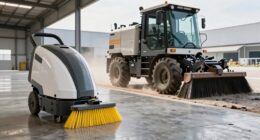
Your sweeper’s path width shows how much ground it covers in a single pass, but it doesn’t guarantee you’ll get everything clean. Actual coverage depends on how well you operate it, the environment, and how systematically you work. Clutter and obstacles can reduce cleaning efficiency, even with a wide path. Knowing how to maximize your sweeper’s potential and understanding its limits can make a big difference. Keep exploring to learn how to boost your cleaning results.
Key Takeaways
- Path width indicates the machine’s cleaning width per pass but doesn’t guarantee full ground coverage.
- Real-world coverage depends on navigation efficiency, obstacle avoidance, and environment organization.
- Advanced mapping and sensors enhance route planning, maximizing debris collection beyond just path width.
- Cluttered or poorly organized spaces reduce effective coverage, regardless of the sweeper’s path width.
- Manual sweepers require systematic overlapping passes to ensure thorough coverage, not just relying on tool width.
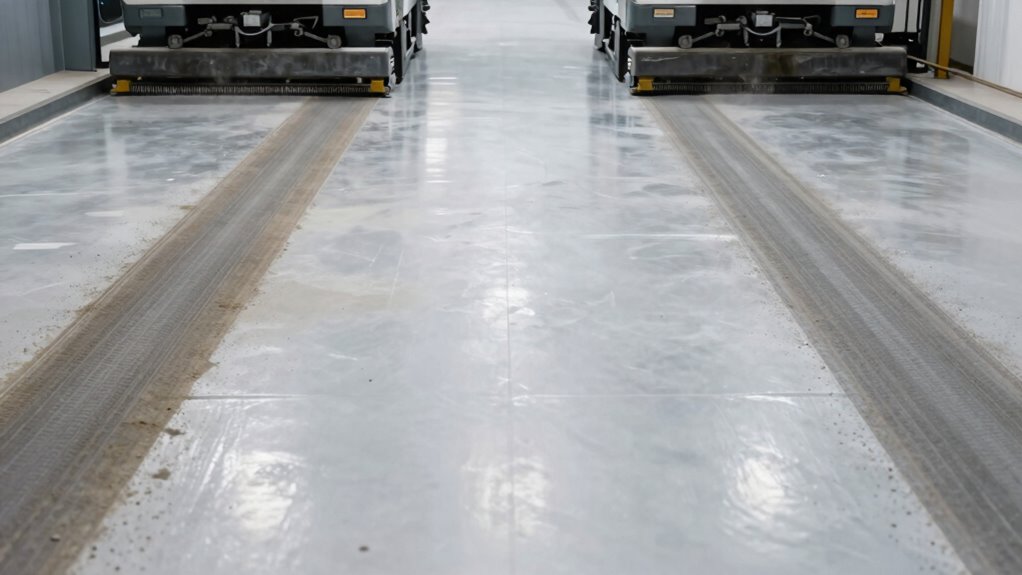
When choosing a robotic or traditional sweeper, understanding the difference between its path width and actual coverage is essential. Path width refers to the width of the area the machine can cover in a single pass, but it doesn’t always equate to the amount of ground actually cleaned. This distinction is vital because, especially with robotic vacuums, factors such as robot navigation influence how thoroughly your space is cleaned. Good robot navigation allows the cleaner to move efficiently, avoiding obstacles and adjusting its route to maximize debris collection. Meanwhile, traditional sweepers rely on manual operation, so their path width is more straightforward but still requires careful maneuvering to ensure full coverage.
Understanding path width versus actual coverage ensures more efficient cleaning with robotic or manual sweepers.
In robotic vacuums, the path width might be quite wide—sometimes matching the size of the device itself—but the real-world coverage depends heavily on how well the robot navigates your environment. If navigation is poor, the robot might miss spots or double back unnecessarily, reducing debris collection efficiency. Conversely, advanced navigation systems with sensors and mapping capabilities can help the robot understand the space better, allowing it to cover more ground systematically. This means the robot can adapt to furniture, tight corners, or clutter, ensuring that debris is picked up from all areas without missing sections. As a result, the actual debris collection becomes more comprehensive, even if the path width remains the same. Navigation accuracy plays a crucial role in translating path width into effective coverage. Additionally, mapping capabilities further enhance the robot’s ability to optimize coverage by creating detailed layouts of your space.
Furthermore, the coverage area can be optimized by maintaining a clean and organized space, which allows the robot to navigate more effectively. Proper organization reduces obstacles and clutter, enabling the robot to operate at its full potential and increasing overall cleaning efficiency. With a cluttered environment, even the best navigation system can struggle to achieve complete coverage, underscoring the importance of a tidy space for robotic cleaning devices.
With traditional sweepers, the operator’s movement determines how well the area is cleaned. Here, the path width is easier to measure—it’s the width of the sweeping tool or attachment—yet actual coverage hinges on how methodically you go over the space. Overlapping passes, turning, and maneuvering can make a big difference in debris collection. If you overlook certain spots or rush through, debris might be left behind, and the coverage won’t match the potential suggested by the path width. Knowing this, you can plan your cleaning route more intentionally, ensuring that each section receives thorough attention. Additionally, understanding coverage efficiency can help you maximize your cleaning efforts and reduce the need for repeated passes.
Ultimately, whether you’re using a robotic or a traditional sweeper, having a clear understanding of both the path width and the actual coverage helps you optimize your cleaning routine. For robotic vacuums, investing in models with intelligent navigation ensures better debris collection and more efficient coverage. For manual sweepers, focusing on systematic, overlapping passes guarantees you make the most of your equipment’s path width. By recognizing the difference, you can achieve cleaner spaces with less effort and fewer missed spots.
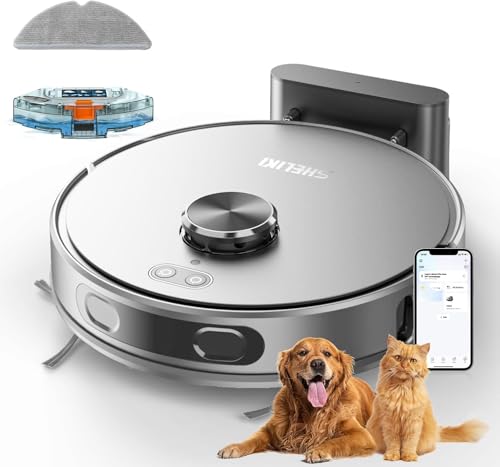
Robot Vacuum and Mop, Mapping Robotic Vacuums Cleaner with LiDAR Navigation Smart & Strong Suction, WiFi/App/Alexa/Voice Control, Obstacle Avoidance, for Home, Wood/Hard Floors, Pet Hair -Gray
360° LiDAR Smart Navigation: D60S robotic vacuum features advanced LiDAR mapping technology that scans your home in real-time,…
As an affiliate, we earn on qualifying purchases.
As an affiliate, we earn on qualifying purchases.
Frequently Asked Questions
How Does Surface Type Affect Sweeper Path Efficiency?
Surface type greatly impacts your sweeper’s path efficiency through surface adaptability. Hard surfaces like concrete allow for straightforward path optimization, covering more area quickly. Meanwhile, uneven or textured surfaces may require slower, more precise maneuvers to guarantee thorough cleaning. Adjusting your sweeper’s settings for different surfaces helps maximize coverage and efficiency. By understanding surface characteristics, you can optimize the path, saving time and ensuring a cleaner environment.
What Maintenance Impacts Coverage Accuracy Over Time?
Over time, maintenance impacts coverage accuracy mainly through sensor calibration and debris accumulation. If you neglect sensor calibration, your sweeper may misjudge obstacle distances, reducing coverage precision. Debris buildup on brushes or sensors can block proper operation, causing missed spots. Regularly calibrate sensors and clear debris to guarantee your sweeper maintains peak coverage. Consistent maintenance keeps your equipment running accurately and extends its lifespan.
Are There Safety Concerns With Wider Sweeper Paths?
Think of a wider sweeper path as a broad river, flowing freely but risking hidden rocks beneath the surface. You might face safety hazards, as larger sweeping swaths can obscure visibility concerns, making it harder to spot obstacles or pedestrians. This increases the risk of accidents. Always balance the desire for efficiency with safety, ensuring your sweeper’s wider reach doesn’t compromise clear sightlines or introduce unnecessary hazards in your environment.
How Do Weather Conditions Influence Real-World Coverage?
Weather variability considerably impacts your real-world coverage. Rain, snow, or high winds can reduce coverage consistency by causing dust or debris to settle unevenly, or making it harder for sweepers to operate efficiently. Wet conditions may lead to clogging or slipping, while windy days can blow debris away before it’s collected. To maintain ideal coverage, adapt your cleaning schedule based on weather forecasts and adjust equipment settings accordingly.
Can Technology Improvements Improve Coverage Accuracy?
Yes, technology improvements can enhance coverage accuracy. You benefit from advanced sensor calibration, which guarantees sensors provide precise data, reducing errors. Better navigation algorithms help your sweeper adapt to complex environments, optimizing its path and coverage. As a result, your cleaning becomes more efficient and thorough, minimizing missed spots. Continuous upgrades in these areas lead to smarter, more reliable cleaning systems that consistently deliver better coverage in real-world scenarios.

VEVOR Walk-Behind Hand Push Floor Sweeper, 25.6" Sweeping Width Floor Sweeper Manual Non-Electric, 5-Gallon Waste Container, Angle & Height Adjustable Folding Handle for Walkway, Yard, Garage, Patio
Sweeping Faster and Smarter: VEVOR walk-behind hand push floor sweeper adopts human-powered sweeping mechanism, breaking free from the…
As an affiliate, we earn on qualifying purchases.
As an affiliate, we earn on qualifying purchases.
Conclusion
You might assume that wider sweeper paths always mean better coverage, but reality proves otherwise. Studies show that overly broad paths can leave missed spots and increase cleaning time without improving efficiency. It’s a common misconception that bigger is better, yet in practice, optimized, narrower paths often deliver more thorough results. So, next time you plan a cleaning route, remember: precision beats size, and smarter coverage beats just wider sweeps.

Shark Ion Robot Vacuum Cliff Sensor Set, Drop Infrared Sensor Set – 750R01US 761R01US Model
Shark Ion Robot Vacuum Cliff Sensor Set – Infrared Drop Sensors
As an affiliate, we earn on qualifying purchases.
As an affiliate, we earn on qualifying purchases.

Mipcase 3pcs Robot Pool Hook Multi-use Hanger for Pool Accessories Connection for Efficient Cleaning Organizes Space Compatible All Robotic Cleaners
Pool equipment: this product provides a reliable solution for organizing your pool area and keeping it clutter- ,multi-use…
As an affiliate, we earn on qualifying purchases.
As an affiliate, we earn on qualifying purchases.