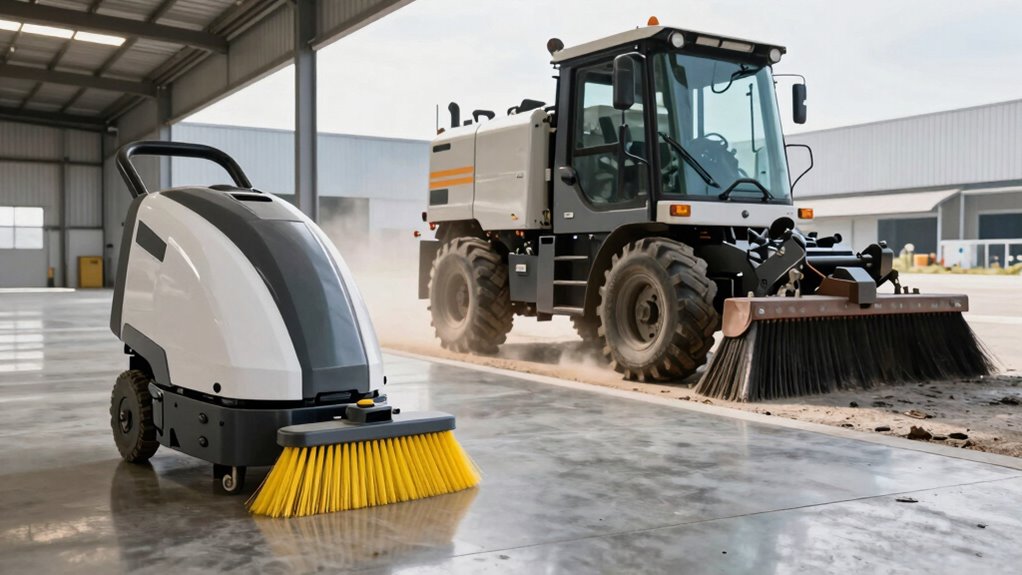
Indoor and outdoor industrial sweepers differ mainly in design and environment. Indoor sweepers are compact, easy to maneuver in tight spaces, and focus on handling fine dust and small debris. They prioritize air quality with dust control systems and require regular maintenance to stay effective. Outdoor sweepers are larger, built for open areas with uneven terrain and bigger debris. To discover more about these differences and find the right sweeper for your needs, keep exploring the details.
Key Takeaways
- Indoor sweepers are compact and designed for maneuverability in tight spaces, while outdoor sweepers are larger for open-area coverage.
- Indoor models focus on dust control and air quality, with specialized filters and dust suppression features.
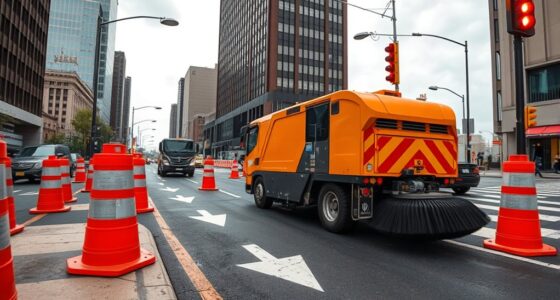
- Outdoor sweepers handle larger debris and uneven terrain, suitable for open and exposed environments.
- Indoor sweepers require frequent maintenance of brushes and filters to maintain performance; outdoor models are built for rugged use.
- Design differences prioritize indoor maneuverability versus outdoor durability and debris capacity.

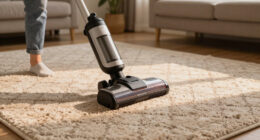
Indoor sweepers are built to operate in enclosed spaces like warehouses, factories, and large commercial facilities. Their design prioritizes maneuverability, allowing you to navigate tight corners and narrow aisles with ease. The suction power and brush systems are calibrated to handle fine dust and small debris, guaranteeing thorough cleaning without spreading dust into the air. Because indoor environments often require frequent cleaning, these sweepers are designed for quick turnarounds and ease of use. Their compact size and ergonomic controls make them suitable for daily operations, reducing downtime and increasing overall cleaning efficiency. Regular equipment maintenance is vital here; keeping brushes, filters, and vacuum systems in top condition guarantees maximum performance and prolongs the lifespan of the sweeper. Proper maintenance also prevents buildup that can compromise cleaning effectiveness. Additionally, indoor sweepers often feature dust control mechanisms to improve air quality during operation. Ensuring proper filter maintenance is essential for maintaining optimal performance and protecting indoor air quality. Incorporating air purification features can further enhance indoor air quality, making cleaning both effective and healthier for occupants. Implementing a comprehensive maintenance schedule can help detect potential issues early and ensure consistent cleaning performance, contributing to a healthier indoor environment. Maintaining a consistent cleaning schedule and monitoring air quality can help ensure a healthier environment for everyone indoors.

Enspoway 41" Commercial Dust Mop: Large Push Broom Wide Industrial Heavy Duty Hardwood Dry Sweeping Mop with 2 Pads Long Handle for Janitor Indoor Warehouse Gym Cleaning
41" Extra-Wide Cleaning Surface: Quickly covers large areas, ideal for garages, warehouses, gyms, hotels, restaurants floors and residential…
As an affiliate, we earn on qualifying purchases.
As an affiliate, we earn on qualifying purchases.
Frequently Asked Questions
What Safety Features Are Common in Industrial Sweepers?
You’ll find that most industrial sweepers include safety features like hazard detection systems to alert you of obstacles or potential dangers. They also have safety protocols such as emergency stop buttons and warning lights to prevent accidents. These features work together to keep you safe during operation, ensuring you can focus on cleaning without worrying about hazards or mishaps, whether indoors or outdoors.
How Do Maintenance Costs Compare Between Indoor and Outdoor Models?
Indoor sweepers generally have lower maintenance costs because they use smaller batteries with longer battery life, reducing replacement costs over time. Outdoor models, however, face harsher conditions, leading to faster wear and more frequent repairs, which increases maintenance expenses. You’ll find that outdoor sweepers often require more extensive upkeep, including battery replacements and component repairs, making their overall maintenance costs higher compared to indoor models.
Can Sweepers Operate on Uneven Outdoor Surfaces?
Yes, sweepers can operate on uneven outdoor surfaces. They’re designed with surface adaptation features, allowing them to handle uneven terrain effectively. You’ll find that many outdoor sweepers have adjustable brushes and rugged tires, which help maintain cleaning efficiency over rough or uneven terrain. This surface adaptation guarantees thorough cleaning even on challenging outdoor surfaces, making them ideal for varied outdoor environments and ensuring you get consistent results regardless of terrain.
What Is the Typical Lifespan of an Industrial Sweeper?
An industrial sweeper typically lasts between 5 to 10 years, depending on usage and maintenance. You should keep an eye on battery life, as it directly impacts operational time, and guarantee dust containment systems are functioning well to prevent wear and tear. Regularly servicing your sweeper helps extend its lifespan, keeping it efficient for indoor or outdoor cleaning tasks. Proper care maximizes your investment and ensures peak performance over the years.
Are There Environmentally Friendly Options Available?
Yes, there are eco-friendly options available for industrial sweepers. You can choose models with rechargeable batteries or alternative energy sources, which support sustainable cleaning practices. These sweepers reduce emissions and energy consumption, making them better for the environment. By opting for eco-friendly sweepers, you contribute to greener operations while maintaining effective cleaning. It’s a smart choice for businesses aiming to balance productivity with environmental responsibility.

Kärcher Walk-Behind Outdoor Push Sweeper S 6 Twin for Workshops, Warehouses or Garages – 6X Faster Than a Push Broom, 10 Gallon Capacity, 33.9" Sweeping Width
Human-Powered Push Sweeper: The S 6 Twin cleans up to 6 times faster than cleaning with a conventional…
As an affiliate, we earn on qualifying purchases.
As an affiliate, we earn on qualifying purchases.
Conclusion
When choosing between indoor and outdoor industrial sweepers, understanding their differences helps you make the right choice for your needs. Did you know that outdoor sweepers can cover up to 30,000 square feet per hour, making them highly efficient for large areas? Whether you’re cleaning warehouse floors or parking lots, selecting the right sweeper guarantees peak performance. Keep this statistic in mind to boost your cleaning efficiency and maintain a safer, cleaner environment.

49" Ride-On Industrial Floor Sweeper Machine, 26-Gal Hopper, 12.68-Gal Dust Control Water Tank, 69,000 Sq Ft/H, 3.1 MPH, 2.5-Hour Runtime for Warehouses, Factories & Parking Areas
Built for Large Industrial Sweeping Jobs: This 49-inch ride-on floor sweeper is designed for large hard-surface areas like…
As an affiliate, we earn on qualifying purchases.
As an affiliate, we earn on qualifying purchases.

Kärcher Walk Behind Outdoor Push Sweeper S 4 Twin for Workshops, Warehouses or Garages – 5X Faster Than a Push Broom, 5.25 Gallon Capacity, 26.8" Sweeping Width
Human-Powered Push Sweeper: The S 4 Twin cleans up to 5 times faster than cleaning with a conventional…
As an affiliate, we earn on qualifying purchases.
As an affiliate, we earn on qualifying purchases.