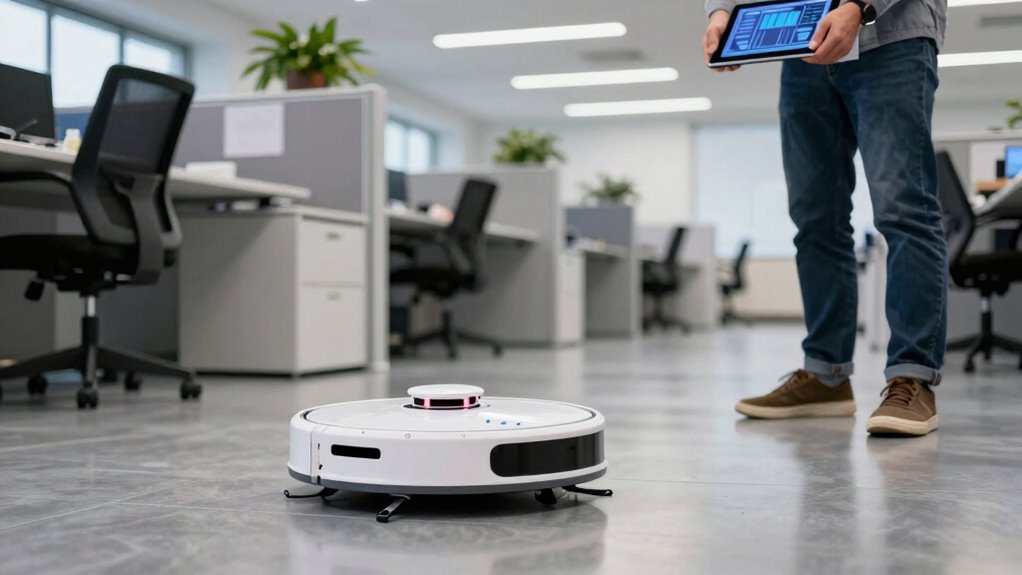
Robotic cleaners still need your oversight to work effectively and safely. They can’t anticipate all obstacles or handle complex situations like spills or fragile items. Your supervision ensures they stay updated, properly maintained, and free of clutter, reducing errors and malfunctions. Regular oversight helps monitor their performance, troubleshoot issues, and make split-second decisions. If you want to keep your space clean, safe, and running smoothly, there’s more to think about—and you’ll find out how to do it efficiently.
Listen free for 30 days with Audible
Thousands of audiobooks and originals — cancel anytime.
As an affiliate, we earn on qualifying purchases.
Key Takeaways
- Human oversight ensures safety, proper performance, and timely troubleshooting of robotic cleaners.
- It compensates for AI limitations in unexpected obstacles or complex environments.
- Regular maintenance and updates depend on human judgment to prevent malfunctions.
- Human intervention is essential for handling fragile items, spills, or unusual messes.
- Oversight guarantees optimal cleaning quality and extends device lifespan through proactive management.
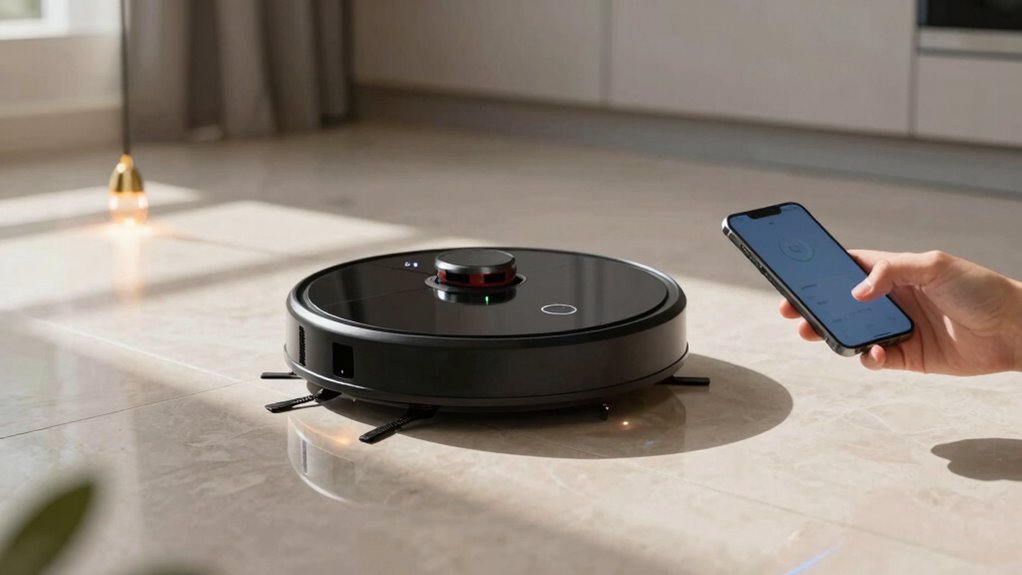
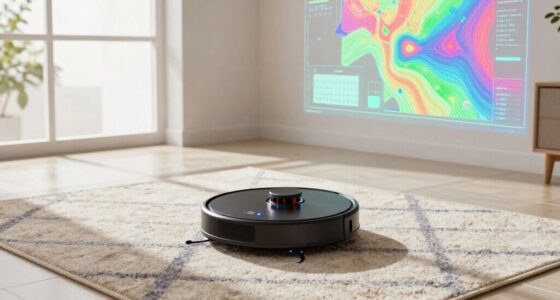
Robotic cleaning devices become more common in homes and workplaces, it’s vital to remember that they still require human oversight to operate effectively. Although these devices boast advanced AI integration that allows them to navigate spaces, make decisions, and adapt to different environments, they aren’t entirely autonomous. Your role remains essential in ensuring they perform at their best and don’t encounter issues that could compromise cleanliness or safety. The AI systems embedded in these robots are impressive, but they rely on continuous updates, accurate mapping, and proper calibration—tasks that often fall under your responsibility. Regularly monitoring their performance, checking for software updates, and troubleshooting when necessary are key to maintaining their effectiveness.
One reason human oversight is indispensable is that even the most sophisticated AI integration can’t anticipate every obstacle or scenario. Robotic cleaners might struggle with unexpected objects, complex layouts, or spills that require human judgment. For example, if a robot encounters a fragile item or a mess that needs special attention, you need to step in and decide whether to pause, reroute, or manually intervene. Without proper oversight, these issues could lead to incomplete cleaning, damage to property, or even safety hazards. Developing and following maintenance protocols ensures your robotic cleaner stays in top shape. This includes routine inspections, cleaning sensors and brushes, and ensuring the battery and wheels are functioning well. Additionally, understanding the importance of AI integration and its reliance on software updates can help you better maintain the device’s performance.
Your involvement also extends to updating the device’s software and firmware, which enhances AI integration by improving navigation accuracy and obstacle detection. Staying informed about the latest updates from manufacturers helps prevent malfunctions and keeps the robot aligned with current cleaning standards. Additionally, maintaining clear and clutter-free environments minimizes the risk of jams or false detections, enabling the robot to operate smoothly. If you notice persistent issues, consulting the maintenance protocols provided by the manufacturer ensures that repairs or adjustments are made promptly, preventing more extensive problems down the line. Recognizing the limits of AI capabilities highlights the necessity of human supervision in adapting to unexpected situations.
In the end, robotic cleaning devices are powerful tools that can greatly reduce your workload, but they’re not entirely independent. Your active supervision—through regular checks, updates, and manual intervention when needed—guarantees these devices perform at their best. Proper AI integration and diligent maintenance protocols create a seamless partnership between human oversight and automation, ensuring your space remains clean, safe, and efficiently maintained.

Thames & Kosmos Dusty Robot Vacuum Cleaner STEM Kit | Build a Desktop Robotic Vacuum with Sensors, Explore Robotics, Engineering & Mechanical Devices, Fun Gift for Ages 8+ or Adults
- Interactive Construction Project: Build a functional desktop vacuum cleaner
- Smart Navigation Sensors: Detects objects and avoids collisions
- Edge Tracking Probe: Moves along table edges accurately
As an affiliate, we earn on qualifying purchases.
As an affiliate, we earn on qualifying purchases.
Frequently Asked Questions
Can Robotic Cleaners Replace Human Janitorial Staff Entirely?
Robotic cleaners can’t fully replace human janitorial staff because robotic cleaning ethics emphasize the importance of human judgment and adaptability. You need humans for complex tasks, troubleshooting, and ensuring safety. Human-robot collaboration enhances efficiency, but robots lack the nuanced understanding and moral reasoning humans bring. So, while robots assist, your oversight remains vital to maintain high standards and address situations beyond their capabilities.
What Safety Concerns Are Associated With Robotic Cleaning Devices?
Sensor calibration and battery longevity are key safety concerns with robotic cleaners. You should guarantee sensors are regularly calibrated to prevent mishaps, like collisions or falls. Battery longevity matters too, as degraded batteries can cause sudden shutdowns or overheating, risking damage or injury. Without proper maintenance, these devices might operate unpredictably, so your oversight helps prevent accidents and keeps the cleaning process safe and efficient.
How Do Robots Handle Unexpected Obstacles During Cleaning?
Robots handle unexpected obstacles during cleaning using obstacle detection sensors, but sensor limitations can sometimes hinder their effectiveness. When sensors fail to recognize an obstacle, the robot might bump into it or get stuck. You need to oversee their operation to guarantee they respond properly to unforeseen objects. Human oversight helps address sensor limitations, allowing you to intervene if the robot doesn’t detect or navigate obstacles correctly, ensuring thorough and safe cleaning.
Are Robotic Cleaners Effective on All Floor Types?
While robotic cleaners work well on most floor surfaces, they might not be perfect for every type. You’ll notice some variation in cleaning performance based on floor surface compatibility, especially with delicate or textured floors. It’s wise to keep an eye on how your robot handles different surfaces, and occasionally step in for a thorough clean. This way, you guarantee your floors stay spotless, no matter the surface.
What Maintenance Is Required to Keep Robotic Cleaners Operational?
To keep your robotic cleaner operational, you need to regularly check the battery lifespan and replace batteries when they decline. Keep the device clean, especially sensors and brushes, to guarantee peak performance. Also, install software updates promptly, as they improve functionality and address bugs. By maintaining batteries and updating software, you enhance your robot’s efficiency and longevity, making cleaning more effective and hassle-free.
Conclusion
So, next time your robot whizzes around flawlessly, remember it’s just pretending to be autonomous. Behind that shiny veneer, a human’s watching, ready to rescue it from chaos—like a superhero in disguise. Without us, it’d be lost, probably stuck in a corner forever, dreaming of a world where it’s king of the clean. Until then, enjoy your spotless floors, thanks to your trusty human oversight—because even robots know who’s boss.
Back to school Picks
back to school
As an affiliate, we earn on qualifying purchases.