
TL;DR
Listen free for 30 days with Audible
Thousands of audiobooks and originals — cancel anytime.
Start your free trialAs an affiliate, we earn on qualifying purchases.
A dehumidifier size calculator estimates the moisture-removal capacity you need by considering room size, humidity, and conditions. Using it prevents overspending and ensures your space stays comfortable and dry.
Choosing the right dehumidifier isn’t just about picking a popular brand or the biggest number on the box. It’s about matching the unit’s capacity to your space’s moisture load. An oversized model wastes energy and cycles too often, while an undersized one runs nonstop, barely making a dent.
Imagine a damp basement with persistent musty odors. A 50-pint dehumidifier might seem perfect, but without proper sizing, it could struggle to keep humidity below 60%. That’s where a simple, effective size calculator can save you time, money, and frustration.
Always measure your space accurately, including ceiling height, to get a reliable capacity estimate.
Match your dehumidifier’s pint rating to the severity of moisture issues—more dampness needs higher capacity.
Oversized or undersized units both cause problems; a balanced size ensures efficiency and comfort.
Use a hygrometer for real-time humidity readings to fine-tune your setup.
Consider extra factors like moisture sources, climate, and leaks for best results.
How a Size Calculator Turns Numbers Into a Perfect Fit
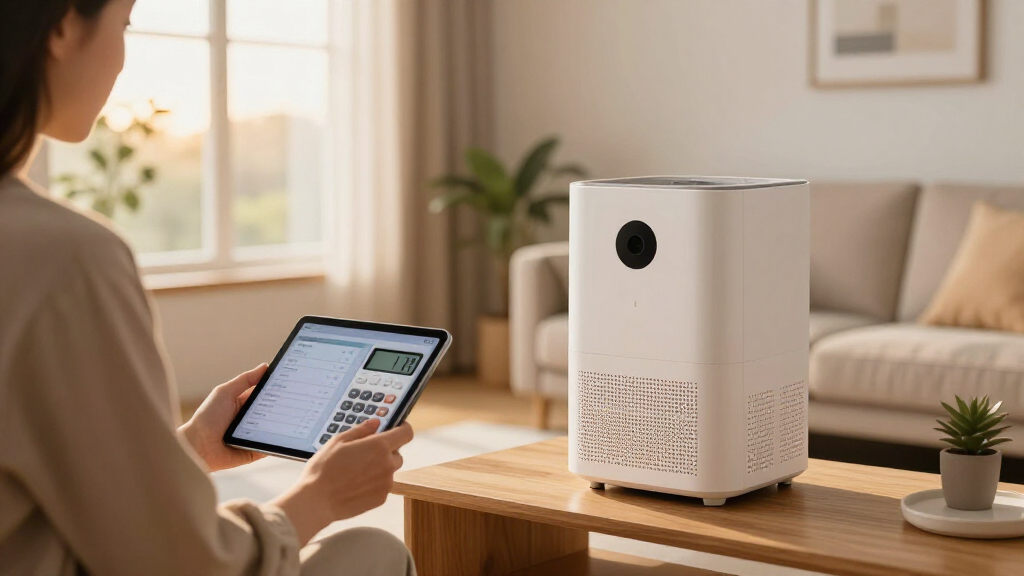
Think of the calculator as your moisture-matching expert. It takes room size, ceiling height, and dampness level to spit out a pint capacity that’s just right. You start by measuring your space—length, width, and ceiling height—then adjust for how damp or wet your environment is.
For example, a 12×20 foot room with 8-foot ceilings and occasional dampness might need around 30 pints. But if it’s a basement with water seepage, you might bump that number up to 40 or 50 pints. The calculator helps you avoid guesswork and focus on what truly works.
Understanding how the calculator uses these inputs is important. Room size provides a baseline estimate, but moisture level and environmental factors significantly influence the actual capacity needed. For instance, a small room with high humidity may require a larger capacity than a bigger, well-ventilated space. Recognizing these nuances ensures you select a dehumidifier that is neither over- nor under-powered, optimizing energy efficiency and performance.
Choosing the right capacity based on these inputs ensures your dehumidifier can handle the moisture load without excessive cycling, which can wear out the unit prematurely. It also prevents underpowered units from running constantly, which can lead to increased energy costs and insufficient moisture removal. Balancing these factors is crucial to maintaining a healthy, comfortable environment while conserving energy and prolonging the life of your appliance.
As an affiliate, we earn on qualifying purchases.
Step-by-Step: Using Your Dehumidifier Size Calculator
- Measure your room: length, width, and ceiling height.
- Calculate the floor area: length × width.
- Adjust for ceiling height: multiply the floor area by the ceiling height divided by 8 (standard height).
- Determine your moisture level: select from slightly damp, moderately damp, very damp, or wet.
- Factor in moisture sources: bathrooms, laundry, outdoor air, or leaks increase the needed capacity.
- Read the result: pick a dehumidifier with a capacity that matches or exceeds this number.
For example, a 15×15 foot room at 8 feet with high humidity might need a 40-pint unit, especially if it’s in a humid climate or has water intrusion issues.
Understanding each step’s importance helps ensure you interpret the calculator’s output correctly. For instance, overestimating capacity might lead to energy waste, while underestimating can result in ineffective moisture control. Properly considering these factors ensures your dehumidifier operates efficiently, maintains desired humidity levels, and avoids unnecessary wear and tear caused by improper sizing.
Compare Common Dehumidifier Sizes and When to Pick Each
| Pint Capacity | Best For | Typical Room Size |
|---|---|---|
| 20–25 pints | Small bedrooms, mild moisture issues | Up to 150 sq ft |
| 30–35 pints | Medium rooms, persistent dampness | 150–300 sq ft |
| 40–50 pints | Basements, large spaces, severe humidity | 300+ sq ft |
Matching the capacity to your room’s needs is vital because an undersized dehumidifier will struggle to remove moisture effectively, leading to persistent dampness and potential mold growth. Conversely, an oversized unit might cycle on and off too frequently, wasting energy and causing unnecessary wear. Proper sizing ensures the unit runs efficiently, maintains consistent humidity, and prolongs its lifespan. For example, selecting a 20-pint unit for a small bedroom with minimal humidity issues prevents unnecessary energy consumption, while a 50-pint model in a damp basement ensures adequate moisture removal without over-drying the space. The key is understanding the tradeoffs: undersizing leads to inefficiency and discomfort, while oversizing can cause energy waste and potential damage to furnishings from over-drying.
Why a Wrong-Sized Dehumidifier Is More Than Just Annoying
If you pick a unit too small, it’ll run nonstop but never hit your target humidity. Think of it as trying to fill a bathtub with a teaspoon—frustrating and slow. This constant operation not only wastes energy but also causes the unit to wear out faster due to continuous cycling, leading to higher maintenance costs and a shorter lifespan.
Oversizing isn’t just about spending more upfront; it can also cause issues during operation. An oversized dehumidifier might cycle less frequently, but when it does run, it can over-dry the air, leading to discomfort and potential damage to furniture or electronics. It can also cause the humidistat to shut the unit off prematurely, resulting in humidity swings that foster mold growth or dust mite proliferation. Proper sizing strikes a balance—enough capacity to handle peak moisture loads without excess—ensuring energy efficiency, durability, and consistent comfort. Recognizing these tradeoffs helps you avoid costly mistakes and ensures your dehumidifier performs optimally over its lifespan.
Frequently Asked Questions
How accurate is an online dehumidifier size calculator?
Online calculators provide a good starting point based on room size and dampness levels. However, they can’t account for leaks, ventilation, or actual moisture generation, so use them as a guide, not a final answer.
Can I use a smaller capacity dehumidifier if I run it longer?
Running a smaller unit longer can help, but it may still struggle to maintain desired humidity, especially in very damp spaces. It’s usually better to match the capacity to your needs for efficiency and comfort.
What happens if I choose a capacity that’s too high?
An oversized dehumidifier may cycle less often but could waste energy, produce more noise, and cause over-drying if not controlled properly. Humidistats help, but sizing still matters.
Is it better to size by square footage or cubic footage?
Square footage works in most cases, but for rooms with high ceilings or irregular shapes, cubic footage gives a more accurate picture of volume and moisture load.
Should I consider future expansions or renovations when sizing?
Yes, if you plan to add rooms or expect increased moisture, choosing a slightly larger unit now can save headaches later. Better to have some capacity in reserve than to outgrow your dehumidifier quickly.
Conclusion
Choosing the right dehumidifier size isn’t magic—it’s math, measurement, and smart decision-making. A good calculator simplifies that process, helping you avoid waste and underperformance. Remember, a well-sized dehumidifier makes your space healthier, more comfortable, and more energy-efficient.
Next time you shop, bring your measurements and a hygrometer. Your perfect balance of dry air is just a few clicks away.
Dehumidifier Size Calculator
Estimate daily pint capacity from room size and how damp the space feels.
Your room likely starts in the 20 to 30 pint range. Compare compact dehumidifiers for smaller spaces.
See compact dehumidifier matchesYour room points to a 35 to 40 pint unit. Compare mid-size dehumidifiers and check drainage options.
See mid-size dehumidifier matchesYour conditions call for a 50 pint or larger unit. Compare larger dehumidifiers and confirm room moisture sources.
See larger dehumidifier matchesEstimate only. Check product specs, local rates, and site conditions before buying or planning around these numbers.
College move-in / dorm season Picks
dorm essentials
As an affiliate, we earn on qualifying purchases.