To operate a Tennant floor scrubber, start by conducting pre-operational checks, like inspecting for leaks and ensuring the squeegee and scrub brushes are in good condition. Turn on the key switch and engage scrub mode. Adjust the solution flow lever for effective cleaning, and lower the scrub brushes and squeegee simultaneously. After use, drain and clean the recovery tank. To keep the machine performing well, you'll want to regularly inspect and maintain the components; there's more to explore!

Get cleaning gear delivered free — and shop member deals
- Fast, free delivery on millions of items
- Access to Prime Big Deal Days deals on October 6–7
- Prime Video, Amazon Music and more included
Key Takeaways
- Perform pre-operational checks, including inspecting for leaks and ensuring scrub brushes and squeegee are in good condition.
- Fill the solution tank with water and detergent, stopping 25 mm below the fill opening.
- Turn on the machine and engage scrub mode by pressing the scrub switch, then lower the brushes and squeegee.
- Adjust the solution flow using the lever to match the surface type and prevent over-saturation during scrubbing.
- Drain and clean the recovery tank after use, and inspect all components for wear and functionality.
Pre-Operational Checks

Before you start operating a floor scrubber, it's crucial to conduct pre-operational checks to verify everything's in proper working order.
Begin by inspecting the machine for any leaks, checking underneath for fluid leaks. Next, examine the squeegee for proper deflection and inspect the blade for wear; make sure there are no rounded edges, nicks, or cuts.
If you're using heavy scrub mode, confirm that the scrub head strap is secure. Open the solution tank cover and fill the tank with water, adding detergent until the water level is about 25 mm (1 inch) below the fill opening.
Finally, check that all components, including the scrub brushes and vacuum hoses, are functioning correctly and free of debris before you start.
Operating the Machine

To operate the floor scrubber effectively, start by turning the On/Off key switch to the right, ensuring the hour meter and battery discharge indicator are working. Next, engage the scrub mode by pressing the top of the scrub switch, lowering the scrub brushes and squeegee. Control the solution flow with the lever, adjusting it as needed while you scrub.
| Action | Description |
|---|---|
| Engage Scrub Mode | Press top of scrub switch |
| Lower Scrub Brushes | Simultaneously lower squeegee |
| Adjust Solution Flow | Move lever forward or backward |
| Stop Scrubbing | Release handles, press bottom |
When you're done, drain and clean the recovery tank, check the solution tank, and inspect the scrub brushes and squeegee for wear.
Adjusting Solution Flow

Adjusting the solution flow is essential for effective cleaning, as it guarantees the right amount of solution reaches the scrub brushes.
You'll find the solution flow lever on the machine's control panel. Pushing it forward increases the flow, while pulling it backward decreases it.
It's vital to match the solution flow to the surface you're scrubbing; harder surfaces typically need less solution, while porous surfaces may require more.
Make sure to set the solution flow appropriately before you start scrubbing to avoid over-saturation or under-cleaning the floor.
During operation, regularly check the solution flow and make real-time adjustments based on the cleanliness of the surface and the performance of the scrub brushes drawing from the solution tank.
Cleaning and Maintenance
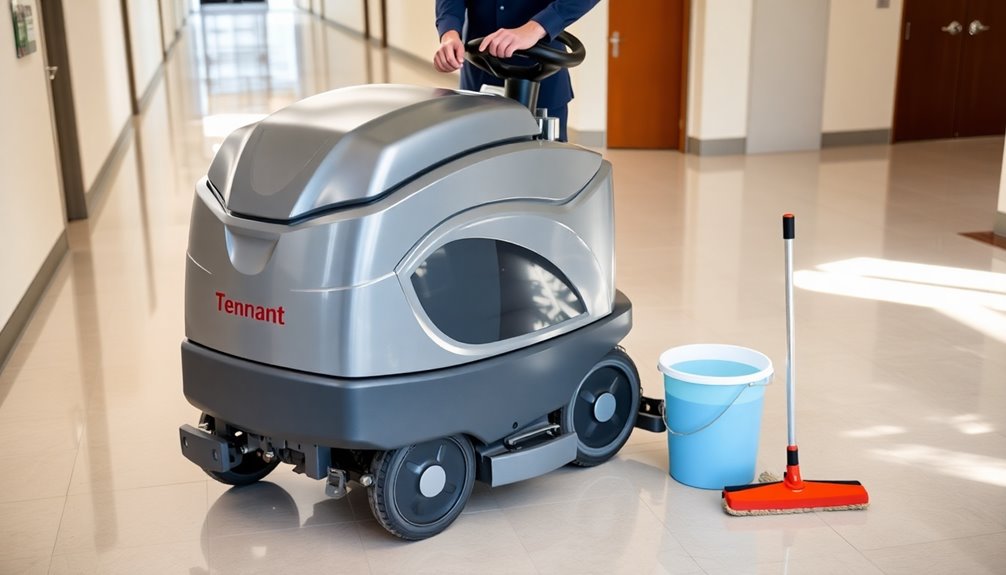
Maintaining your floor scrubber is essential for guaranteeing its longevity and peak performance.
After scrubbing, always drain and clean the recovery tank when it's full to prevent clogs and maintain efficiency.
Regularly check the squeegee for wear or damage, replacing blades if they're torn or show significant signs of wear to guarantee effective water recovery.
Before each use, inspect and clean the vacuum fan filter to maximize airflow and suction performance.
Don't forget to monitor battery charge levels while the machine is powered on and check electrolyte levels when it's off, filling as necessary.
Finally, remove any debris like wire or string wrapped around the scrub brushes to prevent damage and guarantee peak scrubbing performance.
Inspecting and Replacing Components
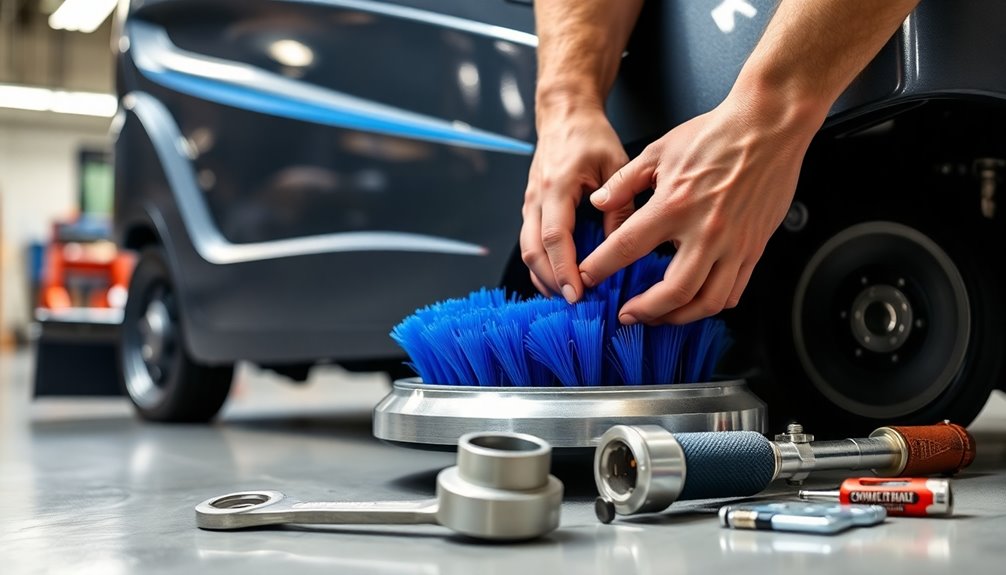
While you operate your floor scrubber, regularly inspecting and replacing its components is essential for maintaining peak performance.
Start with the squeegee; check for proper deflection and inspect the blades for wear, making sure they're free of nicks or cuts to enhance water recovery.
Confirm the scrub head strap is securely in place for heavy scrub mode before beginning.
Examine your brushes for damage—replace them if bristles are missing or if they measure less than 10 mm (3/8 in) in length.
To replace disc brushes, lift the scrub head, turn off the machine, and use the spring clip to remove the old brush.
Finally, inspect and clean the vacuum fan filter to guarantee it's dry and free of debris for maximum suction.
Frequently Asked Questions
How to Start a Tennant Floor Scrubber?
To start a Tennant floor scrubber, first, make sure you've read the manual and checked all safety instructions.
After performing pre-operational checks, open the solution tank cover and fill it with water, adding detergent as needed.
Then, turn the key switch to the right to power it on.
Press the scrub switch to lower the scrub head, adjust the solution flow, and you're ready to begin scrubbing the floor.
How to Operate a Floor Scrubber Machine?
When it comes to operating a floor scrubber, you're in for a clean sweep!
Start by inspecting the machine for leaks and confirming all components are in place. Power it on, lower the scrub brushes, and adjust the solution flow.
As you move forward, let the solution work its magic.
After scrubbing, raise the brushes, drain the recovery tank, and check for wear.
Keeping everything in shape guarantees smooth sailing every time!
Why Is My Tennant Floor Scrubber Not Picking up Water?
If your Tennant floor scrubber isn't picking up water, check a few key areas.
First, make certain the squeegee is lowered properly and the blades are in good shape.
Look for any blockages in the vacuum hoses that could hinder suction.
Also, verify the recovery tank isn't full and inspect the vacuum fan for proper function.
Finally, adjust the squeegee deflection to assure it makes good contact with the floor.
How to Drain a Tennant Floor Scrubber?
When it comes to draining a Tennant floor scrubber, you've got to get your ducks in a row.
First, locate the drain hose at the bottom of the recovery tank and carefully detach it to let the dirty water flow out. Make sure the tank's full before you do this.
Don't forget to flush the hose with clean water after, and always turn off the machine first for safety.
Inspect and clean the tank afterward for best performance!
Conclusion
Now that you've mastered the basics of operating a Tennant floor scrubber, imagine the satisfaction of seeing those floors shine like new. But remember, every scrubber has its secrets—neglect the checks or maintenance, and you could find yourself facing unexpected challenges. As you power it on for the first time, will the machine respond as you hope, or will you uncover hidden issues lurking beneath the surface? Stay vigilant; the path to spotless floors is filled with surprises.
Fall Picks
fall essentials
As an affiliate, we earn on qualifying purchases.