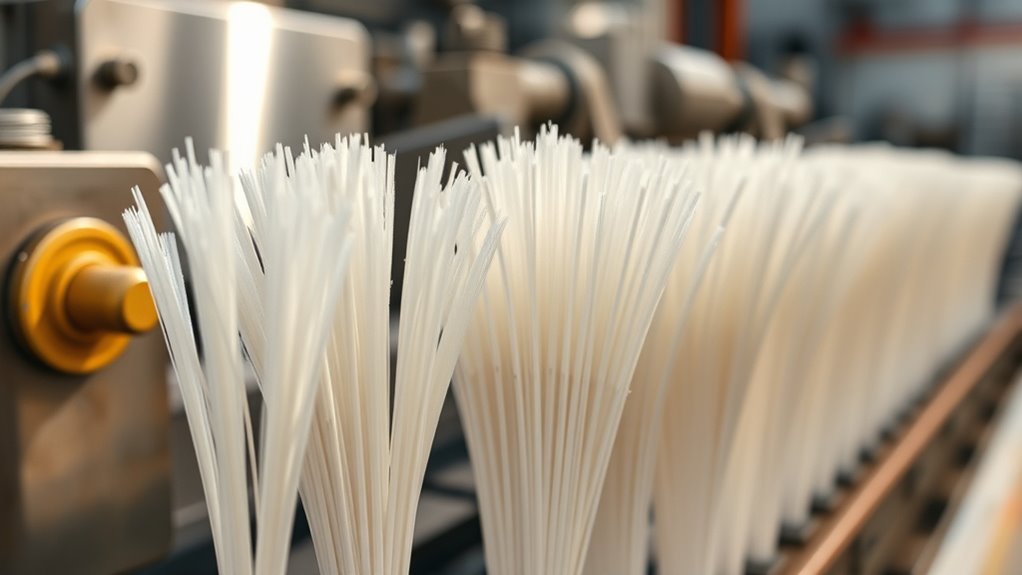

Polypropylene bristles outlast steel in many industries because they resist abrasion, chemicals, moisture, and mold better. Unlike steel, polypropylene stays flexible, maintains its shape, and isn’t affected by corrosive substances, which means fewer replacements and less downtime. Their lightweight design also makes handling easier and allows better access to tricky areas. If you want to discover how these advantages can benefit your business even more, there’s plenty more to explore.
Key Takeaways
- Polypropylene bristles resist abrasion and maintain shape longer than steel, reducing replacement frequency.
- Their high chemical resistance prevents corrosion, ensuring durability in chemically harsh environments.
- Lightweight and flexible, polypropylene allows easier handling and better access to hard-to-reach areas.
- They resist moisture, mold, and corrosion, making them suitable for damp or humid settings.
- Longer lifespan decreases waste and overall maintenance costs compared to steel bristles.
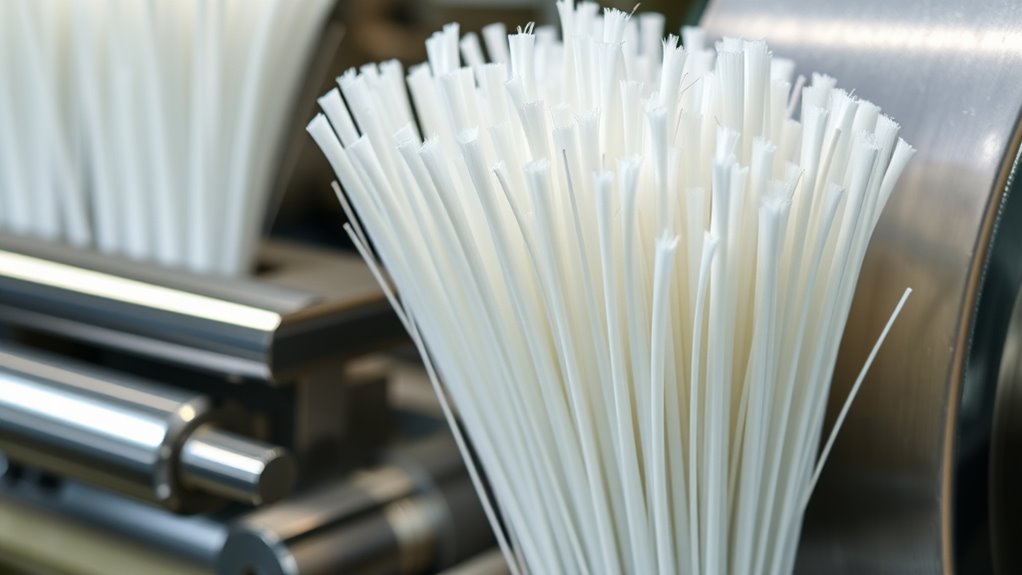
Ever wondered how to choose the right bristle material for your cleaning tools? When it comes to durability and performance, polypropylene bristles often surprise many industry professionals by outperforming steel in specific applications. Unlike steel, polypropylene offers superior abrasion resistance, which means it can withstand constant friction and rough surfaces without wearing down quickly. This makes it ideal for environments where cleaning tools face frequent, intense contact with abrasive materials. Steel bristles, while strong, tend to become dull or develop burrs over time, requiring more frequent replacement. Polypropylene, on the other hand, maintains its shape and integrity longer, saving you money and reducing downtime.
Another essential factor to consider is chemical compatibility. Steel brushes are susceptible to corrosion when exposed to certain chemicals, especially acids, alkalis, or solvents commonly used in industrial cleaning. This corrosion not only diminishes the effectiveness of the bristles but can also lead to contamination of the cleaned surfaces. Polypropylene bristles excel in this area because they are highly resistant to a wide range of chemicals. Whether you’re dealing with cleaning agents, solvents, or other corrosive substances, polypropylene can withstand these without degrading or losing its cleaning performance. This chemical resistance makes polypropylene an excellent choice for industries such as food processing, pharmaceuticals, and chemical manufacturing, where maintaining hygiene and avoiding contamination are paramount.
Beyond abrasion resistance and chemical compatibility, polypropylene bristles also offer advantages in terms of flexibility and weight. They are lighter than steel, making them easier to handle and maneuver, especially during extended cleaning sessions. Their flexibility allows them to reach into crevices and corners more effectively than rigid steel bristles, ensuring a thorough clean. Additionally, polypropylene is resistant to moisture and mold, which can plague steel brushes in damp environments, further extending their lifespan.

SPARTA Plastic Scrub Brush, Cleaning Brush, Utility Brush with Polypropylene Bristles For Cleaning, 8 Inches, Black
- Size: 8.5-inch handheld scrub brush
- Bristle Type: Stiff polypropylene for tough cleaning
- Resistance: Chemical and water resistant
As an affiliate, we earn on qualifying purchases.
As an affiliate, we earn on qualifying purchases.
Frequently Asked Questions
Are Polypropylene Bristles Environmentally Friendly?
You might wonder if polypropylene bristles are environmentally friendly. While they’re durable and resistant to chemicals, they aren’t biodegradable, which means they don’t break down easily in nature. However, you can recycle certain polypropylene products, reducing waste. Choosing polypropylene with recycling options helps lessen environmental impact, but it’s essential to take into account their long-term footprint and explore sustainable alternatives whenever possible.
How Do Polypropylene Bristles Perform in High-Temperature Environments?
Think of polypropylene bristles as the loyal flame-resistant friend in your toolkit. They perform well in high-temperature environments thanks to their impressive thermal resistance. You’ll find that their material stability keeps them from melting or deforming, even when things heat up. While steel might buckle under extreme heat, polypropylene maintains its structure, making it a reliable choice for tasks demanding durability amidst high temperatures.
Can Polypropylene Bristles Be Used With Chemical Cleaners?
You can definitely use polypropylene bristles with chemical cleaners, but it’s important to consider chemical compatibility. Polypropylene resists many acids, alkalis, and cleaning solutions, making it suitable for various applications. While cleaning effectiveness remains high, ensure the specific chemicals you use won’t degrade the bristles over time. Testing your cleaning solution on a small area first helps confirm that polypropylene maintains its durability and performance during routine cleaning tasks.
What Is the Cost Difference Between Polypropylene and Steel Bristles?
You’ll find that polypropylene bristles typically cost about 30-50% less than steel ones. This cost comparison stems from lower manufacturing expenses, as polypropylene is easier and cheaper to produce. Despite the initial savings, polypropylene’s durability in certain applications means you might save money over time, especially in industries where chemical resistance and longevity matter. So, choosing polypropylene could be a smart financial move for your business.
Are Polypropylene Bristles Suitable for Outdoor Industrial Use?
Yes, polypropylene bristles are suitable for outdoor industrial use because they offer excellent temperature resilience, handling both high and low temperatures effectively. Additionally, they have good chemical compatibility, making them resistant to many outdoor chemicals and weather conditions. You’ll find that these bristles maintain their durability and flexibility over time, even in harsh environments. This makes them a reliable choice for outdoor cleaning, maintenance, and industrial applications.
Conclusion
So, when choosing between polypropylene bristles and steel, remember that polypropylene can last longer and handle harsher conditions like a resilient warrior. Its durability surpasses steel in many industries, making it a smart choice for your needs. Think of it as a trusty river’s current, flowing steadily through rough terrains without faltering. By opting for polypropylene, you’re investing in a material that outshines steel, ensuring your tools stay effective and reliable over time.