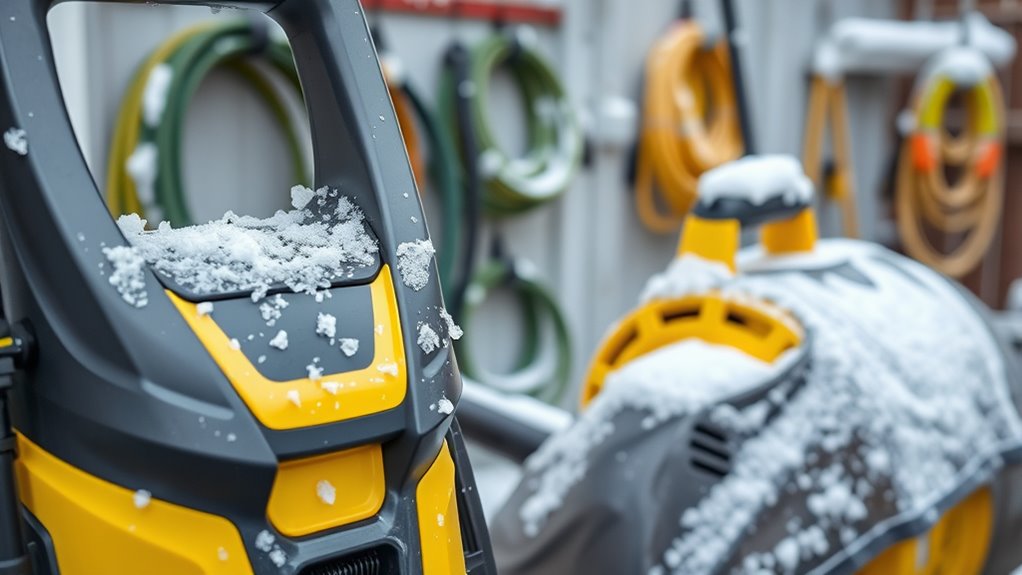

To winterize your outdoor cleaning machines, start by cleaning and inspecting all parts, then drain or stabilize the fuel to prevent gumming. Remove and store batteries in a cool, dry place on a maintainer, and check for corrosion. Lubricate moving parts and cover equipment with breathable covers. Using proper storage containers and techniques helps avoid damage and guarantees your equipment performs well next season. Keep following steps to protect your investment and stay prepared.

Get cleaning gear delivered free with Prime
- Fast, free delivery on millions of items
- Prime Video, Amazon Music and more included
- Member-only deals all year
Key Takeaways
- Drain or stabilize fuel to prevent gum buildup and engine issues during winter storage.
- Remove, clean, and store batteries in a cool, dry place on a maintainer to prevent freezing and corrosion.
- Clean and inspect all parts, belts, and hoses, replacing any worn components before storing.
- Lubricate moving parts and cover equipment with breathable covers to protect against rust, dust, and pests.
- Use maintenance tracking tools to schedule winterizing tasks ensuring comprehensive equipment care.
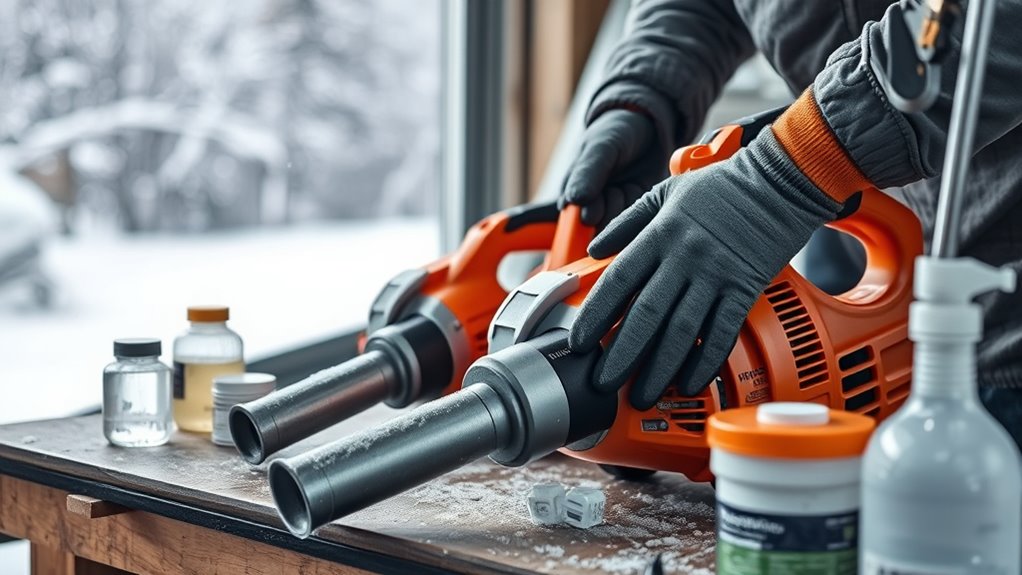
As winter approaches, it’s crucial to prepare your outdoor cleaning machines to prevent damage during the cold months. Properly winterizing your equipment ensures it stays in good condition and is ready to perform when spring arrives. Two critical aspects of this process are fuel preservation and battery maintenance. Neglecting these can lead to costly repairs or equipment failure when you need it most.
Start by addressing fuel preservation. Over the winter, gasoline can deteriorate, causing issues like clogged carburetors or poor engine performance. To prevent this, add a fuel stabilizer to your gas tank and run the engine for a few minutes to circulate the stabilized fuel through the system. If you plan to store your machine for an extended period, consider draining the fuel entirely. This reduces the risk of gum and varnish buildup, which can clog fuel lines and carburetors. For machines without a drain plug, refilling with fresh stabilized fuel before storage is a good alternative. Always store fuel in a sealed, approved container in a cool, dry place, away from heat sources or flames.
Add fuel stabilizer and run engine to prevent carburetor issues during winter storage.
Battery maintenance is equally crucial. Cold temperatures can drain batteries quickly and even cause damage. Before storing, remove the battery from the machine if possible. Clean the terminals with a wire brush to remove any corrosion, then store the battery in a cool, dry location—preferably on a battery maintainer or trickle charger. This keeps the battery charged and prevents it from freezing or deteriorating over time. If removing the battery isn’t feasible, check its charge level and top it off with distilled water if necessary. Keep it connected to a charger designed for maintenance charging to ensure it stays healthy through the winter months. Regularly inspect the battery for signs of corrosion or leaks, and clean or replace it as needed.
In addition to fuel and batteries, you should also thoroughly clean your machines, inspect belts and hoses, and lubricate moving parts to prevent rust and corrosion. Cover your outdoor cleaning equipment with high-quality, breathable covers to provide protection from dust, moisture, and pests. Proper winterizing not only preserves your investment but also makes spring startup smoother and quicker. By paying close attention to fuel preservation and battery maintenance, you ensure your outdoor cleaning machines remain reliable and ready to go when the weather warms up again. Additionally, using specialized maintenance apps can help you keep track of your winterization tasks and schedules, ensuring nothing gets overlooked.
outdoor cleaning machine fuel stabilizer
As an affiliate, we earn on qualifying purchases.
As an affiliate, we earn on qualifying purchases.
Frequently Asked Questions
How Often Should I Winterize My Outdoor Cleaning Machine?
You should winterize your outdoor cleaning machine at the end of each busy season, typically in late fall. Regular machine maintenance is essential for seasonal preparation, preventing damage from freezing temperatures. If you use your machine year-round, consider winterizing it more frequently. Properly winterized machines run better and last longer, saving you money and hassle in the long run. Always follow manufacturer recommendations for specific winterization intervals.
Can I Winterize My Machine Without Professional Help?
Did you know that nearly 60% of outdoor equipment damage occurs due to improper winterization? You can definitely DIY maintenance if you’re comfortable, but some tasks, like handling fuel or electrical components, might need professional assistance. If you’re unsure or uncomfortable, it’s safer to seek help. Proper winterizing guarantees your machine’s longevity, so weigh your skills carefully before attempting it yourself.
What Are the Signs My Machine Needs Winterization?
You’ll know your machine needs winterization when you notice engine trouble, fuel leaks, or rust. To keep it in good shape, follow storage tips like draining fluids and cleaning parts. Use a maintenance checklist to inspect belts, hoses, and filters. Proper winterization prevents damage from cold temperatures and ensures your machine’s longevity. If you’re unsure, consulting the checklist or seeking professional help can save you time and money.
Are There Different Winterizing Steps for Various Machine Models?
You’ll find that different machine models often require model-specific adjustments during winterization. Always follow manufacturer recommendations for each model, as some may need special steps like draining certain fluids or removing specific parts. Check your machine’s manual carefully. By tailoring your winterization process to your specific model, you guarantee ideal protection and longevity. This approach helps prevent damage and keeps your equipment ready for use when you need it again.
How Long Does the Winterization Process Usually Take?
Imagine your machine sipping hot cocoa, dreaming of spring. Winterization usually takes a few hours, depending on your maintenance schedule and machine complexity. You’ll want to factor in a cost analysis to avoid surprises—skipping steps could cost more later. Set aside time now; it’s an investment that pays off by preventing costly repairs and ensuring your equipment’s ready to work when the snow melts.
Conclusion
Now that you know how to winterize your outdoor cleaning machines, you’re all set to prevent costly repairs and extend their lifespan. Did you know that improperly stored equipment can lose up to 50% of its efficiency by spring? Taking these simple steps guarantees your machines stay in top shape, saving you time and money come next season. Stay proactive, and your equipment will be ready to perform when you need it most.
Fall Picks
fall essentials
As an affiliate, we earn on qualifying purchases.