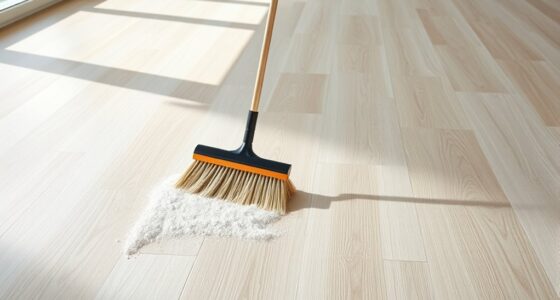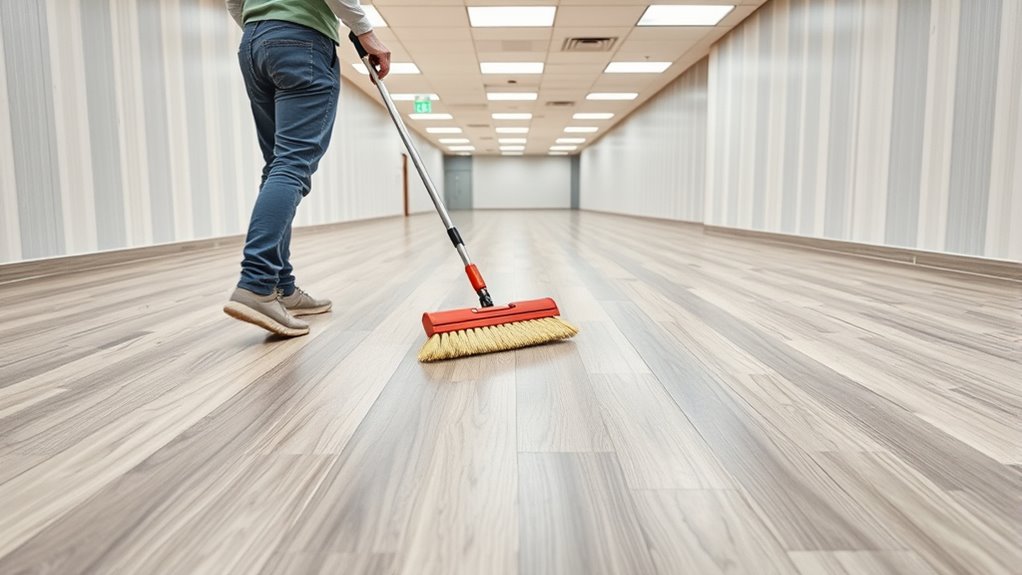

To sweep vinyl plank floors faster, create organized lanes by starting at one corner and working in straight, overlapping lines across the room. Plan your exit points so you don’t walk over cleaned areas, saving time and keeping your floors pristine. Use a lightweight dust mop or vacuum with soft brushes to trap dirt efficiently. Mastering these techniques can considerably speed up your cleaning while protecting your floors—discover more tips for the best results next.
Key Takeaways
- Plan a systematic route starting at one corner, working parallel lanes across the room for efficiency.
- Maintain slight overlaps at lane edges to ensure complete debris removal without missing spots.
- Identify and establish clear exit points before starting to avoid walking over cleaned areas.
- Use consistent, straight motions in each lane to speed up sweeping and prevent recontamination.
- Keep tools clean and in good condition to maximize debris pickup and reduce cleaning time.
Cleaning vinyl plank floors doesn’t have to be time-consuming. With the right approach, you can make the process efficient and even enjoyable. One of the key steps is mastering dust mopping techniques. Instead of random sweeping, think of your dust mop as a tool to create organized lanes across your floor. Start at one corner and work systematically in straight, overlapping lines. This method ensures you cover every inch without retracing your steps or missing debris. Keep your dust mop clean and dust it frequently to prevent pushing dirt around rather than removing it. Using a microfiber dust mop with a long handle makes the process easier and more effective, especially for larger areas. It traps dust and dirt better than traditional brooms, reducing the need for multiple passes. Proper technique is essential to prevent scratches and maintain the integrity of your vinyl planks.
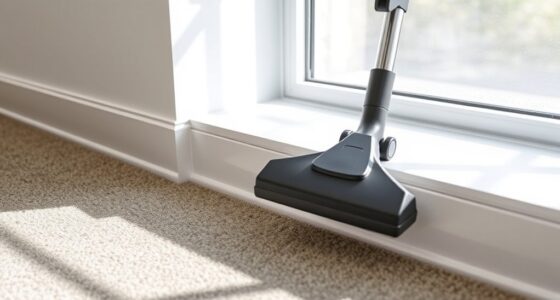
When it comes to vacuum cleaner options, choosing the right one can considerably speed up your cleaning routine. Opt for a lightweight, cordless vacuum designed for hard floors, which allows you to move quickly without the hassle of cords. Some models come with adjustable settings tailored for vinyl plank surfaces, ensuring you don’t accidentally scratch or damage your floors. Look for vacuums with powerful suction and a wide cleaning head, so you can cover more ground with each pass. Consider a vacuum with a soft brush or a bare floor setting—these prevent scratching and lift debris effectively. If you prefer a more traditional approach, a canister vacuum with a floor attachment can also do the trick, especially if it’s lightweight and easy to maneuver. Regular maintenance of your cleaning tools, including replacing filters and brushes, can also enhance their efficiency and prolong their lifespan.
Once you’ve dust-mopped or vacuumed, focus on creating a logical pattern for your cleaning lanes. Start at one corner of the room and work your way across in parallel lines, overlapping slightly at the edges to ensure no dirt escapes. This systematic method prevents you from doubling back unnecessarily and saves you time. When you finish a lane, plan your exit point ahead of time so you don’t have to walk over freshly cleaned areas, minimizing dirt redistribution. This approach not only speeds up your cleaning but also keeps your vinyl plank floors looking pristine longer. By combining efficient dust mopping techniques with the right vacuum cleaner options and a strategic layout, you can considerably cut down your cleaning time while maintaining beautiful, spotless floors. Remember, consistent and proper floor maintenance is key to extending the life and appearance of your vinyl planks.

CLEANHOME Microfiber Dust Mop for Hardwood Floor Cleaning, Dry and Wet Baseboard and Floor Duster, Household Cleaning Tool for Kitchen, Bathroom
- Deep Cleaning Microfiber Mop: Effective at capturing dust and pet hair
- Dual-Function Mop: Suitable for dry and wet cleaning
- Versatile Surface Compatibility: Works on tile, laminate, vinyl, marble
As an affiliate, we earn on qualifying purchases.
As an affiliate, we earn on qualifying purchases.
Frequently Asked Questions
What Tools Are Best for Sweeping Vinyl Plank Floors?
To sweep vinyl plank floors efficiently, you should use dust mops with microfiber cloths. Dust mops pick up dust, dirt, and hair quickly, saving you time. Microfiber cloths are excellent because they trap debris without spreading it around. Make certain to choose a lightweight, manageable mop for easy maneuvering. Regularly replace or wash the microfiber cloths to keep your floors looking spotless and to ensure the best cleaning performance.
How Often Should I Sweep My Vinyl Plank Floors?
You should sweep your vinyl plank floors at least twice a week to prevent dust accumulation and pet hair buildup. Regular sweeping keeps your floors looking clean and helps remove debris that can cause scratches. If you have pets, you might need to sweep more often, especially after playtime or shedding. Consistent maintenance keeps your floors looking their best and makes deep cleaning easier.
Can I Use a Vacuum on Vinyl Plank Flooring?
Yes, you can use a vacuum on vinyl plank flooring. Just make sure to choose the right vacuum type, like one with soft brushes or a setting for hard floors, to avoid scratches. Regular vacuum maintenance, such as cleaning filters and brushes, keeps it working well. Using a vacuum helps quickly pick up dirt and debris, making your cleaning routine more efficient without damaging your floors.
Are There Specific Cleaning Solutions for Vinyl Floors?
You can use gentle cleaning solutions specifically made for vinyl floors, avoiding harsh chemicals. Look for mild, pH-balanced cleaning solutions that won’t damage your floor’s finish. After cleaning, consider applying a vinyl floor polish to restore shine and add a protective layer. Always follow the manufacturer’s instructions for any cleaning solution or polish to guarantee your vinyl plank floors stay looking their best and last longer.
How Do I Prevent Scratches While Sweeping?
Snagging scratches is like tearing a paper; it’s easy to avoid. Use a soft-bristled broom or microfiber mop, gentle mopping techniques, and avoid dragging heavy objects across the floor. When removing pet hair, go with light, sweeping motions instead of pressing down hard. Regularly clean your tools to prevent grit from causing scratches. These simple steps protect your vinyl floors while keeping them spotless and pet-hair free.
Conclusion
By using lanes, overlapping your sweeps, and planning clear exit points, you’ll turn floor cleaning into a breeze rather than a chore. Think of your floor as a canvas, and your sweeping as the brush strokes that bring it back to life—efficient and seamless. With these tips, you’ll glide across your vinyl plank floors like a gentle breeze, making quick work of dust and debris. Now, grab your broom and sweep smarter, not harder!