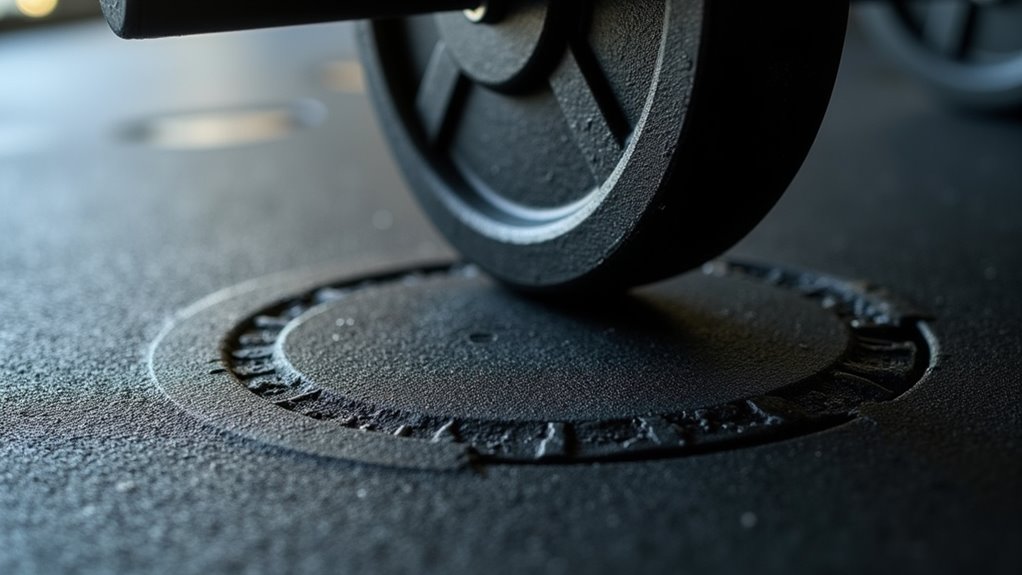
Excessive downward pressure from heavy weights or dropping equipment can damage rubber gym floors, causing permanent dents, tears, or cracks. While these floors are durable, they aren’t invincible—repeated impact from high weights or dropping from heights accelerates wear. To protect your flooring, stay within manufacturer weight limits, use impact-absorbing mats, and handle weights carefully. Curious about how to maximize your gym floor’s lifespan and safety? Keep exploring to find out more.
Key Takeaways
- Rubber gym floors are durable but can sustain damage from excessive downward pressure, such as heavy drops or repeated impacts.
- Consult the manufacturer’s weight and impact limits to prevent permanent indentations and structural damage.
- Using protective mats under heavy equipment helps distribute weight and reduce stress on the flooring.
- Proper lifting and dropping techniques minimize impact, extending the lifespan of the flooring.
- Regular inspections for signs of wear or damage help catch issues early and maintain safety.
Rubber gym floors are designed to withstand significant weight and impact, but excessive down pressure can lead to damage over time. When you place heavy equipment or drop weights repeatedly, you’re testing the flooring’s resilience. While rubber flooring offers excellent flooring durability, it’s not invincible. Too much downward force can cause permanent indentations, tears, or even compromise the underlying structure. Understanding the limits of your gym floor helps prevent costly repairs and ensures safety for everyone using the space.
Excessive downward pressure on rubber gym floors can cause lasting damage and compromise safety.
The key to maintaining your rubber flooring’s longevity lies in recognizing the impact of equipment weight and how it interacts with the surface. Heavy weights, especially when dropped from a height, generate high equipment impact that can wear down the rubber over time. For instance, repeatedly dropping heavy barbells or kettlebells can create divots or cracks, reducing the flooring’s effectiveness and aesthetic appeal. This damage not only diminishes the visual appeal but also weakens the flooring’s ability to absorb shock, making it less effective at protecting your floors and equipment.
To prevent damage, it’s vital to understand the limits of your rubber gym floors. Most commercial-grade rubber flooring is rated to withstand certain weights and impact levels, but exceeding those limits accelerates deterioration. If you’re unsure, consult the manufacturer’s specifications or guidelines. Additionally, consider using protective mats or platforms under heavy equipment to distribute weight more evenly and reduce direct impact. This approach helps preserve flooring durability while still allowing you to use your gym equipment safely and effectively.
Another important aspect is educating users about proper lifting and dropping techniques. Encouraging controlled movements and cautious handling minimizes unnecessary equipment impact. Avoid dropping weights from excessive heights or using them as tools for high-impact exercises unless your flooring is specifically designed for such activities. Regularly inspecting the flooring for signs of wear or damage can also catch issues early before they worsen, saving you money and time in repairs.
Moreover, understanding the cybersecurity vulnerabilities associated with digital gym management systems and equipment connectivity can help prevent potential cyber threats that could compromise your facility’s operations. Ultimately, understanding how much downward force your rubber gym floors can handle ensures you maximize their lifespan. Balance heavy use with proper handling, and don’t ignore the signs of stress or damage. When you respect the flooring’s limits, you protect your investment and create a safer, more durable workout environment. Remember, while rubber floors are tough and resilient, they aren’t indestructible—so mind the impact and keep your gym space in top condition.

Bissell Commercial BigGreen BGFS650 Hercules Scrub and Clean Floor Machine, Green
Brush Speed (Rpm): 2200 Rpm
As an affiliate, we earn on qualifying purchases.
Frequently Asked Questions
What Are the Long-Term Effects of Excessive Down Pressure?
Excessive down pressure can weaken your rubber gym floor over time, leading to uneven wear and potential damage. It disrupts proper pressure distribution, causing parts of the floor to deteriorate faster. To prevent this, confirm proper floor reinforcement and avoid concentrated force in one spot. Regularly check the pressure levels and distribute weight evenly, so your flooring stays durable and safe for long-term use.
How Can I Measure Down Pressure Accurately?
You can measure down pressure accurately by using force sensors designed for that purpose. Ironically, relying solely on guesswork isn’t enough when precision matters—so skip the intuition. Instead, set up pressure measurement tools to monitor force exerted on your rubber gym floors. These sensors provide real-time data, helping you avoid damage. Just remember, the right tools turn guesswork into informed decisions, keeping your floors safe and durable.
Are There Specific Gym Activities That Generate More Down Pressure?
Certain gym activities, like heavy weightlifting and plyometric jumps, generate more down pressure due to increased impact force and weight distribution. You’ll notice higher down pressure during deadlifts, box jumps, or Olympic lifts, as these involve rapid, forceful impacts on the floor. To protect your rubber gym floors, monitor these activities and guarantee proper weight distribution, minimizing impact force to prevent damage and prolong floor longevity.
What Are the Signs of Damage Caused by High Down Pressure?
You’ll notice cracking, bubbling, or uneven surfaces when high down pressure damages your flooring. These signs indicate the pressure distribution has exceeded the flooring’s resilience, causing structural stress. Warping or visible wear also signal that your gym floor can’t handle the load anymore. Pay attention to these issues promptly, as ignoring them can lead to more extensive damage and compromise the safety and durability of your rubber gym floor.
How Often Should Gym Floors Be Inspected for Pressure-Related Issues?
You should inspect your gym floors regularly, ideally monthly, to catch pressure-related issues early. Incorporate routine floor maintenance and pressure monitoring during these inspections to identify signs of damage or excessive pressure buildup. Pay close attention to areas showing uneven wear or indentation. Consistent checks help prevent costly repairs and guarantee your gym environment remains safe and functional, extending the lifespan of your rubber flooring.

HHQ Commercial Floor Scrubber Machine with Brushes and Pads, Heavy Duty Floor Cleaner Polisher and Buffer- Deep Cleaning Tile and Grout, Hardwood Floors and Carpets without Getting on Hands and Knees
Kit Included: 1 Orbital Floor Buffer & Scrubber Machine, 2 Polishing/ Stripping Pads, 3 Scrub Brushes, 1 Microfiber...
As an affiliate, we earn on qualifying purchases.
Conclusion
So, next time you’re worried about pressing too hard on your rubber gym floor, remember—it’s probably the only thing in your workout that can’t handle a little extra weight. Ironically, the very act of pushing your limits might be what finally causes the damage. Just be mindful, or you might find yourself unexpectedly “breaking in” your new flooring—literally. After all, who knew the biggest threat to your gym’s resilience was your own determination?

LUSHIJIE 41" Industrial Walk-Behind Hand Push Floor Sweeper | Commercial 55L Large Capacity | 45000 SqFt/Hour | Indoor & Outdoor Use (Yellow)
Human - Powered Push Sweeper: It cleans about 10 times faster than a conventional broom.Its push-powered design means...
As an affiliate, we earn on qualifying purchases.

Bissell BigGreen BGFS5000 Portable Two Brush Floor Scrubber & Polisher, Polypropylene, 13"" W x 7"" D x 44"" H, White & Green
VERSATILE MULTI SURFACE PERFORMANCE. The BISSELL Commercial BGFS5000 is an industrial strength portable floor scrubber and polisher designed...
As an affiliate, we earn on qualifying purchases.