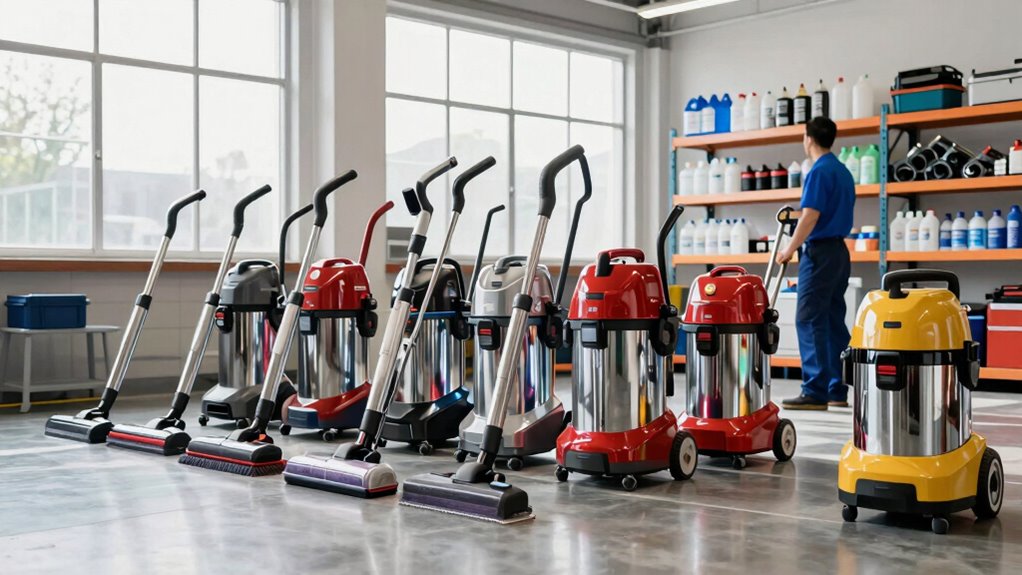

Before expanding your cleaning equipment fleet, make sure you have strong safety protocols and clear signage in place to protect your staff. Proper training on safe operation and handling hazardous chemicals is essential to prevent accidents and reduce damage. Develop an all-inclusive maintenance plan with scheduled checks to prevent breakdowns and extend equipment life. Staying informed about safety and handling best practices will help your expansion go smoothly. Keep exploring to discover more tips for a successful fleet growth.

Get cleaning gear delivered free with Prime
- Fast, free delivery on millions of items
- Prime Video, Amazon Music and more included
- Member-only deals all year
Key Takeaways
- Develop comprehensive safety protocols and signage to ensure staff safety and equipment longevity.
- Provide thorough training on safe operation and handling procedures for all team members.
- Incorporate a detailed maintenance schedule, including routine inspections and automated reminders.
- Implement preventive maintenance practices to extend equipment lifespan and maintain optimal performance.
- Ensure proper handling and safety measures for chemicals and hazardous materials during fleet expansion.
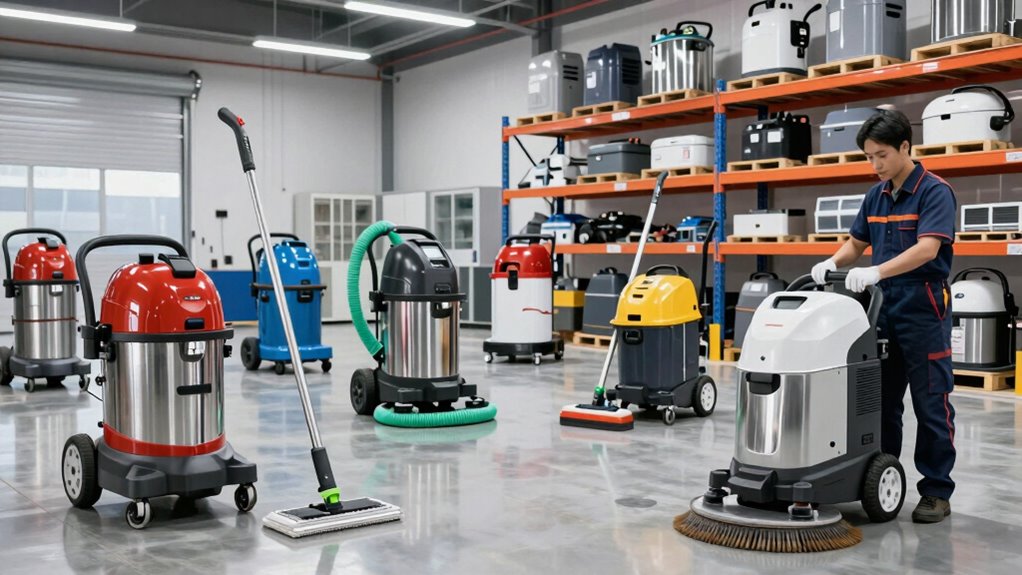
Are you ready to boost your cleaning operations? Expanding your cleaning equipment fleet can markedly improve efficiency and meet growing demands, but it requires careful planning. Before diving into new acquisitions, you need to understand the importance of establishing solid safety protocols. Proper safety measures ensure that your team handles new equipment correctly, reducing accidents and injuries on the job. Make sure everyone is trained on safe operation procedures and that safety signage is clear and visible. Developing an extensive safety protocol not only protects your staff but also extends the lifespan of your equipment by encouraging proper use.
Establish strong safety protocols to protect staff and prolong equipment lifespan during fleet expansion.
Another key consideration is maintenance scheduling. When you add new equipment, it’s crucial to integrate a maintenance plan right from the start. Regular maintenance prevents breakdowns, keeps equipment running at peak performance, and prolongs its useful life. Create a maintenance calendar that includes routine inspections, cleaning, and part replacements. Automating reminders for scheduled maintenance can help you stay consistent and avoid costly repairs down the line. Proper maintenance scheduling also minimizes downtime, ensuring your cleaning operations continue smoothly without unexpected interruptions. Incorporating preventive maintenance practices can further enhance equipment longevity and operational efficiency. Additionally, understanding safety protocols and their proper implementation is essential to prevent accidents and ensure a safe working environment as you expand your cleaning fleet. To support this, training your team on safe operation procedures can significantly reduce risks associated with handling new equipment. Staying informed about lab safety best practices is also vital, especially when working with potentially hazardous cleaning chemicals or equipment.
industrial cleaning equipment safety signage
As an affiliate, we earn on qualifying purchases.
As an affiliate, we earn on qualifying purchases.
Frequently Asked Questions
How Do I Assess Current Fleet Efficiency?
To assess your fleet efficiency, start by tracking performance metrics like cleaning times, downtime, and maintenance costs. Use fleet management software to analyze these data points and identify bottlenecks or underperforming equipment. Consider equipment upgrades that improve productivity or energy efficiency. Regularly review your fleet’s performance, compare it against industry standards, and adjust your management strategies accordingly to optimize operations and justify expansion or upgrades.
What Is the Typical ROI for New Equipment?
The typical ROI for new equipment varies but often ranges from 20% to 50%, depending on factors like cost analysis and efficiency gains. Upgrading equipment can reduce labor costs and improve cleaning quality, leading to faster turnaround times. When considering new purchases, evaluate how the investment impacts your operational costs and productivity. This helps guarantee that equipment upgrades deliver measurable benefits and justify the expense.
How to Train Staff on New Cleaning Tools?
To train staff on new cleaning tools, you should use engaging training techniques like hands-on demos and interactive sessions to guarantee understanding. Encourage staff engagement by involving them in the training process, asking for feedback, and addressing their questions. Regular practice and supervision help solidify skills. Providing clear instructions and visual aids also boosts confidence, making your team more efficient and comfortable with the new equipment.
Are There Eco-Friendly Equipment Options Available?
Yes, eco-friendly equipment options are available. You can choose biodegradable products that reduce plastic waste and harm the environment less. Additionally, energy-efficient machines help lower your energy consumption and operating costs. When expanding your fleet, look for equipment with eco-friendly certifications, such as ENERGY STAR, and prioritize biodegradable cleaning supplies. These choices support sustainability and can appeal to environmentally conscious clients, making your business more eco-friendly and cost-effective.
What Maintenance Schedules Are Recommended for Expanded Fleets?
Imagine your expanded fleet running smoothly, but neglecting maintenance could shorten equipment lifespan unexpectedly. You should schedule routine checks every three to six months, depending on usage, to prevent breakdowns. Regular inspections and timely replacements are key to efficient operation. Implement replacement strategies now—such as tracking wear and tear—to guarantee longevity. Staying proactive keeps your equipment performing at its best and avoids costly repairs later.
Conclusion
Expanding your cleaning equipment fleet can boost efficiency and meet growing demands, but it’s vital to plan carefully. Did you know that 65% of facilities report increased cleaning costs due to outdated equipment? By understanding your needs and investing wisely, you can maximize your return and keep your spaces spotless. Remember, a strategic approach guarantees you’re not just adding gear but enhancing overall cleaning performance. Stay prepared, and your investment will pay off in the long run.
Evergreen bestsellers Picks
bestsellers
As an affiliate, we earn on qualifying purchases.