TL;DR

Get cleaning gear delivered free with Prime
- Fast, free delivery on millions of items
- Prime Video, Amazon Music and more included
- Member-only deals all year
Cordless floor scrubbers use powered brushes or pads to loosen grime, and many collect dirty water in a separate tank as they clean. Compare runtime, tank capacity, floor compatibility, maneuverability, and cleanup needs against your own rooms; the machine still needs filling, emptying, and maintenance after use.
A cordless floor scrubber can wash a kitchen floor without a cord dragging through the breakfast crumbs—but it still needs a battery, clean water, and a rinse after the job. That trade is the key to deciding whether one will make your routine easier.
These machines use powered brushes or pads to scrub hard floors, and many collect the dirty water in a recovery tank as they move. In this guide, you’ll see how that process works, which features matter in a real home, and how to check whether a model suits your floors. You’ll also get practical steps for comparing machines without relying on a long feature list or a manufacturer’s runtime claim alone.
Check floor compatibility in both the scrubber and flooring instructions, especially for wood, laminate, and vulnerable seams.
Match runtime and tank capacity to your usual route, and treat manufacturer runtime figures as estimates affected by settings and floor conditions.
Choose cleaning width and weight based on your rooms, obstacles, stairs, and storage space.
Count replacement batteries, brushes or pads, filters, and approved solution when comparing long-term cost.
Plan to sweep loose grit when recommended, empty the recovery tank after use, and clean the brush and filters as directed.
How a Cordless Scrubber Cleans in One Pass
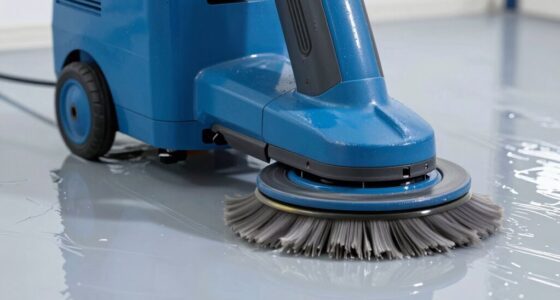
A cordless floor scrubber uses a battery-powered brush or pad to loosen soil, then many models pick up the resulting wastewater into a separate recovery tank. Some also dispense clean water or cleaning solution as they move. Think of it like washing a plate under a running tap while a small squeegee follows behind: one part loosens grime, and another gathers the wet mess.
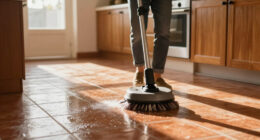
That combination makes the machine different from a traditional mop, which often spreads dirty water until you rinse or change it. On a tile kitchen floor, for example, a scrubber may tackle dried splashes near the stove while collecting gray water in the same pass. Its powered agitation can help with everyday grime and tracked-in soil, though results depend on brush condition, water flow, solution, and how slowly you move.
The cordless design frees you from finding outlets or steering a cable around chair legs. But the battery still sets a working limit, and claims about runtime depend on the selected settings and floor conditions. You’ll also need to fill the clean-water tank and empty the recovery tank. A self-cleaning cycle can rinse parts on some newer models, but it doesn’t remove the need to check for hair, clean filters as directed, and let parts dry.
Many cordless floor scrubbers are built for sealed hard floors, not carpets or every flooring material. Check both the appliance instructions and your flooring maker’s guidance before use. For example, an owner of sealed vinyl may have different options from someone with wood flooring and exposed seams. Less standing water can make drying easier, but the machine’s pickup and the floor’s surface both affect how damp it remains.
Products Worth Considering

Dyson V15 Detect Cordless Vacuum

Dyson V8 Cyclone Cordless Vacuum

Hisense 43-Inch E6 Cinema Series Hi-QLED 4K UHD Smart Fire TV (43E6QF)
As an affiliate, we earn on qualifying purchases.
Pick a Machine That Fits Your Floors and Rooms
Choose a cordless floor scrubber by matching its cleaning path, maneuverability, tank capacity, and floor guidance to the spaces you actually clean. A wider head can cover an open kitchen more quickly, while a compact machine may turn more easily around a toilet or between dining chairs. The advantage of width is fewer overlapping passes; the cost is that a broad head may miss narrow gaps and feel awkward around obstacles. There is no useful “best” width without knowing the room.
Tank size brings a similar tradeoff. Larger tanks can reduce refill and emptying stops, but they may add weight, especially when full. That extra weight matters not only when carrying the machine, but also when steering it through a tight space or lifting it onto a charging dock. Imagine carrying a scrubber up a narrow staircase to clean a small upstairs bathroom: a few extra minutes of tank capacity may not matter as much as an easy lift and storage spot. In a large open-plan home, fewer interruptions might matter more.
Before you buy, write down the surfaces and obstacles in your normal cleaning route. A hallway with tight corners, a long stretch of sealed tile, and a rug at the kitchen entrance ask different things of the machine. Brush placement affects how close you can get to baseboards, so an edge-cleaning claim is useful only if the brush reaches the edge where your dirt collects. Look at the actual brush layout: a housing that stops short can leave a thin strip along the wall, meaning you may still need to finish that strip by hand.
- Floor compatibility: Check the manufacturer’s guidance for each surface, especially wood, laminate, and floors with seams. This determines where you can safely use the machine and whether you need a separate method for other rooms.
- Reach and storage: Measure doorways, charging space, and the closet or utility area where the unit will stand. A machine that fits the room but cannot be stored conveniently may be less likely to get used.
- Brush and pad support: Look for readily available replacements suited to your floor and common messes. Worn brushes can reduce scrubbing performance, so replacement cost and availability affect how useful the machine remains over time.
- Moisture settings: Adjustable water flow or a drying mode may help where you need to limit dampness. More control can be useful on sensitive surfaces, but it does not override the floor maker’s instructions.
For instance, if you clean a small apartment with a mix of tile and laminate, a compact unit with clear surface instructions may suit you better than a larger machine built for broad commercial floors. The smaller machine may mean more refills, but if your area is modest, easier turns and storage could save more hassle than a larger tank would. Check the manual before crossing between surfaces.
Compare Runtime, Tank Size, and Running Costs
Compare a scrubber’s runtime and tank capacity with the area you clean, then add up the parts and supplies it will need over time. A battery estimate by itself cannot tell you whether the machine will finish your routine: runtime changes with settings, floor condition, and water use. A model that handles your kitchen and entryway on one charge may not suit a large home. If a charge runs out halfway through, you may have to stop, wait, and resume later; that interruption can outweigh the convenience of going cordless.
Make your comparison using the same questions for each machine. If you clean a 60-square-metre area, for example, check whether the stated runtime gives you room for slower passes on a sticky spill, plus setup and turns around furniture. A machine’s maximum runtime may reflect a low-power setting, so compare the estimate with the mode you would actually use. Tank capacity creates another limit: if the recovery tank fills before the battery runs down, more runtime will not help you finish without stopping. Manufacturer specifications are useful starting points, not proof of real-world performance. Battery charging time and replacement availability matter too, particularly if you want to clean again soon or cover a large space.
| Feature | What it changes | Example to check |
|---|---|---|
| Battery runtime | How much area you can attempt before charging | Can it cover your usual route on your chosen setting? |
| Tank capacity | How often you stop to refill or empty | Will the recovery tank fill during a full kitchen-and-hall clean? |
| Cleaning width | How quickly you cover open areas and how easily you turn | Can the head fit between your table legs? |
| Replacement parts | Long-term cost and upkeep | Can you buy a battery, brush, or filter when needed? |
Also count the approved cleaning solution, filters, brushes or pads, and possible battery replacement. A low purchase price may look different once you price consumables. Frequent use makes recurring supplies and wear parts more important; occasional spot cleaning may make the upfront price a bigger share of total cost. Noise matters if you clean early in the morning, and weight matters if you carry the machine between floors. Recent models may add app-connected controls or battery and maintenance displays, but those features vary widely; check what each model actually supports and whether the extra information changes how you clean.
For a fair product comparison, use the same floor type, measured area, soil, solution, and number of passes. Measure drying time under similar conditions, then label manufacturer specifications separately from observed results. These controls matter because a different surface or slower pass can change both cleaning time and moisture left behind. That way, a quick showroom impression doesn’t stand in for a useful comparison.
Use a Scrubber Without Soaking or Scuffing the Floor
Use a cordless scrubber only on surfaces its maker approves, and control water carefully on floors that can be damaged by moisture. Sealed tile, vinyl, laminate, and sealed wood are common target surfaces, but suitability varies by product and by floor condition. Water can seep into unsealed wood or vulnerable seams, so check both manufacturers’ instructions before you start.
Begin by removing loose debris if the manual recommends it; a machine that collects wastewater does not automatically work like a dry vacuum. A handful of gritty crumbs can get dragged beneath a brush and leave scratches on a smooth surface. On a kitchen floor, sweep up rice grains and grit first, then test a small, inconspicuous area if the appliance instructions call for a spot check.
Follow the machine’s guidance for solution. Use only products approved for it, in the specified amount. A foamy household cleaner might seem like a harmless shortcut, but too much foam can interfere with pickup or affect components. For a sticky patch beside the refrigerator, you may need a slower pass or pretreatment rather than flooding the area with extra water.
- Check the floor guidance for both the scrubber and the flooring material.
- Clear loose grit by sweeping or vacuuming when the manual recommends it.
- Fill the clean tank with the permitted water and approved solution mixture.
- Move at a steady pace, giving dried-on dirt a slower pass if the instructions allow.
- Check for dampness and let the floor dry before walking over it or returning rugs.
For example, if the first pass leaves a damp strip near a doorway, slow down and check the machine’s pickup and water settings rather than immediately adding more solution. The right response depends on the model and floor. Don’t assume a drying mode makes every surface safe from excess moisture.
Make Cleanup and Maintenance Part of the Routine
A floor scrubber’s job is not finished when the floor looks clean: you also need to empty the dirty-water tank, rinse parts as directed, and let components dry. That upkeep prevents yesterday’s gray water, hair, and crumbs from sitting in a warm machine until your next cleaning day. Think of it like washing a paintbrush after use; the task is short, but leaving it until later makes the next job harder.
After cleaning, follow the manual’s sequence for emptying the recovery tank and rinsing it. Remove hair and debris from the brush or pad, then clean filters only as instructed. Some compact models offer self-cleaning systems that simplify parts of this process. They can be convenient, but check what the cycle actually cleans and whether you still need to empty and dry the tank by hand.
Picture a home with a long-haired dog: fur can wind around a roller even when the floor looks spotless. A quick inspection after each use may catch it before it slows the brush or becomes a harder cleanup. If a filter or brush needs replacement, use the compatible part listed by the manufacturer instead of guessing from appearance.
Storage also affects convenience. A charging dock is useful only if you have a nearby space where the scrubber can stand without blocking a hallway. Check whether its parts need to dry before storage and whether the battery can be removed. In a small apartment, a bulky machine that has nowhere to live can erase the time you hoped to save.
- Empty and rinse the recovery tank after use.
- Clear hair and debris from the brush or pad.
- Clean filters and other parts according to the manual.
- Let washable parts dry as directed, then store the unit in its charging space.
When you compare prices, include brushes, filters, approved solution, and battery support in your ownership estimate. A model that takes five minutes to clean and has easy-to-find parts may fit your routine better than one with more features and awkward maintenance.
Decide Whether It Can Replace Your Mop
A cordless scrubber can replace some routine mopping on compatible hard floors, but it does not automatically replace a vacuum, carpet cleaner, or commercial scrubber. It can combine powered scrubbing with dirty-water pickup, which may leave less standing water than a manual mop. You still handle setup, tank changes, and cleanup afterward.
Consider a busy kitchen where muddy shoe prints and small spills appear through the week. A scrubber could make those regular cleanups easier, especially if its path fits between the island and the cabinets. Dried-on syrup may take a slower pass, though, and loose grit may need sweeping first. The machine’s brush power does not remove every need for prep or patience.
Scale matters. A compact home machine and a walk-behind or ride-on commercial scrubber serve different spaces. If you manage a large shop floor, compare area, tank capacity, runtime, cleaning width, and expected turnaround time rather than assuming a home unit will keep pace. If you only clean a small bathroom, the extra capacity of a larger machine may add weight and storage trouble without helping your routine.
Before buying, picture your last three cleaning sessions: the rooms, the messes, the surfaces, and the awkward corners. Then ask whether the scrubber would have shortened the task enough to justify filling, emptying, charging, and maintaining it. For one household, the answer might be a useful weekly shortcut; for another, a well-used mop and occasional spot cleaning may remain simpler. The practical choice comes from matching the machine to your actual floors, not to a feature list.
Frequently Asked Questions
Can a cordless floor scrubber replace a mop?
It can replace some routine mopping on compatible hard floors, and many models scrub while collecting dirty water. You’ll still need to fill and empty the tanks, clean the machine, and handle messes the model cannot manage in one pass.
Can I use a cordless scrubber on hardwood or laminate?
Only if the scrubber maker and your flooring maker both approve that surface and cleaning method. Pay special attention to water flow and seams, since excess moisture can damage some floors.
How long does the battery last?
Runtime varies by model, brush setting, floor condition, and water use. Compare the manufacturer’s estimate with the size of your usual cleaning area, and check charging time and replacement-battery support if you need longer operation.
Will a cordless floor scrubber leave the floor wet?
Many models collect much of the water they dispense, but the floor may still feel damp. Water flow, suction, surface texture, and the number of passes all affect drying time; follow the machine’s guidance and keep people off a wet floor until it is safe to walk on.
What cleaning solution should I put in the tank?
Use only a solution approved for your specific machine and follow its mixing instructions. An unsuitable or overly foamy cleaner may affect pickup or machine components, even if it works with a regular mop.
Do I need to sweep before using a cordless scrubber?
Check the manual, because dry-debris pickup differs by model. Sweeping or vacuuming loose grit first can help prevent debris from being dragged beneath the brush, particularly on smooth flooring.
Conclusion
Choose a cordless floor scrubber by starting with your floors and your usual cleaning route. Check compatible surfaces, runtime, tank capacity, turning space, and the effort needed to clean the machine after use. A feature earns its place when it solves a problem you actually have.
If the right model fits your rooms, it can turn a bucket-and-mop chore into a steady pass with the dirty water collected behind you. Check the manual, keep moisture under control, and let the clean floor dry like a sunlit tile after a quick rain.