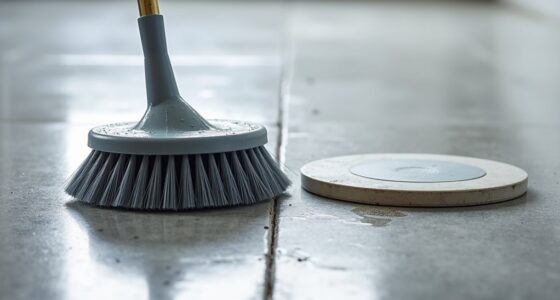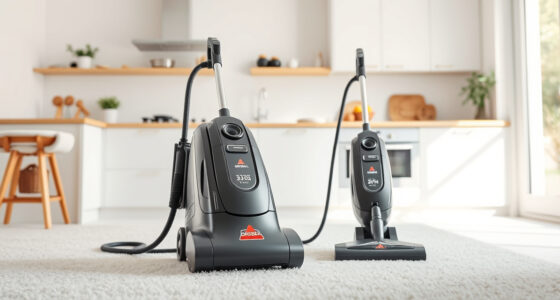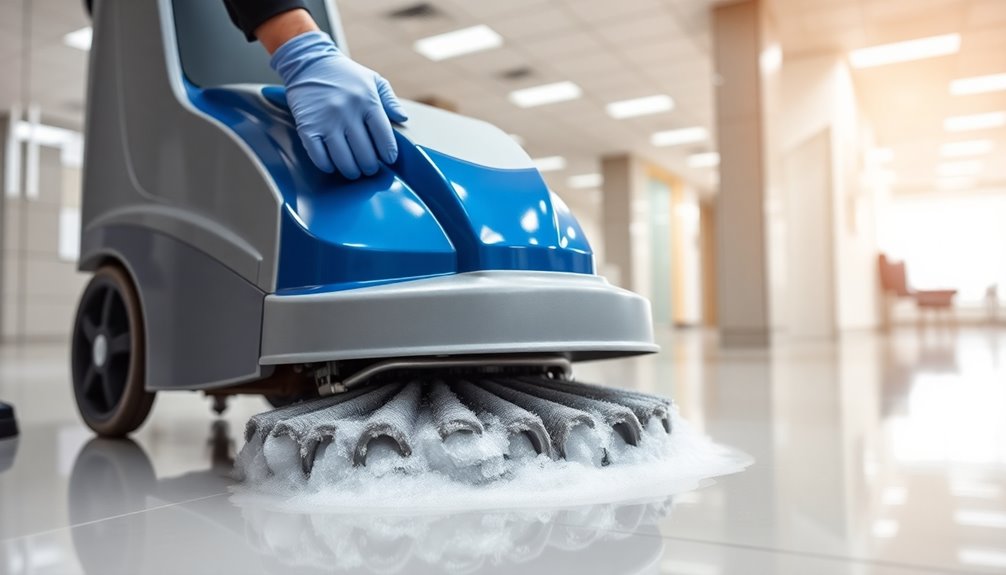

To use a floor scrubber, start by clearing the area and filling the solution tank with water, followed by the cleaning detergent. Begin cleaning from the farthest corner, moving in straight, overlapping rows to cover the entire floor. Keep an eye on the recovery tank and empty it as needed to maintain suction. After cleaning, rinse both tanks and perform maintenance. Make sure to charge it for the next use. There's more to discover about optimizing your scrubber's performance.

Get cleaning gear delivered free with Prime
- Fast, free delivery on millions of items
- Prime Video, Amazon Music and more included
- Member-only deals all year
Key Takeaways
- Prepare the cleaning area by removing obstacles and filling the solution tank with water before adding detergent to minimize foaming.
- Start cleaning from the farthest corner of the room, moving in straight, overlapping rows to ensure complete floor coverage.
- Monitor the recovery tank during cleaning and empty it as needed to maintain suction power and prevent overflow.
- After use, rinse both tanks thoroughly and perform maintenance to keep the scrubber in good condition for future use.
- Charge the scrubber fully and check for any issues before storing it in a clean, dry place for next use.

Using a floor scrubber can make your cleaning tasks much easier and more efficient. Before you dive in, ensure the cleaning area is clear of loose debris and obstacles. This step maximizes efficiency and prevents damage to your scrubber. Once the space is clear, you can prepare your equipment for action.
Start by filling the solution tank with water and the appropriate cleaning detergent according to the manufacturer's specifications. Remember, it's best to add water first to minimize foaming when you mix in the cleaning solution. This preparation sets the stage for effective cleaning and ensures your scrubber performs at its best.
When you're ready to start, begin cleaning from the corner of the room that's furthest from the exit. This strategy helps you avoid stepping on freshly cleaned areas. Move in straight, parallel rows while overlapping each pass slightly. This technique allows for thorough coverage of the floor, ensuring no spots are missed.
As you scrub, keep an eye on the recovery tank. Monitor it frequently and empty it as needed during the cleaning process. Maintaining suction power is crucial, and emptying the tank prevents overflow, which could mess up your hard work.
Once you've scrubbed the entire area, it's essential to perform proper maintenance on your equipment. After use, rinse both the recovery and solution tanks thoroughly to remove any residue and odors. This step not only keeps your scrubber clean but also extends its lifespan.
Lastly, don't forget to plug in the scrubber to charge its batteries fully. This ensures it's ready for the next cleaning session without any interruptions.
Incorporating these steps into your cleaning routine will help you use your floor scrubber effectively. You'll find that a well-maintained scrubber, combined with a systematic approach, leads to cleaner floors and less time spent on your hands and knees.
Frequently Asked Questions
How Do I Use a Floor Scrubber?
Using a floor scrubber is straightforward.
First, clear the area of any debris to avoid damage. Then, fill the solution tank with water and the right detergent.
Start cleaning from the farthest corner, working in straight lines while overlapping slightly. Keep an eye on the recovery tank and empty it as needed.
After you're done, clean both tanks thoroughly and plug in the scrubber to charge, ensuring it's ready for next time.
Do You Put Soap in a Floor Scrubber?
Yes, you can put soap in a floor scrubber to boost cleaning effectiveness.
Just make sure you follow the manufacturer's guidelines for the right detergent and dilution ratios.
Always add water first to minimize foaming, and check that the soap is compatible with your floor type to avoid damage.
After you add the detergent, securely close the solution tank and keep an eye on the levels during cleaning for the best results.
Do Floor Scrubbers Really Work?
Yes, floor scrubbers really work! They make cleaning much more efficient by combining scrubbing and drying in one step.
You'll notice a significant difference in cleanliness, as they remove dirt and grime more effectively than traditional methods.
Plus, they leave floors dry right after use, which helps reduce slip hazards.
Regular use can even prolong the lifespan of your flooring materials, making them a smart investment for maintaining your space.
Is Scrubbing the Floor Better Than Mopping?
Is scrubbing the floor really better than mopping? Absolutely!
When you scrub, you're removing dirt and bacteria more effectively than with a mop, which often just spreads grime around.
Plus, scrubbing cleans and dries surfaces in one pass, saving you time and reducing slip hazards.
In high-traffic or hygiene-sensitive areas, like hospitals, scrubbing can achieve a much higher level of cleanliness.
Conclusion
So there you have it! You've mastered the art of floor scrubbing—who knew you'd be the Picasso of polished floors? Just remember, while you're busy perfecting those swirling motions, your floors might just be plotting their revenge with every scuff and spill. But hey, at least you'll have the satisfaction of knowing you've outsmarted dirt; it's a dirty job, but someone's gotta be the superhero of sanitation. Now go forth and scrub like there's no tomorrow!
Fall Picks
fall essentials
As an affiliate, we earn on qualifying purchases.