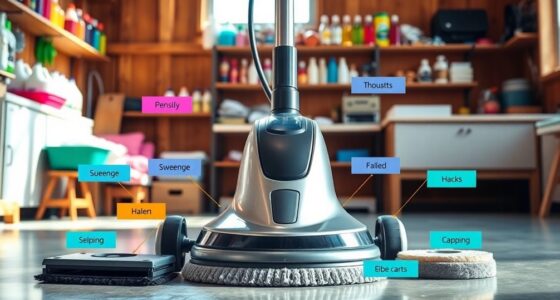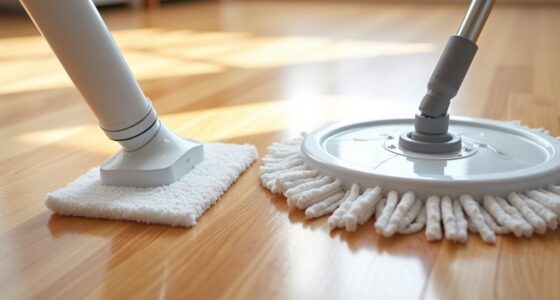
Industrial floor scrubbers are designed for large, demanding cleaning jobs, offering more power, advanced systems, and bigger coverage areas compared to small units. They have more moving parts, require more maintenance, and are built to handle heavy-duty tasks efficiently. Smaller units are simpler, easier to maintain, and suited for limited spaces. If you want to understand how these differences impact your cleaning needs, there’s more to explore.
Key Takeaways
- Industrial floor scrubbers are larger, more powerful, and designed for heavy-duty cleaning, unlike smaller units with limited capacity.
- They feature complex systems and multiple moving parts, requiring more extensive maintenance than simpler small units.
- Larger models have higher initial costs but offer better durability and efficiency for large areas.
- Small units are more suitable for limited spaces and light-duty tasks, with easier maintenance and lower upfront costs.
- The choice depends on cleaning scale, environment demands, operational capacity, and budget considerations.
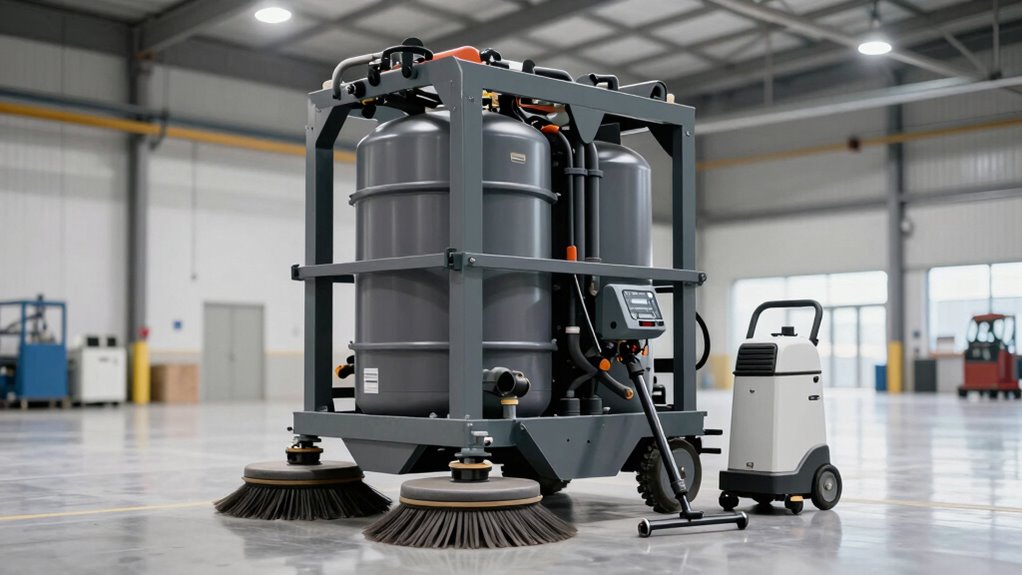
Have you ever wondered what sets different industrial floor scrubbers apart? The key differences often lie in their size, power, and capabilities, which directly impact maintenance challenges and cost considerations. Industrial units are built for large-scale cleaning, meaning they’re more robust and equipped with features designed to handle heavy-duty tasks. This increased complexity naturally brings about more maintenance challenges. You’ll find that larger models typically have more moving parts, sophisticated systems, and higher operational demands, making upkeep more involved. Regular maintenance becomes essential to keep them functioning efficiently, and neglecting this can lead to costly repairs or downtime. It’s important to factor in the time, effort, and expense needed for proper maintenance when choosing between an industrial floor scrubber and a smaller unit. Additionally, industrial equipment durability plays a crucial role in determining long-term cost-effectiveness, as more durable models tend to require less frequent repairs. Proper understanding of meticulous maintenance practices can significantly extend the lifespan of these machines and improve their overall performance. In some cases, investing in preventive maintenance can help avoid unexpected breakdowns and reduce overall operational costs. Moreover, understanding the operational demands of large-scale equipment helps in planning for adequate staffing and resources. Recognizing the importance of training and proper use can also contribute to longer equipment lifespan and optimal performance.
Industrial scrubbers are larger, more complex, and require more maintenance than smaller units.
On the other hand, smaller floor scrubbers are generally simpler in design, making them easier to maintain. They often have fewer components, which means less that can go wrong, and their repairs tend to be quicker and less costly. If your cleaning needs are limited to smaller areas or less frequent use, a small unit might be more cost-effective in the long run. You’ll likely spend less on initial purchase, maintenance, and repairs. However, it’s also worth noting that smaller units might not have the same power, battery life, or coverage capacity as their larger counterparts, which could lead to increased operational costs if you need to run multiple shifts or cover extensive areas.
When weighing cost considerations, larger industrial scrubbers often come with a higher upfront price tag, but they can save you money over time by boosting productivity and reducing the number of cleaning sessions needed. They’re designed for durability and extended use, which means investing in quality maintenance can prolong their lifespan. Conversely, smaller units tend to be more affordable initially, but if they’re used repeatedly over large spaces, they might wear out faster or require more frequent replacements, adding to overall costs.
In essence, choosing between an industrial floor scrubber and a smaller unit hinges on your specific cleaning requirements and budget. Larger models excel in handling heavy-duty, large-area cleaning but demand more involved maintenance and higher initial investment. Smaller units are easier to keep in working order and cost less upfront, but they might not be suitable for extensive or demanding environments. Understanding these differences helps you make a smarter decision, ensuring your cleaning equipment aligns with your operational needs and financial considerations.
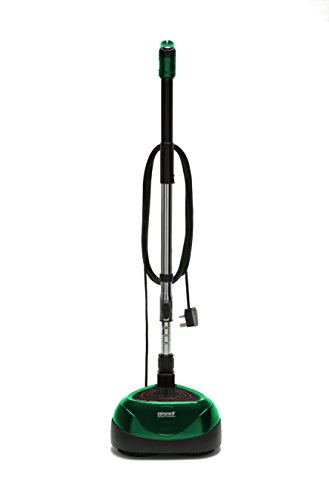
Bissell Commercial BigGreen BGFS650 Hercules Scrub and Clean Floor Machine, Green
Brush Speed (Rpm): 2200 Rpm
As an affiliate, we earn on qualifying purchases.
As an affiliate, we earn on qualifying purchases.
Frequently Asked Questions
Are Industrial Floor Scrubbers Suitable for Both Indoor and Outdoor Use?
Yes, industrial floor scrubbers are suitable for both indoor and outdoor use. They feature outdoor durability, allowing them to handle rougher surfaces and weather conditions outside. At the same time, their indoor versatility lets you clean large, hard floors efficiently. These machines are built to adapt to various environments, making them ideal for all-encompassing cleaning tasks across different settings without needing separate equipment.
How Long Is the Typical Lifespan of an Industrial Floor Scrubber?
Think of an industrial floor scrubber as a reliable workhorse, often lasting 7 to 10 years with proper maintenance. Its durability comparison to smaller units shows stronger build quality, making it a wise investment. When you consider the cost analysis, remember that a longer lifespan signifies fewer replacements and repairs, saving you money over time. Regular upkeep guarantees your scrubber remains a steadfast partner in keeping your floors spotless.
Can Small Units Be Upgraded to Industrial-Grade Performance?
Yes, small units can often be upgraded to industrial-grade performance through performance upgrades and capacity enhancements. You can boost their motor power, extend battery life, or add more durable components to handle tougher cleaning tasks. Upgrading filters or increasing water tank capacity also improves efficiency. These modifications help small units better meet industrial standards, making them more suitable for demanding environments without needing a complete replacement.
What Are the Most Common Maintenance Requirements for Industrial Scrubbers?
Maintenance must-minds for industrial scrubbers include meticulous battery maintenance and frequent filter replacement. You should regularly check battery connections to prevent power problems, ensuring consistent cleaning performance. Additionally, replacing filters keeps debris and dust at bay, maintaining peak suction and scrubbing efficiency. Staying on top of these tasks prolongs your scrubber’s lifespan, maximizes productivity, and minimizes downtime, making your cleaning operation smoother and more efficient.
How Does Operator Training Differ Between Small and Industrial Floor Scrubbers?
With industrial floor scrubbers, operator training emphasizes safety and ergonomic design, ensuring you understand complex controls and safety protocols. You’ll learn how to operate larger, more powerful machines safely, minimizing risks. Training covers proper handling to prevent injuries, plus how to adjust ergonomic features for comfort during extended use. In contrast, small units require simpler instruction, focusing mainly on basic operation, making operator safety and ergonomic considerations more integral in industrial settings.

Battery Powered Walk Behind Mini Automatic Floor Scrubber Machine – Compact & Portable, 15” Cleaning Width, 90-Minute Runtime, 170 RPM – Ideal for Small Commercial Spaces, Offices, Retail & More
Compact & Efficient Cleaning – Designed for small commercial spaces, this mini automatic floor scrubber features a 15-inch…
As an affiliate, we earn on qualifying purchases.
As an affiliate, we earn on qualifying purchases.
Conclusion
In conclusion, choosing an industrial floor scrubber over a small unit means you’ll benefit from greater power, larger capacity, and durability for demanding environments. For example, a warehouse handling heavy debris saw increased efficiency and cost savings after switching to an industrial model. If your facility requires frequent, extensive cleaning, investing in an industrial scrubber guarantees thorough, reliable results. Don’t underestimate the value of the right equipment—it’s the key to maintaining a safe, spotless workspace.

Global Industrial Corded Low Speed Floor Machine, 20" Cleaning Path, Durable Stainless Steel Construction, Heavy-Duty 1.5 HP Motor, 50'L Safety GFCI Power Cord
Constructed from stainless steel, this durable machine provides users with a 20" cleaning path for greater coverage in…
As an affiliate, we earn on qualifying purchases.
As an affiliate, we earn on qualifying purchases.

RT15AC 14“ Walk Behind Floor Scrubber Dryer Machine for Industrial Commercial Use, 4-Gal Tank, 26-ft Power Cord
Compact and Maneuverable: With a 14-inch brush cleaning width and 18-inch squeegee, it easily navigates through tight spaces,…
As an affiliate, we earn on qualifying purchases.
As an affiliate, we earn on qualifying purchases.