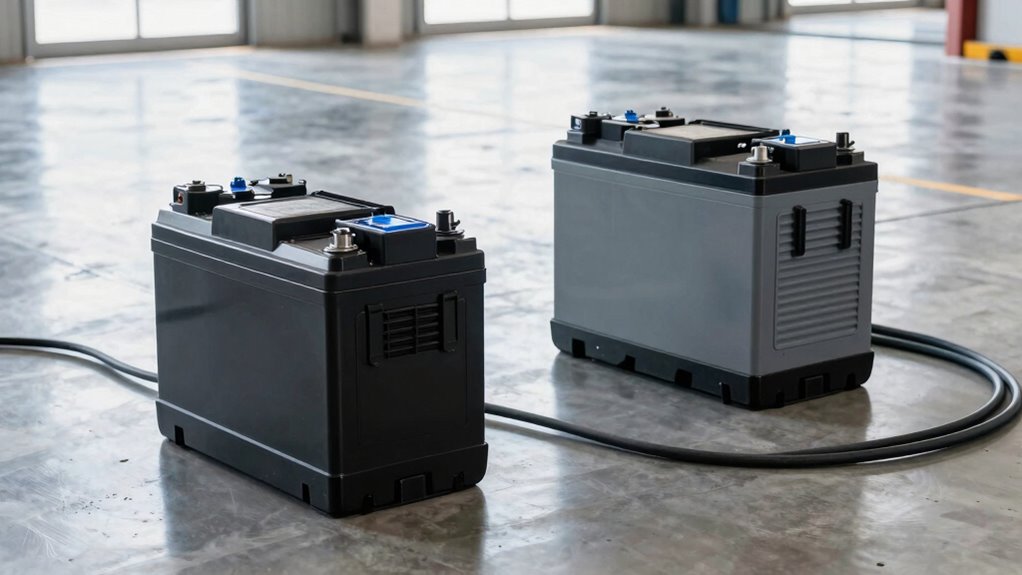

Choosing between lithium and lead-acid batteries for your floor scrubber fleet depends on your priorities. Lithium batteries offer higher energy density, faster charging, and longer lifespan, which means less downtime and lower maintenance costs over time. Although they come with a higher upfront price, the long-term savings and environmental benefits often outweigh initial costs. To discover how each option can optimize your operations and budget, continue exploring the key differences.

Get cleaning gear delivered free — and shop member deals
- Fast, free delivery on millions of items
- Access to Prime Big Deal Days deals on October 6–7
- Prime Video, Amazon Music and more included
Key Takeaways
- Lithium batteries offer higher energy density, supporting longer operating hours and faster charging for floor scrubber fleets.
- Lower maintenance and longer lifespan of lithium batteries reduce total ownership costs over time.
- Initial costs are higher for lithium, but long-term savings stem from fewer replacements and lower maintenance expenses.
- Lithium batteries are more environmentally friendly and easier to recycle than lead-acid counterparts.
- Supply chain considerations and infrastructure upgrades influence the feasibility of adopting lithium batteries for fleets.
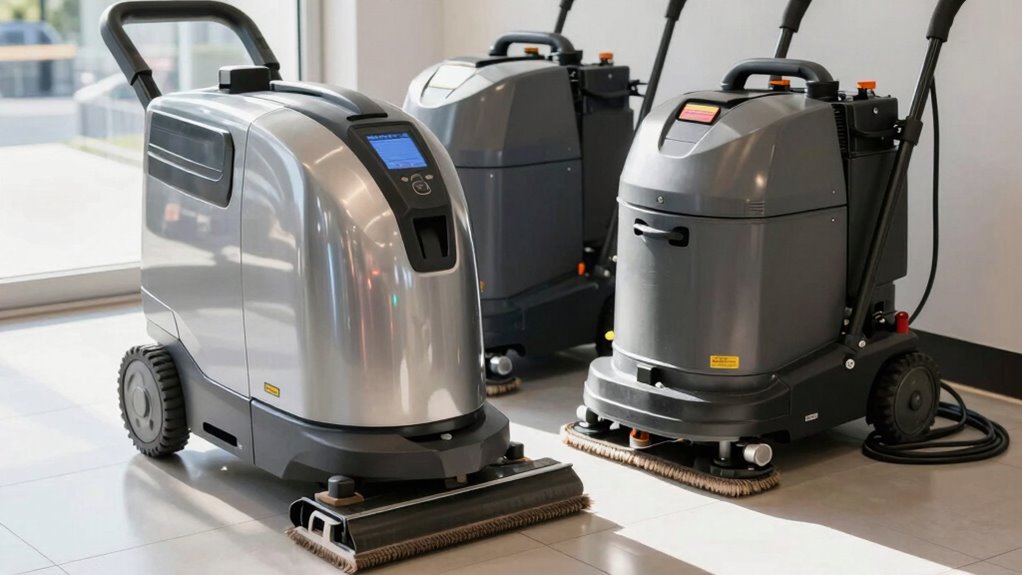
When choosing batteries for your floor scrubber fleet, understanding the differences between lithium and lead-acid options can substantially impact your operations. Both types serve the same purpose—powering your equipment—but they differ significantly in performance, maintenance, and overall cost-effectiveness. Lithium batteries are lightweight, have a higher energy density, and charge faster, making them ideal for businesses that need quick turnaround times and longer operating hours. Lead-acid batteries, on the other hand, are more traditional, generally less expensive upfront, but they tend to be heavier, require more frequent maintenance, and have a shorter lifespan. Your decision will influence not only daily operations but also your long-term sustainability strategies, including considerations like battery recycling and the necessary charging infrastructure.
Lithium batteries offer a substantial advantage in terms of charging infrastructure. They support fast-charging options, allowing your team to replenish power during short breaks, increasing overall productivity. This is especially important if your fleet operates across large facilities or multiple shifts. Additionally, lithium batteries typically have a longer cycle life, meaning you’ll replace them less frequently, which can lead to cost savings over time. Their reduced weight also minimizes wear and tear on your equipment, prolonging the lifespan of your scrubbers. When considering battery recycling, lithium batteries are more environmentally friendly in the long run because they contain fewer toxic materials and are easier to recycle compared to lead-acid batteries. Many manufacturers now offer recycling programs specifically for lithium batteries, helping your business stay compliant with environmental regulations and reduce waste. Moreover, the environmental impact of lithium batteries tends to be lower due to their cleaner manufacturing processes and recyclability. The availability of recycling infrastructure further supports their sustainability benefits. Additionally, advancements in lithium battery technology continue to improve their performance and sustainability profiles, making them an increasingly attractive choice for industrial equipment. Being aware of the global supply chain for lithium is also important, as it can affect availability and pricing.
Lead-acid batteries still hold some appeal due to their initial lower cost and established infrastructure. They are compatible with existing charging stations and are easier to replace without significant upgrades to your current charging infrastructure. However, they demand regular maintenance such as watering and equalization charges, which can increase labor costs and downtime. Their shorter lifespan means you’ll need to invest in replacements more often, and disposal becomes a bigger concern, especially since they contain sulfuric acid and lead, which pose environmental risks if not properly recycled. While the recycling process for lead-acid batteries is well-established, it still involves handling hazardous materials, requiring proper procedures to ensure environmental safety. The ongoing availability of recycling facilities for lead-acid batteries ensures that proper disposal can be managed, but it remains a critical aspect to consider for environmentally responsible operations.
Ultimately, your choice depends on your operational priorities, budget, and environmental commitments. Lithium batteries may have a higher upfront cost but offer long-term savings and sustainability benefits, especially with advanced charging infrastructure and battery recycling options. Lead-acid batteries can be a cost-effective solution for smaller fleets or operations with limited infrastructure upgrades but may incur higher maintenance and replacement costs over time. Weighing these factors carefully will help you select the optimal power source for your floor scrubber fleet, ensuring efficiency and environmental responsibility.
Lithium battery for floor scrubber
As an affiliate, we earn on qualifying purchases.
As an affiliate, we earn on qualifying purchases.
Frequently Asked Questions
How Do Lithium and Lead-Acid Batteries Compare in Initial Cost?
You’ll find lithium batteries have a higher initial cost compared to lead-acid batteries. However, lithium batteries typically offer better battery longevity and charging efficiency, which can save you money over time. Although the upfront investment is higher, the longer lifespan and faster charging might reduce replacement and downtime costs, making lithium a more cost-effective choice for your floor scrubber fleet in the long run.
What Are the Environmental Impacts of Each Battery Type?
You’ll find lithium batteries have a lower environmental impact overall because they produce fewer toxic materials during use. However, their recycling process can be more complex and costly, and improper disposal risks releasing toxic materials. Lead-acid batteries are more straightforward to recycle but contain hazardous materials like lead, which can contaminate the environment if not handled properly. Proper battery recycling is essential for both types to minimize environmental harm.
How Do Maintenance Requirements Differ Between Lithium and Lead-Acid Batteries?
Think of maintaining batteries like caring for two different garden plants. Lithium batteries require less frequent watering and pruning, so you’ll enjoy a longer battery lifespan with minimal maintenance. Lead-acid batteries, however, need regular watering and cleaning, demanding more attention. You’ll also need a robust charging infrastructure for lithium batteries, but they save you time and effort in the long run. Overall, lithium batteries simplify maintenance, extending lifespan and reducing downtime.
Are There Compatibility Issues With Existing Floor Scrubber Models?
You might face compatibility issues with existing floor scrubber models when switching to lithium batteries, especially regarding charging infrastructure and battery recycling. Lithium batteries often require specialized chargers and different connectors, so you’ll need to upgrade your charging stations. Also, guarantee your current models support lithium battery integration to avoid operational hiccups. Properly evaluating these factors helps you smoothly shift without disrupting your fleet’s efficiency or compliance with recycling regulations.
What Are the Safety Considerations for Each Battery Type?
You’re risking a wildfire if safety isn’t a priority. Lithium batteries pose fire hazards if damaged or improperly handled, requiring strict safety protocols and proper storage. Lead-acid batteries, while less volatile, contain hazardous materials needing careful disposal and recycling. Both types demand vigilance—avoid short circuits and leaks. Prioritize safety by following battery recycling guidelines and investing in training to prevent accidents and protect your team and environment.
Conclusion
Choosing between lithium and lead-acid batteries is like weighing the promise of the future against the comfort of the past. Lithium’s quick charge and longer lifespan beckon you towards innovation, much like the modern muse calling artists to create anew. Lead-acid, while reliable, echoes the familiar tunes of tradition. Ultimately, your choice shapes your fleet’s destiny—embrace the future now, and let your floors shine as brightly as the dawn of a new day.
Fall Picks
fall essentials
As an affiliate, we earn on qualifying purchases.