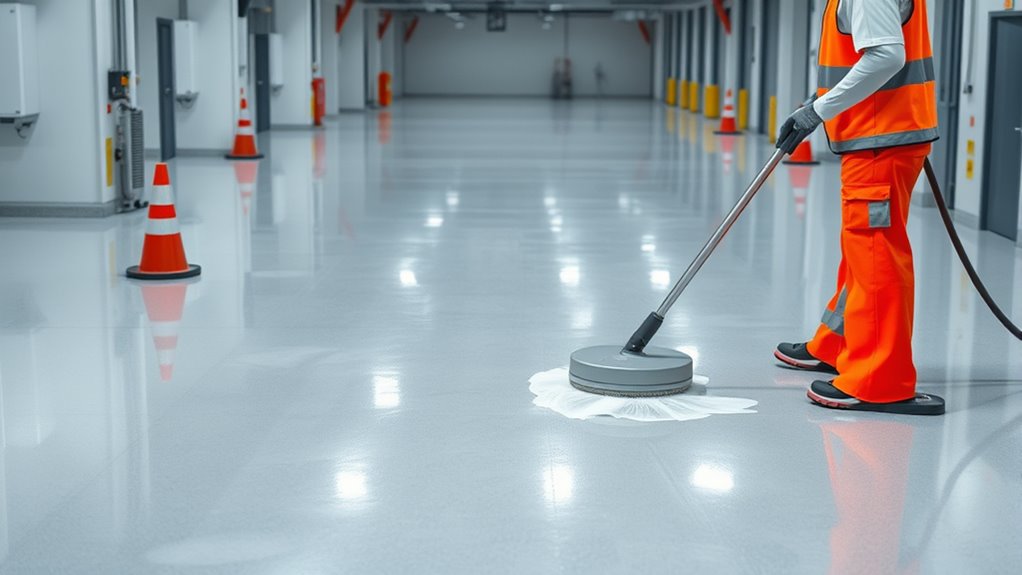

By using low-moisture scrubbing, you greatly reduce slip-and-fall risks because floors dry quickly and stay safer for longer. This method minimizes wet surfaces, which are the main cause of slips, and ensures a cleaner environment with less water and harsh chemicals. Implementing this technique can cut incidents by up to 42%, helping you create a safer space. If you want to discover how this approach works and benefits your facility, keep exploring the details.
Key Takeaways
- Low-moisture scrubbing dries floors quickly, significantly reducing slip-and-fall hazards.
- It minimizes wet floor exposure time, decreasing the likelihood of slips by up to 42%.
- The method combines effective cleaning with rapid drying, enhancing overall safety protocols.
- Proper staff training ensures consistent application, maintaining low moisture levels and safety standards.
- Using specialized equipment for low-moisture cleaning improves safety outcomes and reduces accident risks.
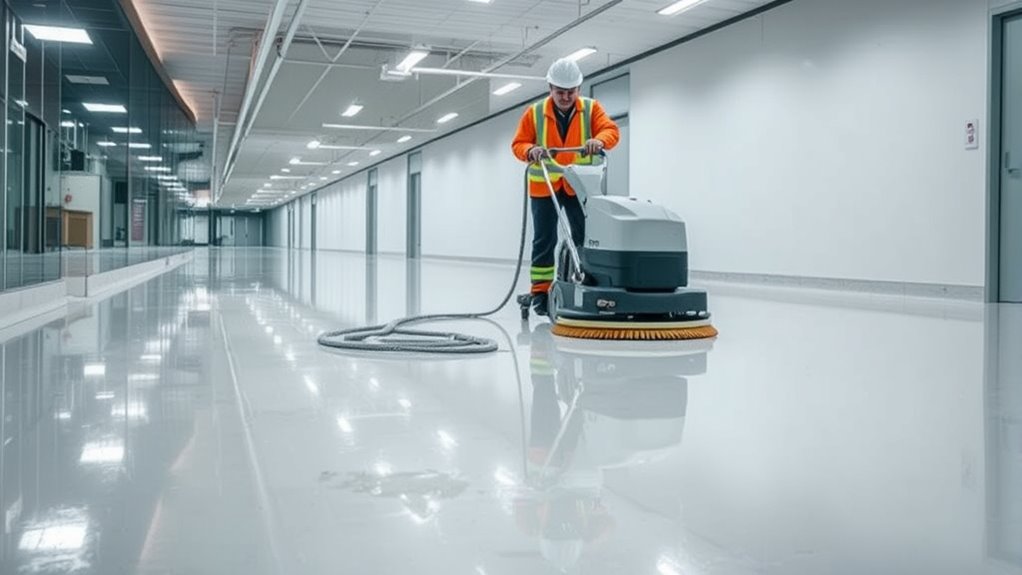
Maintaining dry floors is essential for preventing slip-and-fall accidents, and low-moisture scrubbing methods make this easier than ever. When you prioritize floor safety, you’re actively reducing the risk of slips, trips, and falls that can cause injuries and liability issues. Traditional cleaning methods often leave floors wet for extended periods, increasing danger and complicating cleaning protocols. In contrast, low-moisture scrubbing uses minimal water, which dries quickly, ensuring your floors stay safer for longer. This approach not only enhances safety but also streamlines your cleaning routines, making them more efficient and effective.
Implementing low-moisture scrubbing techniques requires you to adjust your cleaning protocols. Instead of soaking floors with large amounts of water and harsh chemicals, you use specialized equipment designed to clean effectively with less moisture. These machines typically combine cleaning solutions with agitation and extraction, removing dirt and grime while leaving behind a fraction of the water used in traditional methods. As a result, the floors dry faster, minimizing the window during which they might be slippery. This not only protects visitors and employees but also reduces downtime for cleaning, allowing spaces to be used sooner.
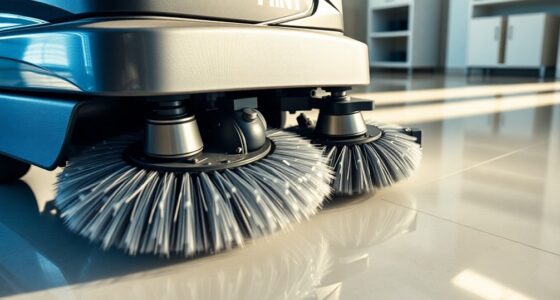
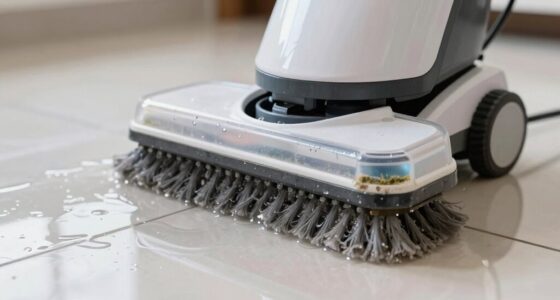
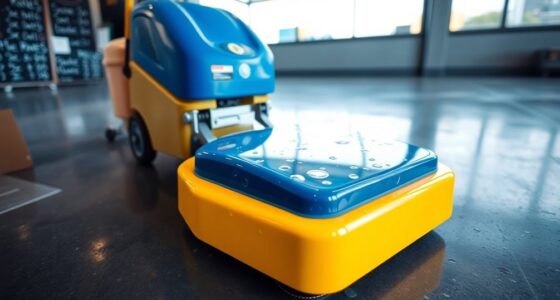
Low-moisture scrubbing uses specialized equipment to clean effectively while ensuring faster floor drying and safety.
Adopting such methods means you need to train your staff on proper procedures and the importance of floor safety. Your team should understand that the goal isn’t just cleanliness but also creating a safe environment. Clear cleaning protocols should emphasize thoroughness with minimal moisture, ensuring every area is sanitized without the residual wetness that can cause accidents. Regular maintenance and monitoring are key to ensuring these protocols are followed consistently, which in turn lowers the overall slip-and-fall risk by a notable margin. The data shows that low-moisture scrubbing can cut slip-and-fall incidents by up to 42%, highlighting its impact when properly integrated into your safety and cleaning strategies.
Furthermore, adopting low-moisture cleaning methods demonstrates your commitment to safety and operational excellence. It reduces the need for aggressive chemicals or excessive water use, aligning with sustainable practices and reducing environmental impact. Using specialized equipment designed for low-moisture scrubbing ensures optimal cleaning performance with minimal water. The quicker drying times also mean your floors are safer sooner, which is especially important in high-traffic areas like hospitals, schools, and commercial buildings. Overall, by refining your cleaning protocols to include low-moisture scrubbing, you enhance floor safety, reduce hazards, and create an environment where slips and falls are markedly less likely. With consistent application and staff training, you make a measurable difference in safety outcomes and operational efficiency, all while maintaining a clean and professional appearance.
Frequently Asked Questions
What Types of Flooring Are Compatible With Low-Moisture Scrubbing?
When considering types of flooring for low-moisture scrubbing, you should focus on flooring compatibility to guarantee safety and effectiveness. Most resilient surfaces like vinyl, tile, sealed concrete, and sealed wood are compatible because they withstand minimal moisture without damage. Avoid unsealed wood or porous materials, which can absorb moisture and deteriorate. Always verify the manufacturer’s guidelines to select the best flooring type for low-moisture cleaning methods.
How Often Should Low-Moisture Scrubbing Be Performed for Optimal Safety?
Think of cleaning frequency as your safety net—regular checks catch issues before they cause accidents. For maximum safety, you should perform low-moisture scrubbing at least three times a week, depending on foot traffic. Incorporate it into your safety protocols to maintain clean, slip-resistant floors. Consistent cleaning reduces hazards, keeps your environment safe, and minimizes slip-and-fall risks, just like a well-maintained safety net.
Does Low-Moisture Scrubbing Affect the Longevity of Flooring Materials?
When considering flooring maintenance, you might wonder if low-moisture scrubbing affects your floors’ longevity. Generally, this method minimizes moisture impact, reducing water-related damage and wear over time. Since it uses less water than traditional cleaning, it helps preserve the integrity of your flooring materials. You’ll find that low-moisture scrubbing not only keeps your floors cleaner but also extends their lifespan, making it an effective, long-term maintenance choice.
Are There Environmental Benefits Associated With Low-Moisture Scrubbing?
You might be interested to know that low-moisture scrubbing reduces chemical use by up to 90%, making it environmentally friendly. This method promotes water conservation by using minimal water, which helps preserve resources. Plus, it cuts down on harmful runoff and chemical waste, benefiting ecosystems. By choosing low-moisture scrubbing, you’re supporting sustainable practices that protect the environment while maintaining clean, safe floors efficiently.
What Training Is Required for Staff to Properly Perform Low-Moisture Scrubbing?
To guarantee effective low-moisture scrubbing, you need proper training on technique and safety protocols. You should learn how to operate equipment correctly, apply the right amount of moisture, and avoid hazards like slips or equipment misuse. Your training should include step-by-step instructions, safety guidelines, and hands-on practice. Following these protocols helps you perform the task efficiently while maintaining safety for yourself and others.
Conclusion
By choosing low-moisture scrubbing, you’re effectively turning the tide against slip-and-fall accidents, reducing risks by 42%. It’s like installing a sturdy safety net beneath your feet, catching potential hazards before they cause harm. With this simple yet powerful change, you create a safer environment that flows smoothly and confidently. Embrace low-moisture scrubbing, and watch your safety measures rise like a shield, keeping everyone on solid ground.