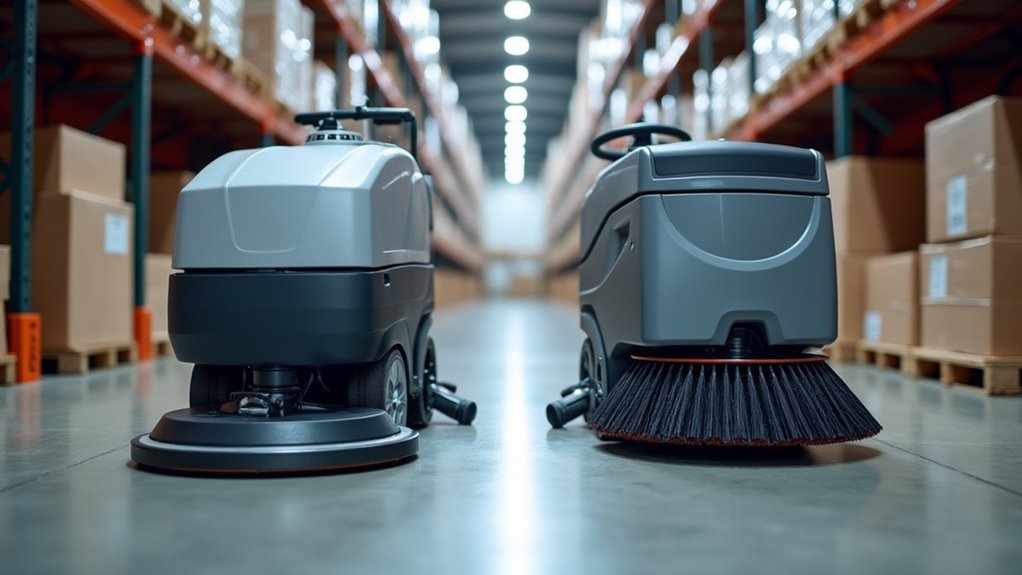

When setting up your auto-scrubber for warehouse aisles, choosing between pads and brushes depends on your cleaning needs. Pads are softer and ideal for delicate surfaces or light tasks, reducing surface damage. Brushes are more aggressive, perfect for heavy-duty scrubbing and stubborn grime removal. Proper attachment and surface consideration make certain of effective cleaning without damage. Keep these tips in mind, and you’ll find it easier to optimize your setup—keep exploring for more helpful details.
Key Takeaways
- Use pads for delicate warehouse floors or light cleaning tasks to prevent surface damage.
- Select brushes for heavy-duty scrubbing of stubborn dirt and grime in high-traffic aisles.
- Ensure proper attachment and secure fit of either pad or brush to prevent detachment during operation.
- Match attachment type to surface type to optimize cleaning efficiency and floor safety.
- Regularly inspect and replace worn pads or brushes to maintain optimal cleaning performance.
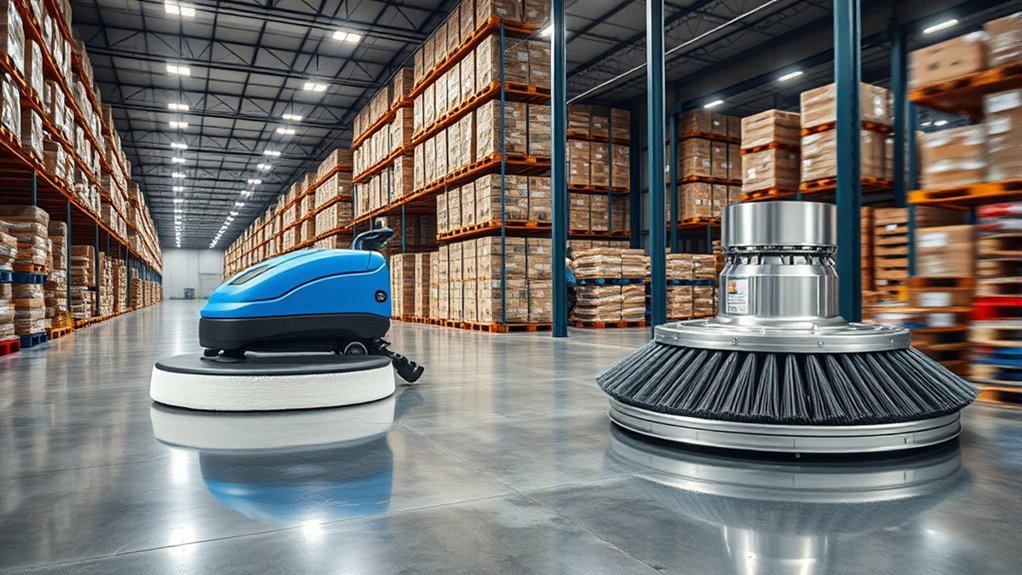
Setting up your auto-scrubber correctly is essential for efficient cleaning and ideal performance. One of the first steps is selecting the right pad or brush, but equally important is ensuring that your machine’s battery life is maximized and safety protocols are in place. Properly maintaining your battery not only extends its lifespan but also guarantees consistent power during operation, preventing unexpected shutdowns that could disrupt your cleaning schedule. Before starting, make sure the battery is fully charged and that you’re following the manufacturer’s guidelines for charging cycles to preserve its longevity.
Proper battery maintenance ensures reliable power and extends the lifespan of your auto-scrubber.
When it comes to safety, always wear appropriate personal protective equipment and familiarize yourself with the safety protocols outlined in the user manual. These protocols often include checking for any leaks, ensuring that all covers and guards are securely in place, and verifying that the machine is in good working condition. Proper safety measures protect you from potential hazards, such as electrical shocks or mechanical malfunctions, and ensure that the auto-scrubber operates smoothly throughout its use. Additionally, understanding the battery technology used in your machine can help you better manage its charging and maintenance routines.
Choosing between a pad or a brush depends on your specific cleaning needs. Pads are generally softer and better suited for delicate floors or light maintenance tasks. They provide a gentler approach, reducing the risk of surface damage, especially on sensitive materials like vinyl or sealed concrete. Brushes, on the other hand, are more aggressive and effective for heavy-duty scrubbing, removing stubborn dirt, grime, or built-up residues. They are ideal for heavily soiled warehouse aisles where deep cleaning is necessary. When setting up your scrubber, consider the type of surface you’ll be cleaning to select the most appropriate attachment, which directly impacts cleaning efficiency and surface safety.
Installing the right pad or brush involves ensuring it’s securely attached to prevent detachment during operation. Proper attachment not only improves cleaning effectiveness but also reduces the risk of accidents. Always double-check that the attachment is correctly aligned and locked into place before powering on the machine. Additionally, regularly inspecting the pad or brush for wear and tear helps maintain maximum cleaning performance and prevents damage to your floors.
Frequently Asked Questions
How Often Should I Replace the Pads or Brushes?
You should replace your pads or brushes when you notice reduced cleaning performance or visible wear. Generally, pads have good durability and can last several months with regular use, while brushes tend to have a shorter lifespan. Check your operator’s manual for specific recommendations, but regularly inspecting for damage or excessive wear guarantees peak cleaning. Replacing them timely maintains cleaning efficiency and prevents damage to your equipment.
Can Different Pad Types Be Mixed During Operation?
You shouldn’t mix different pad types during operation because of pad compatibility issues. Using incompatible pads can damage your auto-scrubber or reduce cleaning efficiency. Stick to the same pad type, whether you’re using soft pads, scrub brushes, or abrasive pads. Always check the manufacturer’s guidelines for compatible brush types and pad options to guarantee peak performance and prevent unnecessary wear or damage to your equipment.
What Maintenance Is Required After Each Cleaning Session?
Think of your auto-scrubber as a trusty steed needing care after every ride. You should inspect the brushes for wear and debris, making sure they’re in top shape, and perform pad maintenance by cleaning or replacing pads as needed. Clearing out dirt and buildup prevents future issues, keeps it running smoothly, and extends its lifespan. Regularly checking these components ensures your equipment’s always ready for the next cleaning adventure.
Are There Specific Safety Precautions for Setup Adjustments?
You should always wear safety gear like gloves and goggles when making setup adjustments to prevent injuries. Before adjusting the pad or brush, make sure the machine is turned off and unplugged. Familiarize yourself with emergency procedures, such as how to quickly shut down the equipment if needed. Prioritize safety by double-checking that all parts are securely attached and that no loose components could cause accidents during operation.
How Do I Troubleshoot Uneven Cleaning Results?
Ever wonder why some areas stay dirty while others shine? You should check your pad wear and brush alignment first. Uneven cleaning often comes from a worn-out pad or misaligned brushes causing inconsistent scrubbing pressure. Adjust the brushes properly and replace the pad if it shows signs of excessive wear. Regularly inspecting these parts guarantees even results and keeps your warehouse floors spotless.
Conclusion
Choosing between a pad and a brush for your auto-scrubber is like selecting the right key to open a spotless warehouse. Each tool symbolizes a different path—smooth, glossy floors or rugged, textured grit—guiding your cleaning journey. By understanding their roles, you guarantee your aisles shine like a well-tuned symphony. Ultimately, your decision becomes the compass that leads to a cleaner, safer environment, turning your warehouse into a shining beacon of efficiency.