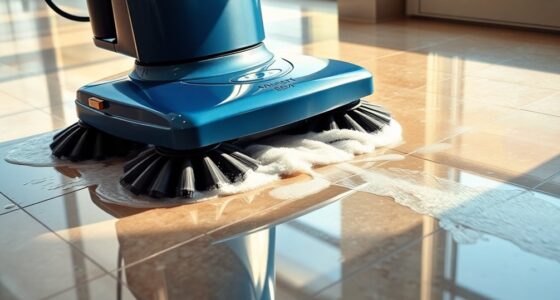

Pre-sweeping natural stone is essential to protect its surface from scratches, stains, and damage caused by loose dirt and debris. By removing dust first, you help preserve the stone’s natural beauty, maintain its luster, and make cleaning more effective. Skipping this step can lead to scratches, dull spots, and faster deterioration over time. Keep this in mind—learning more will help you care for your stone surfaces even better.
Key Takeaways
- Always pre-sweep natural stone surfaces to remove loose dirt and debris before cleaning or sealing.
- Skipping pre-sweep increases the risk of scratches, stains, and surface dullness over time.
- Pre-sweeping helps preserve the stone’s natural luster and structural integrity.
- Use soft-bristled tools during pre-sweep to prevent surface damage.
- Incorporate pre-sweeping regularly for efficient, cost-effective maintenance and longer-lasting stone surfaces.

Have you ever wondered why a thorough pre-sweep is essential before working on natural stone surfaces? The truth is, it plays a crucial role in maintaining the integrity and appearance of your stone. Dust control is one of the main reasons to start with a pre-sweep. Natural stone surfaces are porous and susceptible to scratching or staining if debris is left on the surface. Dust and loose dirt can easily get embedded into the stone during cleaning, causing surface damage over time. By pre-sweeping, you effectively remove these particles, preventing unnecessary scratches and preserving the stone’s natural beauty.
Additionally, pre-sweeping helps you manage cleaning frequency more efficiently. Without removing loose debris beforehand, you might find yourself performing more intensive cleaning sessions later, which could be unnecessary if the surface was properly cleared first. Regularly sweeping the surface minimizes the need for harsher cleaning methods and reduces the wear and tear on your cleaning tools. This makes your overall cleaning routine more sustainable, saving you time, effort, and money in the long run.
When you’re planning to clean natural stone, it’s tempting to jump straight into mopping or scrubbing, but skipping the pre-sweep can lead to complications. Dust and dirt on the surface can cause abrasive damage when you use brushes or mop heads, especially if they’re not soft enough. Over time, this damage becomes visible as dull spots or tiny scratches, diminishing the natural luster of the stone. Using a soft-bristled broom or a vacuum designed for delicate surfaces ensures you effectively remove fine dust without risking harm.
The importance of pre-sweeping is also tied to the type of cleaning you’re doing. For routine maintenance, a quick pre-sweep is usually sufficient to keep dirt at bay. But if you’re preparing for deeper cleaning or sealing, a thorough pre-sweep becomes even more critical. It guarantees that no loose dirt or debris interferes with the process, allowing the cleaning agents or sealants to work more effectively. This step not only prolongs the life of your natural stone but also maintains its polished and refined appearance.
In short, a pre-sweep isn’t just an extra step — it’s a vital part of your cleaning routine for natural stone surfaces. It controls dust, reduces damage, and optimizes cleaning frequency. By incorporating it into your regular maintenance, you’ll keep your stone looking its best for years to come. Proper dust control is essential in preventing surface damage and preserving the natural beauty of your stone.
Frequently Asked Questions
Can I Use a Vacuum Instead of Sweeping Natural Stone?
You can use a vacuum instead of sweeping natural stone, but consider vacuum alternatives designed for delicate surfaces to avoid scratches. Regular vacuuming can be effective if you maintain a consistent sweeping frequency to prevent dirt buildup. Just guarantee your vacuum’s brush or attachment is gentle enough for natural stone, and avoid using high-powered settings that could damage the surface. This way, you keep your stone clean without risking harm.
How Often Should I Pre-Sweep Natural Stone Floors?
Think of your natural stone floor as a canvas awaiting a masterpiece; dust removal and debris clearance are your first strokes. You should pre-sweep before every major cleaning, ideally weekly, to prevent grit from grinding into the surface. Regular dust removal maintains your natural stone looking its best and preserves its integrity. By staying consistent, you ensure your floor remains radiant and damage-free over time.
Is Pre-Sweeping Necessary Before All Cleaning Methods?
Yes, pre-sweeping is necessary before all cleaning methods. You should prioritize dust removal and debris clearance to prevent scratching and damage to natural stone surfaces. By removing loose dirt and debris first, you guarantee the cleaning process is more effective and gentle. Skipping pre-sweeping can push debris into the stone’s pores or cause scratches, so always start with a thorough sweep to protect your natural stone floors.
What Tools Are Best for Pre-Sweeping Natural Stone?
They say “A clean start is half the work,” so you’ll want the right tools for dust removal and debris clearance. Use a soft-bristled broom or a microfiber dust mop to gently sweep natural stone. A vacuum with a brush attachment also works well for thorough dust removal without scratching the surface. These tools help you prep the stone properly, ensuring your cleaning is effective and safe.
Does Pre-Sweeping Damage Delicate Natural Stone Surfaces?
Pre-sweeping generally doesn’t damage delicate natural stone surfaces if you use the right tools. Gentle dust removal prevents dirt from scratching the surface later. Avoid using harsh bristles or stiff brooms, as they can cause surface scratching. Instead, opt for soft brushes or microfiber dust mops to keep your natural stone looking pristine without risking damage from abrasive dust or aggressive cleaning tools.
Conclusion
Think of your natural stone like a delicate garden. A quick pre-sweep is the gentle gardener’s hand, clearing away debris to protect the vibrant blooms beneath. Skipping this step is like neglecting the gardener’s care, risking damage to your stones’ beauty. So, embrace the pre-sweep as your secret to keeping your natural stone shining and resilient. With this simple act, you’re nurturing your stone garden, ensuring it stays stunning for years to come.