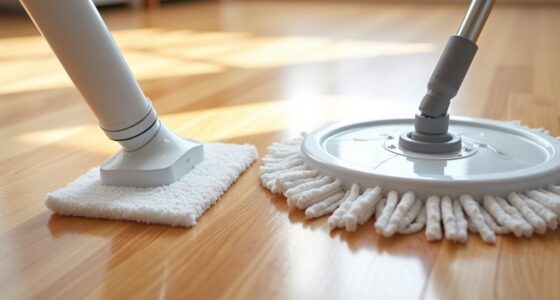
Pre-sweep removes loose dirt and debris, making the surface ready for deeper cleaning, while pre-scrub targets stubborn grime and stains that sweeping alone can’t remove. Following the proper sequence guarantees dirt doesn’t get pushed around or embedded deeper into surfaces, leading to more effective results. Skipping pre-sweep can reduce cleaning efficiency, and rushing into pre-scrub might damage delicate areas. If you want to master these steps, there’s more to discover about how the right order makes all the difference.

Get cleaning gear delivered free with Prime
- Fast, free delivery on millions of items
- Prime Video, Amazon Music and more included
- Member-only deals all year
Key Takeaways
- Pre-sweep removes loose debris, making pre-scrub more effective at targeting stubborn dirt.
- Skipping pre-sweep can push debris deeper, reducing the effectiveness of pre-scrubbing.
- Proper sequence ensures cleaning agents work directly on surfaces without hindrance.
- Starting with pre-sweep prepares surfaces, allowing pre-scrub to focus on embedded grime.
- The sequence optimizes cleaning efficiency, prolongs surface lifespan, and maintains hygiene.

When preparing a space for cleaning or maintenance, understanding the difference between pre-sweep and pre-scrub is vital. These initial steps set the foundation for effective cleaning, impacting how well the surface responds to subsequent cleaning techniques. Pre-sweep involves removing loose debris, dirt, and dust from the surface’s surface, which prevents particles from smudging or embedding during deeper cleaning. It’s a quick, straightforward process that clears the way for more intensive cleaning methods. Conversely, pre-scrub targets the removal of stubborn residues, stains, and grime that aren’t easily dislodged by sweeping alone. It’s a more aggressive step, involving the application of cleaning agents and physical agitation, such as scrubbing brushes or pads, to loosen embedded dirt.
Knowing when and how to use pre-sweep versus pre-scrub is vital for surface preparation. If you skip pre-sweep and jump straight into pre-scrubbing, you risk pushing dirt further into the surface or spreading bacteria and allergens around. This can make the cleaning less effective and even damage delicate surfaces. On the other hand, starting with a thorough pre-sweep ensures you remove most loose debris, reducing the workload for pre-scrub and making the process more efficient. For surfaces like tile floors or concrete, pre-sweep is usually sufficient to remove loose debris before applying a cleaning solution. But for heavily soiled surfaces, pre-scrub becomes necessary to break down stubborn grime, especially in industrial or high-traffic areas.
Your choice of cleaning techniques during these steps should match the surface type and level of dirt. For example, in surface preparation, gentle sweeping with a broom or vacuum might suffice for light dust, but more intensive pre-scrubbing with a scrub brush and appropriate cleaning agents is needed when dealing with sticky residues or oil stains. The sequence of pre-sweep followed by pre-scrub maximizes efficiency because it first clears loose dirt, then tackles tougher contaminants. This approach ensures that cleaning solutions can work directly on the surface, rather than being hindered by debris or grime. Ultimately, understanding the role of each step helps you optimize your cleaning process, ensuring surfaces are thoroughly prepared for the final cleaning stage. Proper surface preparation not only improves cleanliness but also extends the lifespan of your surfaces and maintains a healthier environment.
broom and dustpan set for sweeping
As an affiliate, we earn on qualifying purchases.
As an affiliate, we earn on qualifying purchases.
Frequently Asked Questions
How Do Different Surfaces Respond to Pre-Sweep Versus Pre-Scrub?
You’ll notice that different surfaces respond uniquely to pre-sweep and pre-scrub. Smooth surfaces benefit more from pre-sweep, as it easily lifts loose debris, aiding contamination removal. Textured surfaces, on the other hand, often require pre-scrub to penetrate crevices and remove stubborn dirt. Choosing the right sequence guarantees effective contamination removal, preserving surface integrity and reducing the risk of spreading contaminants during cleaning.
What Safety Precautions Are Recommended During Pre-Sweeping and Pre-Scrubbing?
You should always wear protective gear, like gloves and masks, to prevent inhaling dust and debris during pre-sweeping and pre-scrubbing—studies show proper PPE reduces exposure risks by 80%. Make certain good ventilation measures are in place to disperse airborne particles. Keep the workspace well-ventilated, and use fans if necessary. These precautions safeguard your health while maintaining a safe cleaning environment.
Can Pre-Scrubbing Be Used Effectively on Delicate Materials?
Yes, pre-scrubbing can be effective on delicate materials if you use gentle cleaning techniques. You should select mild cleaning agents and avoid aggressive scrubbing to prevent damage. Always test a small, inconspicuous area first to check material sensitivity. By applying gentle pressure and using soft brushes or cloths, you guarantee effective cleaning without compromising the integrity of delicate surfaces.
How Do Cleaning Times Compare Between Pre-Sweep and Pre-Scrub Methods?
Pre-sweep generally takes less time, offering quicker cleaning efficiency for large debris removal. Pre-scrub, however, involves additional steps, so it usually requires more time but results in deeper cleaning. If you prioritize time management, pre-sweep is faster for initial debris clearance. But for thorough cleaning, pre-scrub may be worth the extra time spent. Balancing these methods depends on your specific cleaning needs and desired level of cleanliness.
Are There Environmental Impacts Associated With Each Cleaning Sequence?
Think of your cleaning routine as a delicate dance with the environment. Pre-scrubbing, with its intensive chemicals, can leave a larger environmental footprint and risk chemical runoff into waterways. Pre-sweeping, on the other hand, minimizes chemical use, reducing pollution risks. By choosing the sequence wisely, you’re not only cleaning more effectively but also protecting ecosystems from harmful environmental impacts, making your cleaning routine more eco-friendly.
Conclusion
Now that you see how pre-sweep and pre-scrub dance differently, remember, choosing the right step can turn your cleaning routine into a perfectly choreographed masterpiece. Think of it like tuning a guitar—each move sets the tone for the next. When you master the sequence, your surfaces shine brighter than a starry night. So, whether you sweep first or scrub with care, make your process a smooth melody that leaves everything sparkling and fresh.
Fall Picks
fall essentials
As an affiliate, we earn on qualifying purchases.