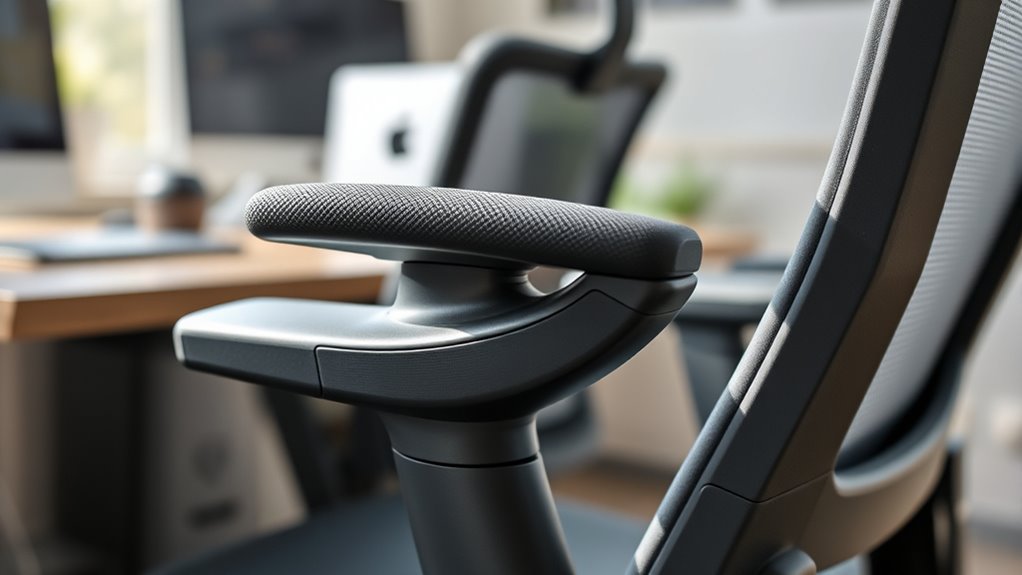

To optimize ergonomics, set your handle height so your elbows form a 90° angle and are level with your forearms. Controls should be within easy reach without stretching or leaning forward, reducing strain on your shoulders, wrists, and arms. Adjust them based on your body size and task needs for better comfort and efficiency. Proper setup minimizes fatigue and injury risks—keep exploring to discover how fine-tuning these adjustments can improve your work environment.
Key Takeaways
- Handles should be set at elbow height with a 90° bend to prevent strain.
- Controls must be within easy reach to avoid stretching and awkward postures.
- Use adjustable handles and controls to customize positioning based on body size and task.
- Maintain neutral wrist positions during use to reduce fatigue.
- Regular ergonomic assessments help identify and correct handle and control setup issues.

Have you ever wondered how your workspace can impact your health and productivity? The way you set up your handle heights and controls plays a vital role in preventing strain and guaranteeing efficiency throughout your day. Small adjustments can make a significant difference, and understanding proper adjustment techniques is key to creating an ergonomic environment that supports your well-being. When you take the time to perform ergonomic assessments of your workspace, you can identify areas where your setup might be causing unnecessary fatigue or discomfort and make necessary changes.
First, focus on the height of handles and controls. If they’re too high or too low, you might find yourself reaching awkwardly, which puts unnecessary stress on your shoulders, arms, and wrists. To get this right, use adjustment techniques that allow you to set handles at a height where your elbows are bent comfortably at about a 90-degree angle. This position minimizes strain and promotes good posture. For controls that are frequently used, guarantee they’re within easy reach without requiring you to stretch or lean forward. This reduces the risk of repetitive strain injuries and enhances your overall comfort.
Performing ergonomic assessments regularly helps you understand how your workspace affects your movements. When you analyze your setup, look for areas where you might need to make modifications. For example, if you notice your wrists are bent awkwardly when reaching for handles, adjust their height or angle accordingly. Many workplaces provide adjustable handles and controls to facilitate these modifications, but if yours doesn’t, consider using accessories like risers or pads to improve positioning. Remember, the goal is to maintain a neutral wrist position and keep your shoulders relaxed. Additionally, being aware of ergonomic principles can help you optimize your workspace setup effectively to prevent discomfort over time.
Regular ergonomic checks help optimize handle positioning and prevent wrist strain.
Furthermore, take into account your body size and task requirements. Shorter individuals may need handles set lower, while taller people might require higher placements. Your task type also influences how you adjust controls; precision tasks often benefit from more finely tuned handles, while quick, repetitive motions might need a setup that minimizes movement. Regularly reviewing your workspace through ergonomic assessments enables you to fine-tune these adjustments and prevent discomfort over time.
Frequently Asked Questions
How Do Handle Heights Vary for Different User Heights?
You should customize handle height based on your height to guarantee comfort and reduce strain. An ergonomic handle design allows you to adjust the handle height easily, fitting your body perfectly. When handle height varies for different users, it helps maintain proper posture and minimizes fatigue. Always opt for handle height customization options, so you can work efficiently and comfortably, regardless of your height.
What Are the Best Controls for Minimizing Repetitive Strain Injuries?
You want to minimize repetitive strain injuries, so choose controls with an ideal hand grip and thoughtful control design. Look for controls that are easy to reach, require minimal force, and encourage natural hand positions. These features reduce muscle fatigue and strain. When your hands move smoothly with well-designed controls, you not only protect your body but also boost efficiency. The secret lies in selecting the right controls—your best defense against injury.
How Can Adjustable Handles Improve Ergonomic Safety?
Adjustable handles improve ergonomic safety by allowing you to customize handle design and grip comfort to fit your body. When you can modify handle height, you decrease strain on your wrists, arms, and shoulders, preventing injuries. Properly adjusted handles ensure you maintain a natural posture, making tasks easier and safer. This personalized fit minimizes repetitive strain, enhances control, and promotes long-term comfort during work or manual activities.
Are There Guidelines for Ergonomic Control Placement in Workplaces?
Did you know that over 70% of workplace injuries relate to poor ergonomic control placement? Yes, ergonomic standards guide you to position controls within easy reach, usually between waist and shoulder height, to minimize strain. Proper workplace design ensures controls are accessible and user-friendly, reducing fatigue and injury. Always follow these guidelines to create a safer, more efficient environment, and regularly review your setup to maintain ideal ergonomic practices.
What Tools Help Measure Optimal Handle and Control Positions?
You can use measuring tools and ergonomic gauges to determine the best handle and control positions. Measuring tools like tape measures, rulers, or calipers help you measure dimensions accurately. Ergonomic gauges, such as hand anthropometers or specialized height meters, assess reach and comfort. These tools help guarantee handles are positioned to minimize strain, improve efficiency, and promote safety in your workspace. Always follow manufacturer guidelines for precise measurements.
Conclusion
In summary, paying attention to handle heights and controls can drastically improve your comfort and safety. For example, imagine a factory worker who adjusts their workstation so tools are within easy reach; they experience less fatigue and fewer injuries. When you customize your workspace ergonomically, you create a healthier environment that boosts productivity and reduces strain. Don’t overlook these simple changes—your body will thank you for it!