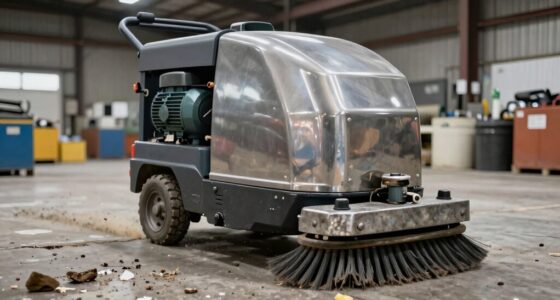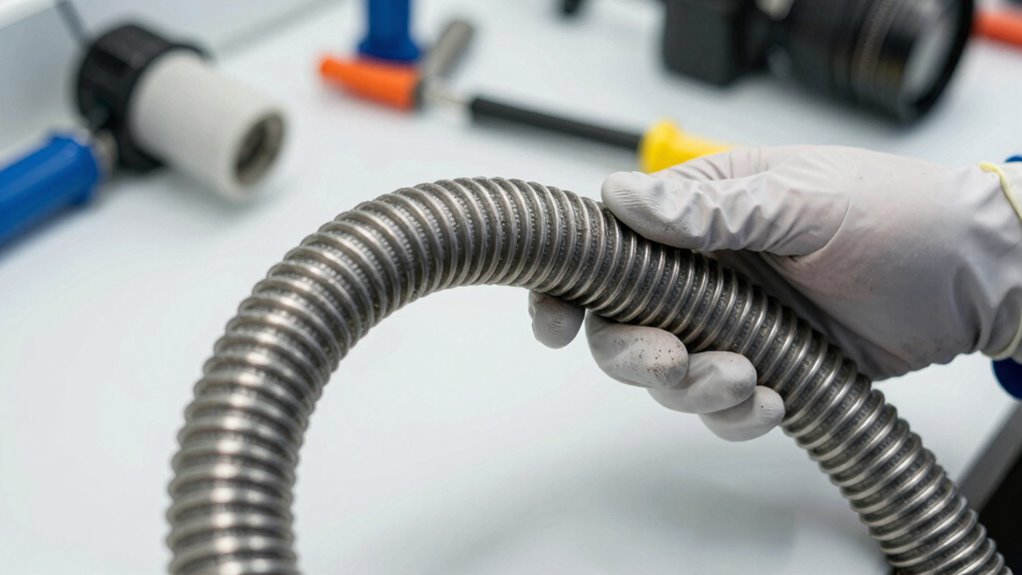

To inspect your scrubber hose, regularly check for signs of wear like cracks, abrasions, and leaks, especially at connection points. Use tools like flashlights, magnifying glasses, and ultrasonic testers to spot surface damage and internal deterioration. Keep an eye on fittings and internal walls for corrosion or thinning. Schedule inspections consistently, both before and after shifts, and keep detailed logs to track hose health over time. Continuing with thorough checks helps guarantee safety and prolongs your hose’s lifespan.

Get cleaning gear delivered free with Prime
- Fast, free delivery on millions of items
- Prime Video, Amazon Music and more included
- Member-only deals all year
Key Takeaways
- Regularly inspect connection points and fittings for wear, leaks, and corrosion.
- Use visual tools and ultrasonic testers to detect surface damage and internal deterioration.
- Check for chemical degradation, abrasions, and material fatigue during routine inspections.
- Schedule inspections consistently and maintain detailed logs for proactive maintenance planning.
- Replace damaged hoses promptly to ensure safety, efficiency, and extend hose lifespan.
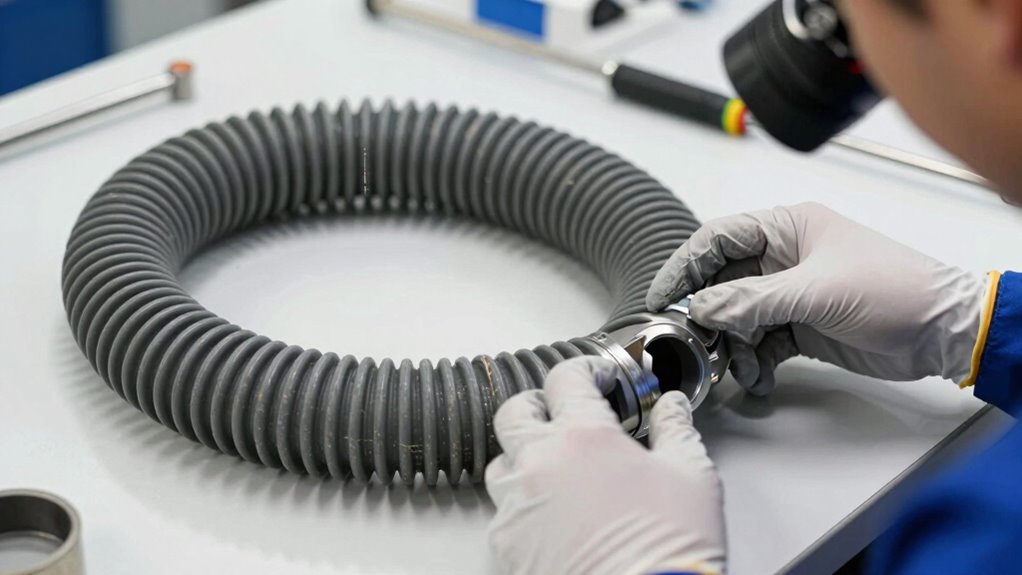
Have you ever wondered how to guarantee your scrubber hoses remain in prime condition? Regular inspection is key to maintaining their performance and safety. One of the first things you need to consider is hose material resilience. Over time, exposure to harsh chemicals, high temperatures, and constant flexing can weaken the hose material, making it prone to cracks, leaks, or even rupture. Choosing hoses made from durable materials like reinforced rubber or specialized plastics can extend their lifespan. But even the most resilient hoses need routine checks because material fatigue can develop unnoticed.
Regular inspections and durable hose materials are essential for maintaining scrubber hose safety and longevity.
To effectively monitor hose integrity, you should use appropriate inspection tools. The effectiveness of these tools directly impacts your ability to catch issues early. Visual inspection tools, such as flashlights and magnifying glasses, are fundamental for spotting obvious signs of wear, like cracks, bulges, or discoloration. However, they might not reveal internal damage or subtle structural weaknesses. For that reason, employing more advanced inspection tools—such as ultrasonic testers or hose pressure testers—can considerably improve your inspection accuracy. Ultrasonic devices, for example, allow you to detect thinning walls or internal corrosion without dismantling the hose, saving time and preventing failure during operation.
When inspecting, pay close attention to the connection points and fittings. These areas are especially susceptible to wear and leaks, which can compromise the entire system’s efficiency. Tighten loose fittings and replace damaged connectors promptly. Additionally, always check for signs of chemical degradation or surface abrasions, which can weaken the hose material over time. Regular inspections shouldn’t be limited to just the visible surface; internal checks using appropriate tools can reveal hidden deterioration. Incorporating biodiversity-conscious inspection practices, such as avoiding unnecessary damage to surrounding ecosystems, can also be beneficial in environmentally sensitive areas. Understanding the material resilience of hoses helps in selecting the right tools and techniques for inspection, ultimately leading to more reliable assessments. Being aware of environmental considerations can help ensure inspections are both effective and sustainable.
Scheduling inspections at consistent intervals ensures you don’t overlook developing issues. Incorporate routine visual checks before and after each shift, and perform more thorough inspections periodically, especially in high-use environments. Maintaining detailed inspection records—such as inspection logs—is vital for tracking the health and lifespan of your hoses and planning timely replacements. This documentation helps you track hose lifespan and plan replacements proactively, avoiding unexpected failures.
In short, maintaining scrubber hoses in top condition hinges on understanding hose material resilience and leveraging the right inspection tools for all-encompassing checks. By combining these strategies, you reduce downtime, prevent costly repairs, and ensure your equipment operates safely and efficiently. Regular, thorough inspections keep your scrubber system running smoothly and extend the lifespan of your hoses, safeguarding your operations now and into the future.
As an affiliate, we earn on qualifying purchases.
Frequently Asked Questions
How Often Should Scrubber Hoses Be Inspected?
You should inspect your scrubber hoses at least monthly, depending on the hose material and usage conditions. Regular inspections help identify signs of wear, cracks, or corrosion early, preventing failures. If your hoses operate in harsh environments or handle aggressive chemicals, consider more frequent inspections. Keeping a detailed record guarantees you stay ahead of potential issues, maintaining safe and efficient operation. Always follow manufacturer recommendations for inspection frequency.
What Tools Are Recommended for Hose Inspection?
Think of your inspection as a health check-up for your hose. You’ll want to use inspection accessories like mirrors, flashlights, and ultrasonic testers to see hidden damage. For hose cleaning, brushes or compressed air help remove debris. These tools act as your eyes and hands, revealing cracks, wear, or blockages before they turn into costly failures. Regular use guarantees your hose stays in top condition, safeguarding your operation.
Can Minor Damages Be Repaired or Do Hoses Need Replacement?
Minor damages in your scrubber hose can often be repaired, depending on the hose material and damage severity. You can use specific repair techniques like patching small tears or sealing minor cracks with appropriate sealants. However, if the damage is extensive or affects the hose’s integrity, it’s safer to replace it. Always assess the damage carefully and follow manufacturer recommendations to guarantee best performance and safety.
Are There Specific Safety Precautions During Inspection?
Inspecting hoses is like handling fragile glass—you must be cautious. You should always wear personal protective equipment, like gloves and goggles, to shield yourself from potential hazards. Follow strict inspection safety protocols, such as checking for leaks or damage carefully and avoiding sharp tools that could cause injury. Staying vigilant and methodical guarantees your safety and the integrity of the hose, preventing accidents and ensuring reliable operation during inspection.
How Do Environmental Factors Affect Hose Durability?
Environmental factors markedly impact hose durability. You’ll notice environmental degradation from exposure to UV rays, ozone, and extreme temperatures, which weaken the hose material over time. Chemical exposure from corrosive substances can cause the hose to crack or degrade faster. To guarantee longevity, you should regularly inspect your hose for signs of wear or damage, especially if it’s exposed to harsh environmental conditions. Proper storage and protective measures help extend its lifespan.
Conclusion
Now that you know the essentials of scrubber hose inspection, you’re practically a superhero armed with the power to prevent catastrophic failures! Think of yourself as the guardian of your system, catching tiny cracks and leaks before they turn into disaster movies. Skipping these inspections isn’t just risky—it’s like ignoring a ticking time bomb. Stay vigilant, keep inspecting, and keep your system running smoother than a rocket launch—because prevention is your ultimate superpower!
Fall Picks
fall essentials
As an affiliate, we earn on qualifying purchases.