
To stop squeegee streaks in school hallways quickly, start by inspecting and cleaning your squeegee blades for damage or residue. Use steady, even pressure and make overlapping, straight strokes from one end of the hallway to the other. Afterward, dry the floor with a microfiber cloth or mop to prevent moisture marks. Properly maintaining your equipment and technique can make a big difference—continue with us to discover more tips for perfect hallway floors.
Key Takeaways
- Check and replace worn or chipped squeegee blades for smooth, streak-free results.
- Use consistent, gentle pressure with the squeegee, starting from one end and overlapping strokes.
- Clean and dry floors immediately after squeegeeing with a microfiber cloth or mop to prevent streaks.
- Ensure squeegee frame is stable and properly maintained for even pressure and effective cleaning.
- Use high-quality, flexible rubber blades suited for the floor type to achieve a quick, streak-free finish.

Squeegee streaks in school hallways can be distracting and make the environment look unkempt. These streaks often appear after cleaning, giving the floors an uneven, smeared look that detracts from the overall cleanliness. To tackle this issue quickly and effectively, you need to pay attention to your cleaning equipment and establish proper maintenance routines. When your equipment is well-maintained, you minimize streaks and guarantee your floors stay spotless.
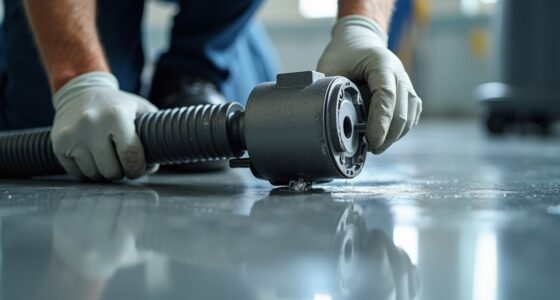
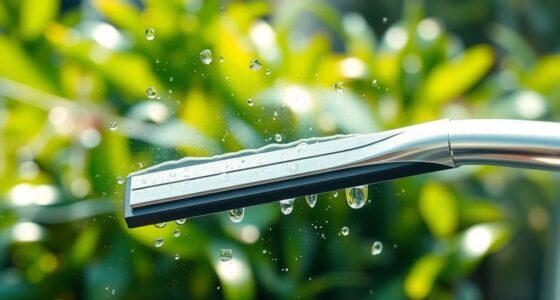
Start by inspecting your squeegee regularly. Worn or damaged blades are a common culprit behind streaks. If the rubber edge is chipped, cracked, or hardened, it won’t glide smoothly across the floor, leaving smears behind. Replacing worn blades promptly is a simple fix that can dramatically improve your results. Additionally, check the squeegee frame for stability; a loose or bent frame can cause uneven pressure, leading to streaks. Keeping your equipment in top shape is vital, so incorporate routine maintenance routines that include cleaning the squeegee blades after each use and storing them properly to prevent warping or damage.
Regularly inspect and maintain squeegee blades and frames for streak-free floors.
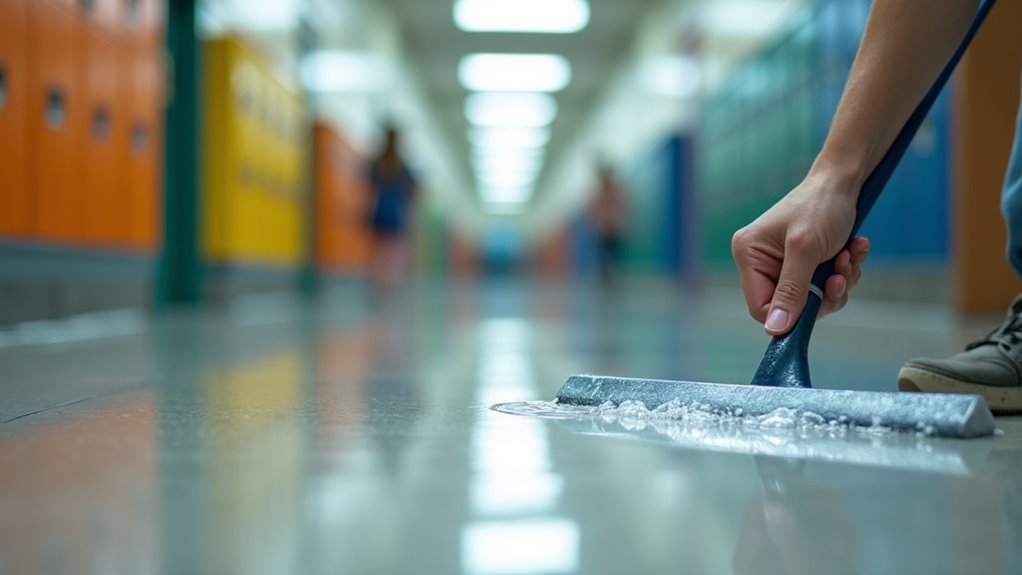
Using the right cleaning equipment also makes a big difference. Choose a high-quality squeegee with a flexible, durable rubber blade that conforms to the floor’s surface. Pair this with a suitable cleaning solution designed for the floor type, and avoid overly soapy or greasy cleaners that can leave residue. When cleaning, make sure you use the squeegee with consistent pressure, starting from one end of the hallway and working your way across in straight, overlapping strokes. This technique ensures even coverage and reduces streaks.
Don’t forget to routinely check your mops, buckets, and other cleaning tools. Dirty or worn-out cleaning cloths and mops can spread dirt unevenly, making streaks more noticeable. Regularly washing and replacing these tools is part of good maintenance routines that keep your cleaning process efficient and streak-free. Additionally, selecting the appropriate floor cleaning equipment based on your hallway surfaces can significantly reduce streak formation.
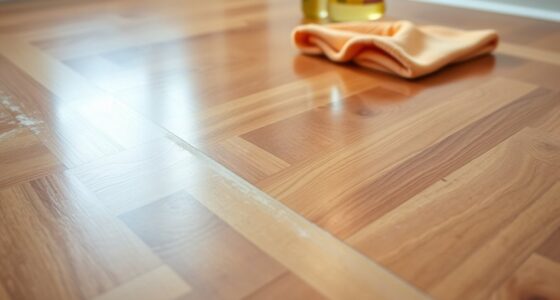
Finally, after cleaning, always go over the floor with a dry microfiber cloth or a clean mop to remove any remaining moisture or streaks. This quick step seals the cleaning process and leaves your floors looking clear and professional. By paying close attention to your equipment’s condition and sticking to consistent maintenance routines, you’ll cut down on streaks in a matter of minutes. This simple, proactive approach ensures your hallways stay bright, clean, and welcoming for everyone who walks through them.

Battery Powered Walk Behind Mini Automatic Floor Scrubber Machine – Compact & Portable, 15” Cleaning Width, 90-Minute Runtime, 170 RPM – Ideal for Small Commercial Spaces, Offices, Retail & More
Compact & Efficient Cleaning – Designed for small commercial spaces, this mini automatic floor scrubber features a 15-inch...
As an affiliate, we earn on qualifying purchases.
Frequently Asked Questions
Are There Eco-Friendly Solutions to Prevent Streaks?
Yes, you can prevent streaks with eco-friendly products that are gentle on the environment. Use biodegradable solutions made from natural ingredients, which clean effectively without harmful chemicals. These products often come in recyclable packaging and are safe for students and staff. Regularly wiping down surfaces with these eco-friendly solutions helps prevent streaks and maintains a clean hallway while supporting sustainability. It’s a simple, responsible choice for your school.
How Often Should Hallway Floors Be Cleaned to Avoid Streaks?
If you want to prevent streaks from turning your hallways into mirror-like chaos, clean the floors at least twice a day—morning and after lunch. Regular floor cleaning frequency keeps dirt and grime from building up, making streak prevention strategies more effective. Skipping a cleaning could turn your hallway into a reflective nightmare, so stay vigilant. Consistent cleaning is your best defense against streaks that dazzle and distract.
Can Specific Cleaning Tools Reduce Streak Formation?
Yes, using specific cleaning tools can minimize streak formation. Microfiber cloths are excellent because they absorb and lift dirt without leaving lint or streaks. Squeegee blades, when used properly, quickly remove excess water and cleaning solutions, preventing streaks from forming. Combining these tools with proper technique ensures your hallway floors stay clear and shiny, making your cleaning more effective and efficient.
Do Different Floor Types Require Different Cleaning Techniques?
Think of your floors as different terrains in a vast landscape. You need to adapt your mopping techniques to each one. Hardwood floors benefit from gentle, damp mopping and proper floor sealants to prevent streaks, while tile or vinyl may require more thorough cleaning with different tools. Using the right techniques guarantees your floors shine without streaks, protecting their beauty and integrity across every surface.
Is There a Recommended Cleaning Schedule for Streak Prevention?
Yes, there’s a recommended cleaning schedule for streak prevention. You should establish regular maintenance routines, like daily sweeping and damp mopping, to keep floors clean and free of residue. Adjust the cleaning frequency based on foot traffic; high-traffic hallways may need more frequent cleaning. Consistent routines prevent streaks and guarantee your floors stay shiny and clean, making your school environment safer and more inviting for everyone.

Oreck Commercial Orbiter Hard Floor Cleaner Machine, Multi-Purpose Floor Cleaning, Random Orbital Drive, Wide Cleaning Path, 50-Foot Long Cord, ORB550MC, Gray/Red
MULTI-PURPOSE CLEANING: Commercial grade cleaner and effective on all types of flooring surfaces. Sand, refinish, strip, scrub, wax,...
As an affiliate, we earn on qualifying purchases.
Conclusion
Now, picture your hallway shining brightly, streak-free and welcoming. With just a quick wipe, you turn dull, smudged floors into a crystal-clear path that guides students and staff smoothly through their day. That simple three-minute fix transforms the space from messy to pristine, leaving a gleaming trail behind every step. You’ve created a cleaner, more inviting environment—proof that a small effort makes a big difference in brightening your school’s atmosphere.

SUNMAX RT35 Walk-Behind Floor Scrubber Polisher Machine, 17" Rotary Disc Brush and Red Sourcing Pad, 22" Squeegee Width, 9.2-gal Tank, 19000 sqft/h, Anti-Collision Wheel
Powerful Performance: With its heavy-duty scrubbing brushes and 17-inch cleaning path, this floor scrubber efficiently cleans over 19,000...
As an affiliate, we earn on qualifying purchases.

HHQ Commercial Floor Scrubber Machine, 13" Heavy Duty Orbital Floor Cleaner Buffer and Polisher- Deep Cleaning Hard Floors and Carpets with Ease, 3 Brushes & 3 Cleaning Pads, Orb-6
Deep Clean Floors/ Carpets Without Getting on Your Hands and Knees- Bring Your Bare Floors and Carpets Back...
As an affiliate, we earn on qualifying purchases.