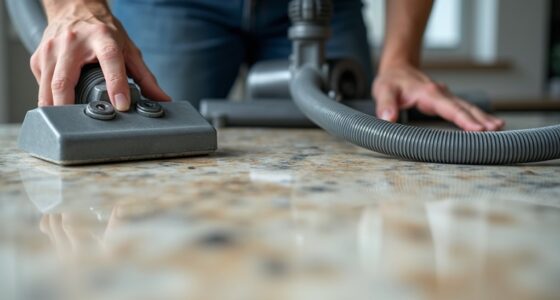
Use detergent-free scrubbing when cleaning delicate surfaces like glass, wood, or ceramic to prevent damage or residue buildup. It’s also ideal if you’re concerned about safety around children or pets, as natural ingredients like baking soda and vinegar are non-toxic. Plus, it’s a cost-effective and eco-friendly way to tackle everyday messes. If you want tips on how to naturally clean your home effectively, keep exploring for more helpful advice.

Get cleaning gear delivered free with Prime
- Fast, free delivery on millions of items
- Prime Video, Amazon Music and more included
- Member-only deals all year
Key Takeaways
- Use on delicate surfaces like glass, wood, or ceramic to prevent damage from harsh chemicals.
- When cleaning items contacted by children or pets to avoid toxic residues.
- For cost-effective cleaning using common household ingredients like baking soda and vinegar.
- To support eco-friendly practices by reducing chemical use and plastic waste.
- When removing stains or grime from kitchen counters, bathroom tiles, or household items naturally.
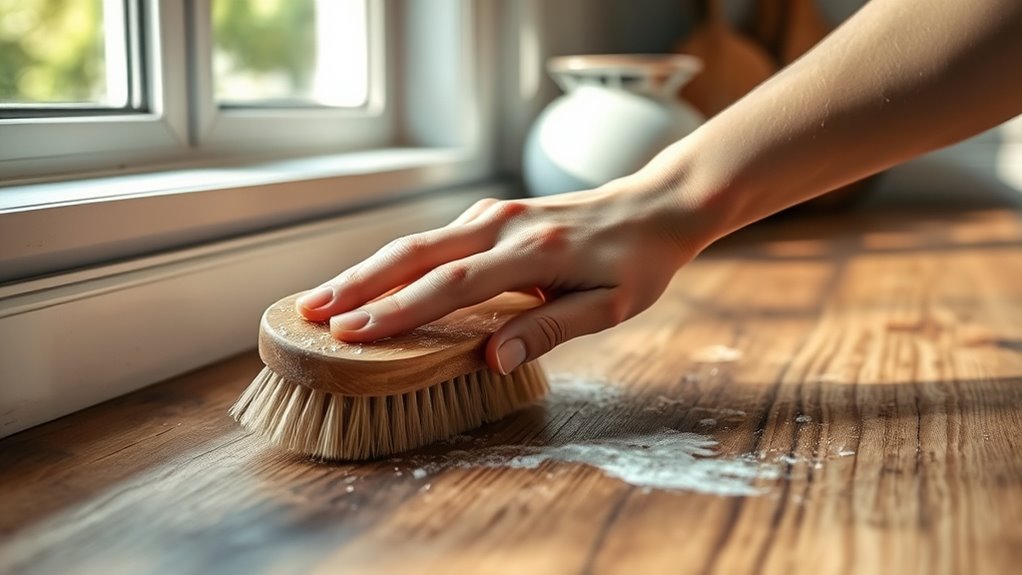
Cleaning doesn’t always require harsh detergents. In fact, many times, you can achieve a thorough clean using natural cleaning techniques that are gentle on the environment and safe for your household. When you opt for eco friendly methods, you’re not only reducing your chemical footprint but also promoting healthier living spaces. Detergent-free scrubbing is a smart choice when dealing with delicate surfaces, stubborn stains that don’t need aggressive chemicals, or everyday messes that can be tackled with simple, natural ingredients.
Choose natural cleaning methods for gentle, eco-friendly, and effective household care.
You should consider using detergent-free scrubbing when cleaning items like glass, wood, or ceramic surfaces. These materials can be sensitive to the harsh chemicals found in conventional cleaning products, which can cause damage or leave residues. Instead, using natural cleaning solutions—such as baking soda, vinegar, or lemon—can effectively lift dirt and grime without risking harm to the surfaces. For example, a paste of baking soda and water makes an excellent scrub for stovetops or sinks, providing abrasive power without the abrasiveness of synthetic cleaners. Vinegar, with its natural acidity, works wonders on mineral deposits and soap scum, making it ideal for bathroom tiles and glass surfaces.
Another situation where detergent-free scrubbing shines is when you’re cleaning items that come into contact with children or pets. Many commercial cleaners contain chemicals that can be irritating or toxic, so switching to eco friendly methods ensures a safer environment. These natural alternatives are not only safer but also cost-effective, since common household ingredients are often enough to get the job done. You might find that a simple scrub with baking soda and a damp cloth can restore the shine to your kitchen counters or remove stains from your favorite wooden cutting boards.
Furthermore, when you want to maintain a sustainable lifestyle, choosing natural cleaning methods aligns with your goals. Detergent-free scrubbing reduces waste and minimizes the use of plastic bottles and chemical runoff, supporting eco friendly practices. It’s especially useful for regular cleaning routines, where the goal is to keep things tidy without introducing unnecessary chemicals into your home. Using natural cleaning techniques and simple ingredients can make your routine more environmentally friendly while still being effective. You don’t need fancy or expensive products—just a little know-how and some common ingredients can make your cleaning routine more natural and sustainable.
As an affiliate, we earn on qualifying purchases.
Frequently Asked Questions
Can Detergent-Free Scrubbing Remove Tough Stains Effectively?
Detergent-free scrubbing can effectively remove tough stains using abrasive techniques that rely on physical action rather than chemicals. You should consider this method when you prefer chemical alternatives or want to avoid harsh cleaners. While it works well on some stains, very stubborn or oily ones might require additional effort or a different approach. Overall, with the right abrasive techniques, detergent-free scrubbing offers a safe and eco-friendly way to clean tough stains.
Is Detergent-Free Scrubbing Suitable for All Skin Types?
Think of your skin as a delicate garden; detergent-free scrubbing can be gentle enough for sensitive skin if paired with natural ingredients. It’s suitable for most skin types because it avoids harsh chemicals that might cause irritation. You’ll find it especially beneficial if your skin reacts to synthetic additives. Just choose a product formulated with calming, natural elements, and you’ll nurture your skin like tending to a fragile but beautiful garden.
How Often Should I Use Detergent-Free Scrubbing?
You should use detergent-free scrubbing about once or twice a week, depending on your skin sensitivity. Follow the frequency guidelines to avoid over-exfoliating, which can cause irritation, especially if your skin is sensitive. Pay attention to how your skin reacts; if you notice redness or dryness, reduce the frequency. Consistency helps, but always prioritize your skin’s comfort and adjust accordingly.
Are There Specific Surfaces That Shouldn’T Be Cleaned With Detergent-Free Scrubbing?
You shouldn’t use detergent-free scrubbing on delicate materials or electronic surfaces, as these can be easily damaged by gentle abrasives. Imagine trying to clean a fragile vase or an electronic screen, where even a slight scratch could cause harm. For these surfaces, stick to gentle, specialized cleaning methods. Using harsh scrubbers might seem effective, but it risks compromising their integrity. Always choose the right cleaning approach for delicate or sensitive surfaces.
What Are the Environmental Benefits of Detergent-Free Scrubbing?
You’ll find detergent-free scrubbing benefits the environment by using biodegradable ingredients, which break down naturally and reduce pollution. It also promotes water conservation by requiring less water to rinse away residues, compared to traditional cleaning methods. This approach minimizes chemical runoff, helping protect ecosystems. By choosing detergent-free scrubbing, you support sustainable cleaning practices that are gentle on the planet while still maintaining effective cleanliness.
Conclusion
So, next time you’re considering cleaning options, ask yourself if your skin needs a break from harsh chemicals. Detergent-free scrubbing is perfect when your skin feels sensitive, irritated, or overly dry. It gently removes dirt without stripping natural oils, leaving your skin refreshed and balanced. Isn’t it worth choosing a gentler approach that respects your skin’s natural barrier? Sometimes, less really is more—give your skin the kindness it deserves with detergent-free scrubbing.
Halloween Picks
halloween
As an affiliate, we earn on qualifying purchases.