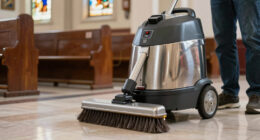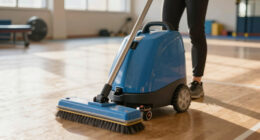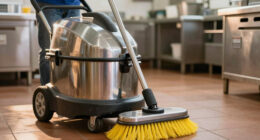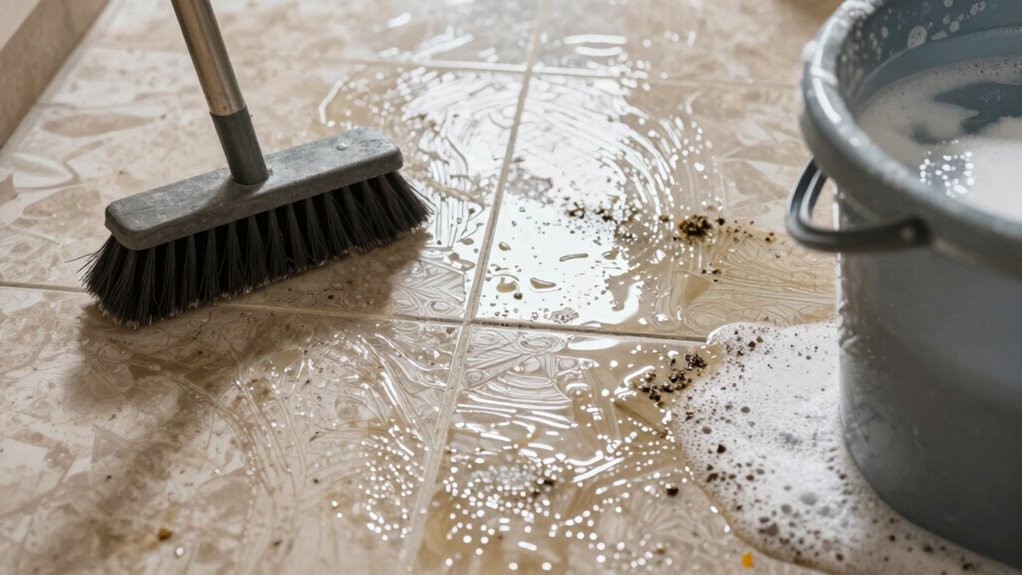

You should consider double-scrubbing your floors when regular mopping doesn’t remove stubborn grime, streaks, or deeply embedded dirt. If you notice residue remaining or dullness on smooth, sealed surfaces like tile, vinyl, or hardwood, a second cleaning pass can restore their shine. Be cautious with porous or delicate surfaces, testing first to avoid damage. Keep in mind, knowing when to double-scrub can make your floors look brand new, and you’ll find helpful tips if you keep exploring.
Key Takeaways
- When stubborn grime remains after initial mopping, indicating the need for a more thorough clean.
- If floors show streaks, residue, or persistent dirt despite regular cleaning efforts.
- When deeply embedded dirt on smooth, sealed surfaces requires extra agitation for removal.
- If initial cleaning doesn’t restore the floor’s shine or leaves visible residue.
- On surfaces tolerant of vigorous scrubbing, especially when cleaning heavily soiled or greasy floors.
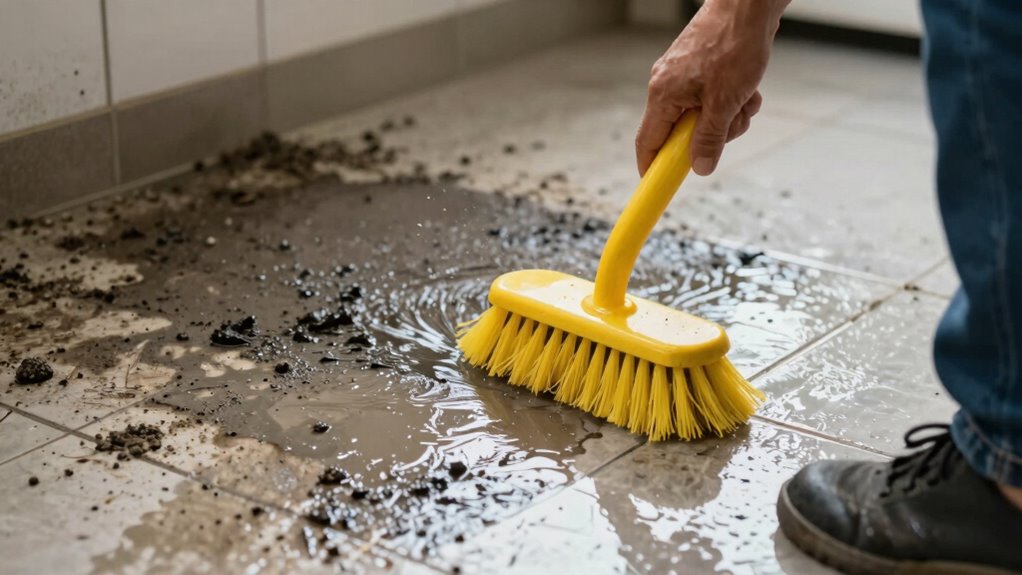
Cleaning dirty floors can sometimes require more than just a quick sweep or mopping, especially when stubborn grime or built-up dirt is involved. When you notice that your regular mopping isn’t effectively removing the dirt, it’s a sign that double-scrubbing may be necessary. This technique can markedly boost your mopping efficiency, helping you restore your floors to their original shine. But before jumping into double-scrubbing, it’s important to contemplate the type of floor surface you’re dealing with. Different floor surfaces react differently to scrubbing methods, and knowing when to use double-scrubbing can save you time and prevent damage.
For smooth, sealed floors like tile, vinyl, or hardwood, double-scrubbing can be a game-changer when grime has become deeply embedded. If your initial mopping leaves behind streaks, residue, or dirt that just won’t lift, it’s time to take a more aggressive approach. These surfaces tolerate a bit more scrubbing, especially if you use the right cleaning solutions. For instance, a mixture of warm water and a gentle floor cleaner can loosen dirt effectively, but sometimes a second pass with a scrub brush or a microfiber mop is needed for thorough cleaning. Double-scrubbing not only improves mopping efficiency but also prevents the need for harsh chemicals that could harm delicate surfaces. Additionally, understanding floor surface types can help you choose the most appropriate cleaning method and tools. Knowing the cleaning methods for different surfaces can further help you avoid damage and ensure effective cleaning. It’s also helpful to be aware of proper scrubbing techniques to avoid damaging your floors during the process. Employing the correct cleaning agents tailored to each surface can maximize cleaning effectiveness and safety.
On the other hand, if you’re working with more sensitive or porous surfaces like natural stone or unsealed wood, double-scrubbing requires caution. Over-aggressive scrubbing can scratch or stain these surfaces. For such floors, gentle agitation combined with appropriate cleaning agents is key. Usually, a single, well-executed scrub will suffice, but if the dirt persists, a carefully applied double-scrubbing process can be justified. Always test a small area first to ensure the surface can handle the extra effort.

Floor Scrub Brush with Long Handle, 3 in 1 Scrape and Heavy-Duty Stiff Bristle Scrubber Brush for Cleaning Shower Bathroom, Patio, Pool, Garage, Kitchen, Wall and Deck (Gray, 1 Pack)
【Innovative 3-in-1 Floor Scrub Brush】: Our floor scrub brush is a game-changer! Combining a dual-sided scrub brush and…
As an affiliate, we earn on qualifying purchases.
As an affiliate, we earn on qualifying purchases.
Frequently Asked Questions
Can Double-Scrubbing Damage My Floor’s Finish?
Double-scrubbing can damage your floor’s finish if you’re not careful, especially with delicate surfaces. Excessive scrubbing or using harsh cleaning agents may strip or dull the finish, leading to potential damage. To prevent this, use gentle cleaning solutions and avoid aggressive scrubbing. Always follow manufacturer recommendations for your floor type, and consider double-scrubbing only when necessary for deep cleaning to guarantee damage prevention and maintain your floor’s shine.
How Often Should Double-Scrubbing Be Performed?
Imagine you’re preparing a heavily stained kitchen floor for new varnish. You should perform double-scrubbing every few months or when surface prep and stain removal require deep cleaning. This method effectively loosens stubborn dirt and grime, ensuring your floor remains clean and well-maintained. Regular double-scrubbing prevents buildup, but avoid overdoing it to protect your floor’s finish. Adjust frequency based on foot traffic and dirt accumulation.
Is Double-Scrubbing Suitable for All Floor Types?
Double-scrubbing isn’t suitable for all floor types. For delicate surfaces like hardwood or vinyl, it can cause damage, especially if harsh cleaning chemicals are used. Use gentle cleaning solutions and avoid excessive scrubbing. For tougher floors like concrete or tile, double-scrubbing works well to remove deep dirt and grime. Always check your floor’s manufacturer recommendations and test cleaning chemicals first to prevent damage.
What Equipment Is Best for Effective Double-Scrubbing?
You’d think cleaning equipment would be straightforward, but for effective double-scrubbing, you need a high-quality rotary floor machine or an automatic scrubber. Keep the equipment well-maintained to avoid breakdowns and guarantee efficiency. Choose the right chemicals—alkaline cleaners often work best on stubborn grime. Proper chemical selection and equipment maintenance make all the difference, transforming tedious tasks into a quick, effective process that leaves your floors spotless.
Are There Health Risks Associated With Double-Scrubbing?
Yes, there are health hazards associated with double-scrubbing, mainly due to chemical exposure from cleaning agents. You might inhale fumes or get chemicals on your skin, which can cause irritation or respiratory issues. To stay safe, always wear gloves, masks, and make certain proper ventilation. Using eco-friendly or less harsh cleaners can also reduce health risks. Be cautious and follow manufacturer instructions to protect your health while cleaning.

Microfiber Mops for Hardwood Floor Cleaning – BPAWA Flat Floor Mop with 4 Washable Pads for Laminate Wood Tile Vinyl Home Kitchen Bathroom – 59" Adjustable Handle
Microfiber Mops for Floor Cleaning: Flat floor mop with adjustable long handle, flexible lightweight but sturdy, great for…
As an affiliate, we earn on qualifying purchases.
As an affiliate, we earn on qualifying purchases.
Conclusion
Remember, double-scrubbing isn’t always necessary, but when faced with stubborn grime, it’s your ultimate ally. It’s a reminder that sometimes, the simplest tools can make the biggest difference—turning a dirty, neglected floor into a shining proof of your effort. Embrace the challenge, knowing that through persistence, you transform chaos into cleanliness. In those moments, double-scrubbing becomes more than cleaning; it’s a symbol of your dedication to a fresh start.

Bona Hardwood Floor Cleaner Refill – 128 fl oz – Unscented – Refill for Bona Spray Mops and Spray Bottles – Residue-Free Floor Cleaning Solution for Wood Floors
Easily refill any Bona floor cleaner spray bottle or mop cartridge
As an affiliate, we earn on qualifying purchases.
As an affiliate, we earn on qualifying purchases.

Holikme 6Pack Drill Brush Power Scrubber Cleaning Brush Extended Long Attachment Set All Purpose Drill Scrub Brushes Kit for Grout, Floor, Tub, Bathroom and Kitchen Surface,Scratch Brushes(Yellow)
5 shape of brushes clean your bathtub, grout, upholstery, bathroom surface, floor, tile, shower, toilet and carpet etc,…
As an affiliate, we earn on qualifying purchases.
As an affiliate, we earn on qualifying purchases.