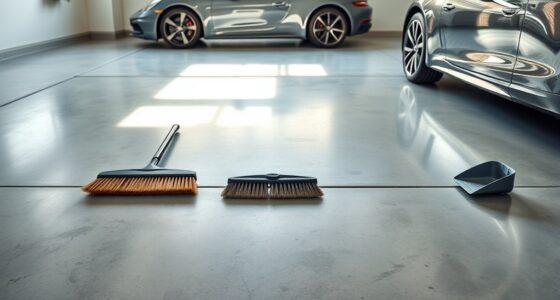

For garage floors, soft bristles are best for gentle cleaning and safeguarding surfaces like epoxy-coated or sealed concrete, preventing scratches and damage. Use stiff bristles to tackle embedded dirt, mud, and stubborn stains, but only with care on delicate surfaces. Combining both types during regular cleaning guarantees you get deep dirt removal without harming the finish. Want to discover how to choose the right tools and best cleaning habits? Keep exploring for expert tips.

Get cleaning gear delivered free with Prime
- Fast, free delivery on millions of items
- Prime Video, Amazon Music and more included
- Member-only deals all year
Key Takeaways
- Soft bristles protect epoxy-coated floors from scratches and are ideal for routine cleaning and delicate surfaces.
- Stiff bristles effectively remove stubborn dirt and stains but may damage smooth, sealed surfaces if misused.
- Combining soft and stiff brushes provides thorough cleaning while minimizing surface damage.
- Always test a small area first to ensure the bristle type doesn’t harm your specific garage floor finish.
- Use stiff brushes sparingly and with gentle pressure to prevent chipping or scratching delicate coatings.
Garage Floors
A garage floor is more than just a foundation for your vehicle; it’s a vital part of your home’s overall functionality and appearance. When it comes to maintaining or upgrading your garage, choosing the right cleaning tools can make a noticeable difference. One key decision is whether to use soft or stiff bristles on your broom or scrub brush. The choice depends on the surface finish, the type of debris, and the level of cleaning you need. For sealed concrete floors, such as those treated with concrete sealing or epoxy coatings, selecting the proper bristle type ensures effective cleaning without damaging the surface.
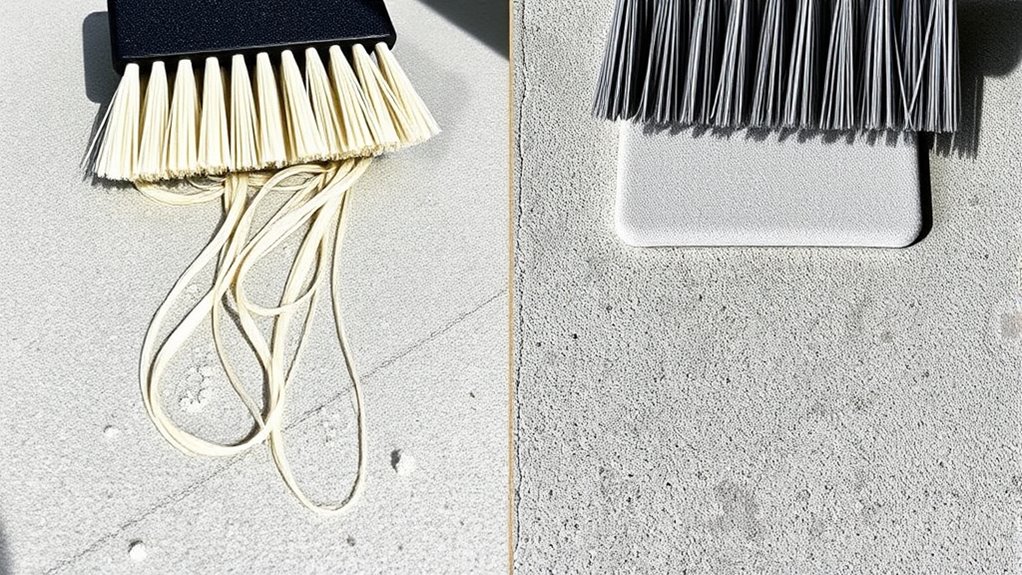
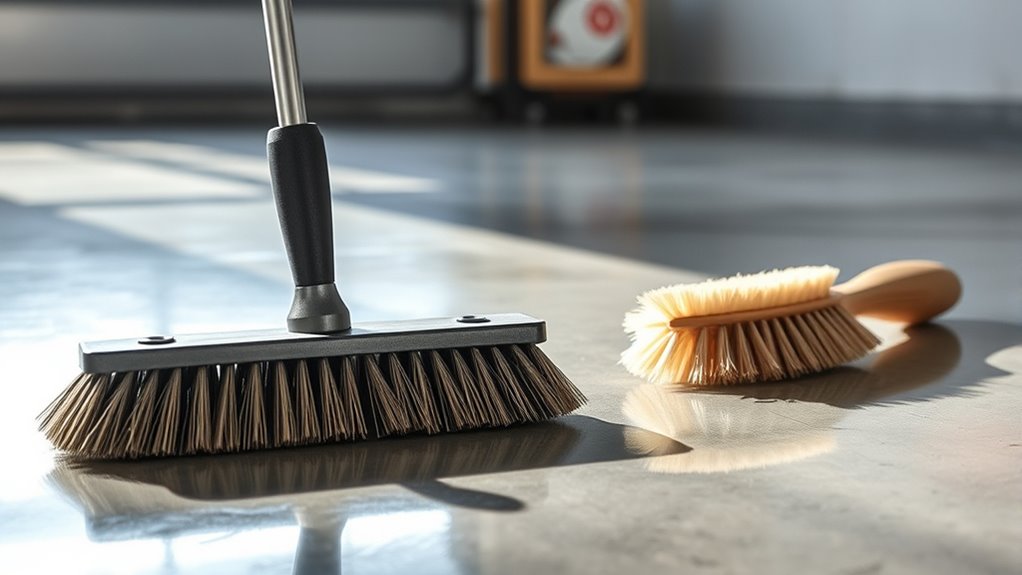
Soft bristles are gentle and ideal for delicate finishes or surfaces that require a light touch. If your garage floor has a smooth, epoxy-coated surface, using a soft-bristled brush helps prevent scratches and preserves the glossy finish. These bristles effectively remove dust, light dirt, and spills without stripping away sealants or damaging the coating. Soft brushes are especially useful for routine cleaning, where you want to maintain the integrity of your epoxy or sealed concrete and avoid unnecessary wear.
Soft bristles prevent scratches and protect glossy, epoxy-coated garage floors during routine cleaning.
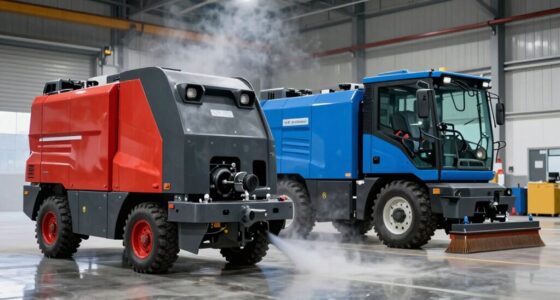
Stiff bristles, on the other hand, excel at tackling stubborn grime, mud, or hardened stains. When your garage floor is heavily soiled or has accumulated debris from outdoor activities, stiff-bristled tools provide the scrubbing power needed to lift dirt embedded in the surface. However, if your concrete has a smooth finish or is coated with epoxy, using stiff bristles may risk scratching or chipping the surface, especially if you apply excessive pressure. It’s essential to balance the cleaning power with the surface’s durability — stiff brushes can be effective, but only if used carefully and on appropriate surfaces.
In many cases, a combination approach works best. Start with a stiff-bristled brush to loosen and lift stubborn debris, then switch to a soft brush for delicate finishing touches. This method ensures deep cleaning without compromising your concrete sealing or epoxy coatings. Regular cleaning with the right brush type prolongs the lifespan of your garage floor, keeping it looking fresh and protected. Remember, routine maintenance prevents the buildup of dirt and stains, reducing the need for harsh scrubbing or resurfacing.
Ultimately, the choice between soft and stiff bristles boils down to your floor’s surface and the cleaning task at hand. When in doubt, test a small area first to see how the surface responds. Proper cleaning tools, combined with suitable surface treatments like concrete sealing or epoxy coatings, help you maintain a durable, attractive garage floor for years to come. Additionally, understanding the different types of cleaning tools can help you select the most effective method for your specific needs and ensure long-term durability.
garage floor cleaning brush soft bristles
As an affiliate, we earn on qualifying purchases.
As an affiliate, we earn on qualifying purchases.
Frequently Asked Questions
Which Broom Type Lasts Longer With Regular Garage Floor Cleaning?
A stiff-bristled broom generally lasts longer with regular garage floor cleaning because its durability withstands frequent use and heavy debris. If you clean often, a stiff broom’s durability guarantees it maintains effectiveness longer, saving you money over soft-bristled options. Soft brooms tend to wear out faster under rigorous cleaning, especially with high cleaning frequency. For consistent, long-term use, opt for a stiff broom to maximize durability and maintain a clean garage floor.
Are Soft Bristle Brushes Suitable for Heavy-Duty Grease Removal?
Soft bristle brushes aren’t ideal for heavy-duty grease removal because their bristle stiffness isn’t strong enough to tackle tough grime. They tend to wear out faster when used on greasy, stubborn stains, affecting brush durability. For heavy-duty cleaning, you need a stiffer bristle brush that can withstand the pressure and effectively break down grease without quickly losing its shape or effectiveness.
Can Stiff Bristles Damage Epoxy-Coated Garage Floors?
Stiff bristles can cause abrasive damage to epoxy-coated garage floors if you’re not careful. They may scratch or dull the surface, compromising epoxy safety and durability. To protect your floor, use softer brushes for routine cleaning and reserve stiff bristles for tougher dirt only when necessary. Always test in a small area first, and avoid applying excessive pressure, ensuring your epoxy coating stays intact and looks great longer.
What’s the Best Cleaning Method for Painted Garage Floors?
A gentle touch is your best ally when caring for a painted surface. Use a soft-bristled brush or mop and mild cleaning solutions like a mixture of water and dish soap. Avoid harsh chemicals or abrasive scrubbers, which can dull or damage the paint. Regularly sweep away debris first, then clean with light pressure to maintain the vibrant finish without risking harm to your garage floor’s paint.
Do Electric or Manual Brushes Clean More Efficiently?
Electric brushes clean more efficiently because of their power source, providing consistent scrubbing intensity that manually operated brushes can’t match. With an electric tool, you’ll cover large areas faster and remove stubborn grime more effectively. Manual brushes require more effort and time, often leading to uneven results. So, if you want a thorough and quicker clean, go for an electric brush, especially for tough stains or large garage floors.
Conclusion
Choosing between soft and stiff bristles for your garage floor depends on what you value most. Think of soft bristles as gentle waves caressing your concrete, ideal for delicate cleaning. Stiff bristles are like a powerful storm, perfect for tough grime. Remember, the right brush is your trusty ship’s anchor, keeping your garage shining bright. Whichever you pick, make sure it’s the sturdy tool that helps your floor stand tall and proud like a fortress.
Halloween Picks
halloween
As an affiliate, we earn on qualifying purchases.