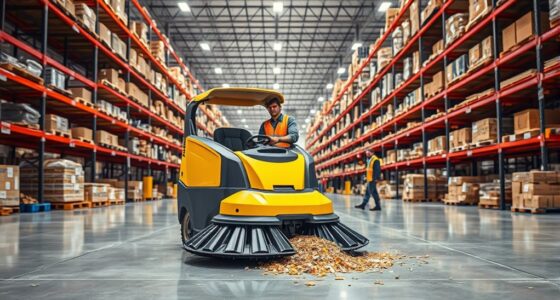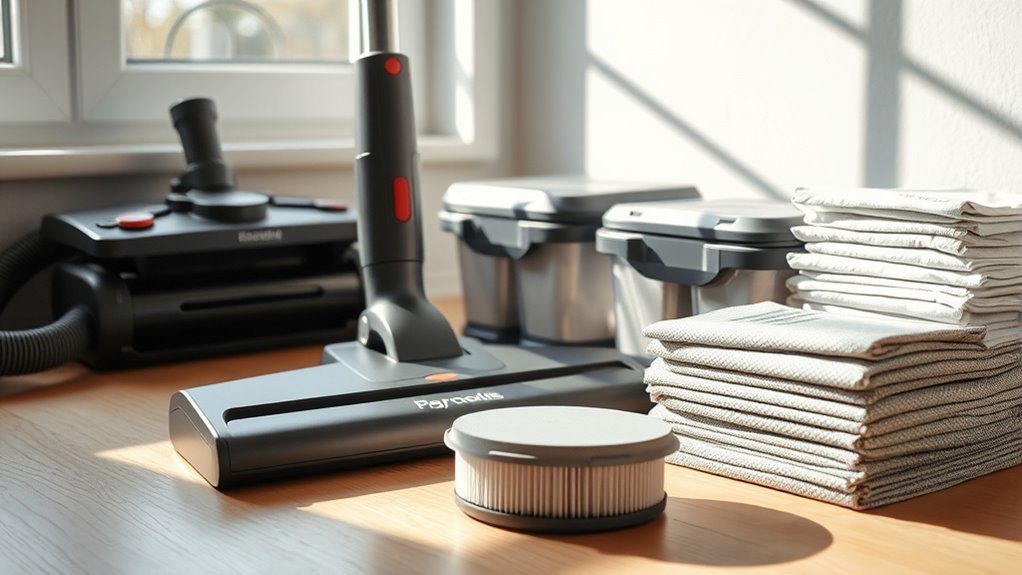

To budget for sweeper consumables effectively, you should start by estimating costs based on past usage and manufacturer guidelines. Keep track of supplies through inventory management to avoid shortages or overstocking. Forecast your consumption by knowing the lifespan of items like brushes and filters, and plan purchases accordingly. Exploring supplier options and negotiating better prices can also cut costs. If you’re interested, there’s more to uncover on managing expenses efficiently and optimizing your resources.
Key Takeaways
- Analyze past usage data and manufacturer guidelines to estimate routine and unexpected consumable costs.
- Track inventory levels and usage patterns to prevent shortages and overstocking.
- Calculate operational hours to forecast replacement needs and plan bulk purchases.
- Regularly review actual expenses against estimates to identify and address cost deviations.
- Negotiate with suppliers for better prices and terms, leveraging accurate data for cost control.

Are you prepared to manage the ongoing costs of sweeper consumables effectively? Proper budgeting starts with accurate cost estimation. You need to understand what consumables your sweeper uses, such as brushes, filters, and replacement parts. Take the time to analyze past usage data if available, or consult manufacturer guidelines to establish a baseline. By estimating costs carefully, you avoid surprises and ensure your budget reflects real needs. This process helps you set aside enough funds for routine replacements and unexpected repairs, preventing disruptions in your cleaning schedule.
Once you’ve estimated costs, the next step is effective inventory management. Keeping track of your supplies ensures you always have the necessary consumables on hand without overstocking, which ties up funds and storage space. Implement a system that records usage patterns, so when certain items run low, you can reorder proactively. Regular inventory checks reduce waste and prevent last-minute emergency purchases, which are often more expensive. An organized approach also helps identify slow-moving items, allowing you to adjust your purchasing habits accordingly.
Managing inventory efficiently requires knowing your consumption rates. For example, if brushes typically last for 100 hours of operation, and your sweeper runs 40 hours a week, you can predict when replacements will be needed. This forecasting allows you to plan purchases in advance, avoiding downtime or compromised cleaning quality. Additionally, consider bulk purchasing for frequently used consumables. Buying in larger quantities often results in cost savings and reduces the frequency of reordering.
Furthermore, exploring cost-effective options such as alternative brands or refurbished parts can help reduce expenses without compromising quality. Incorporate your cost estimation and inventory management strategies into your overall budgeting process. Regularly review actual expenses against your projections to identify any discrepancies. If you notice higher-than-expected costs, analyze the reasons—perhaps increased usage, supplier price changes, or inefficiencies—and adjust your budget accordingly. This continuous monitoring helps you stay within your financial plan and adapt to changing operational needs.
Finally, establish relationships with reliable suppliers. Negotiating better prices or favorable terms can markedly reduce ongoing expenses. When you combine accurate cost estimation, disciplined inventory management, and strategic supplier relationships, you position yourself to control expenses effectively. Over time, this integrated approach leads to more predictable costs, better resource allocation, and ultimately, a more sustainable budget for your sweeper consumables.

Oreck Commercial Orbiter Hard Floor Cleaner Machine, Multi-Purpose Floor Cleaning, Random Orbital Drive, Wide Cleaning Path, 50-Foot Long Cord, ORB550MC, Gray/Red
MULTI-PURPOSE CLEANING: Commercial grade cleaner and effective on all types of flooring surfaces. Sand, refinish, strip, scrub, wax,...
As an affiliate, we earn on qualifying purchases.
Frequently Asked Questions
How Often Should Consumables Be Replaced in Sweepers?
You should replace sweeper consumables based on your maintenance scheduling and cost analysis, typically every 100 to 200 hours of operation. Regular inspections help identify wear and tear early, preventing costly repairs. By tracking usage, you optimize replacements, ensuring efficiency. Adjust your schedule as needed, considering environmental factors and workload. Staying proactive with maintenance scheduling keeps your sweeper running smoothly and minimizes unexpected expenses.
Are There Eco-Friendly Options for Sweeper Consumables?
Yes, you can find eco-friendly sweeper consumables made from alternative materials that reduce environmental impact. Look for options that are compatible with your equipment and participate in recycling programs to dispose of used parts responsibly. These eco-friendly options help you minimize waste and support sustainability efforts. Switching to recyclable or biodegradable materials not only benefits the planet but can also enhance your company’s eco-conscious reputation.
How Can I Track Consumable Usage Costs Effectively?
You can track consumable usage costs effectively by implementing inventory management systems that monitor stock levels and usage patterns in real-time. Regularly review your data to identify trends and perform cost analysis, helping you spot areas to reduce waste or switch to more affordable options. Keep a detailed record of purchase dates and quantities, ensuring you stay within budget and optimize your consumable expenses efficiently.
What Are Signs of Consumable Wear Impacting Performance?
You’ll notice signs of consumable wear impacting performance through performance decline and wear indicator lights. When brushes or filters wear out, the sweeper might struggle with debris pickup or become less efficient. Pay attention to these indicator lights—they signal when consumables need replacing. If you see a drop in cleaning effectiveness or warnings, it’s time to inspect and replace worn parts to maintain peak performance and prevent further damage.
Can Bulk Purchasing Reduce Overall Consumable Expenses?
Yes, bulk purchasing can reduce your overall consumable expenses. By buying in larger quantities, you benefit from bulk discounts and strengthen your position in supplier negotiations. This approach often leads to lower unit costs, saving you money over time. Just make certain you’re managing inventory properly to avoid overstocking, and choose reliable suppliers to maximize these savings and maintain consistent performance of your sweeper.

Battery Powered Walk Behind Mini Automatic Floor Scrubber Machine – Compact & Portable, 15” Cleaning Width, 90-Minute Runtime, 170 RPM – Ideal for Small Commercial Spaces, Offices, Retail & More
Compact & Efficient Cleaning – Designed for small commercial spaces, this mini automatic floor scrubber features a 15-inch...
As an affiliate, we earn on qualifying purchases.
Conclusion
By carefully budgeting for sweeper consumables, you guarantee your operation runs smoothly without unexpected hiccups—think of it as your modern-day equivalent of a trusty steed’s well-kept harness. Don’t let shortages turn your routine into chaos; stay proactive and plan ahead. Remember, even in this digital age, a well-maintained sweeper is your secret weapon for cleanliness and efficiency. Keep your equipment ready, and you’ll always be the hero of your own story.

HHQ Commercial Floor Scrubber Machine with Brushes and Pads, Heavy Duty Floor Cleaner Polisher and Buffer- Deep Cleaning Tile and Grout, Hardwood Floors and Carpets without Getting on Hands and Knees
Kit Included: 1 Orbital Floor Buffer & Scrubber Machine, 2 Polishing/ Stripping Pads, 3 Scrub Brushes, 1 Microfiber...
As an affiliate, we earn on qualifying purchases.
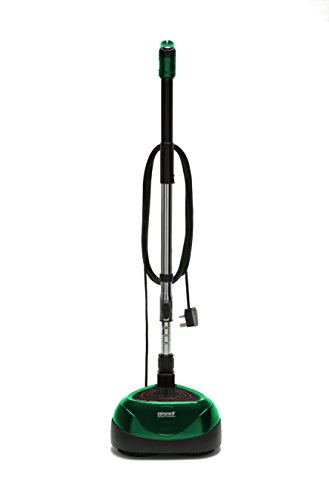
Bissell Commercial BigGreen BGFS650 Hercules Scrub and Clean Floor Machine, Green
Brush Speed (Rpm): 2200 Rpm
As an affiliate, we earn on qualifying purchases.