
By implementing strategic navigation patterns, you can cut cleaning time by up to 30%. Optimize routes with systematic paths like spirals or lines, and leverage mapping technology for real-time adjustments. Obstacle detection and avoidance guarantee smooth coverage, while learning capabilities help your sweeper improve over time. These innovations allow your system to cover more ground efficiently, avoid repeats, and adapt to changing environments. Keep exploring to discover how these techniques can maximize your cleaning efficiency.

Get cleaning gear delivered free with Prime
- Fast, free delivery on millions of items
- Prime Video, Amazon Music and more included
- Member-only deals all year
Key Takeaways
- Implement systematic path planning, such as grid or spiral patterns, to maximize coverage and reduce cleaning time.
- Utilize real-time obstacle detection and route recalculations to avoid redundant passes and streamline cleaning.
- Incorporate mapping technology for environment understanding, enabling strategic navigation and fewer missed spots.
- Combine sensor data with adaptive algorithms to optimize routes around furniture and clutter efficiently.
- Employ learning algorithms to refine navigation patterns over time, continuously improving cleaning speed and coverage.
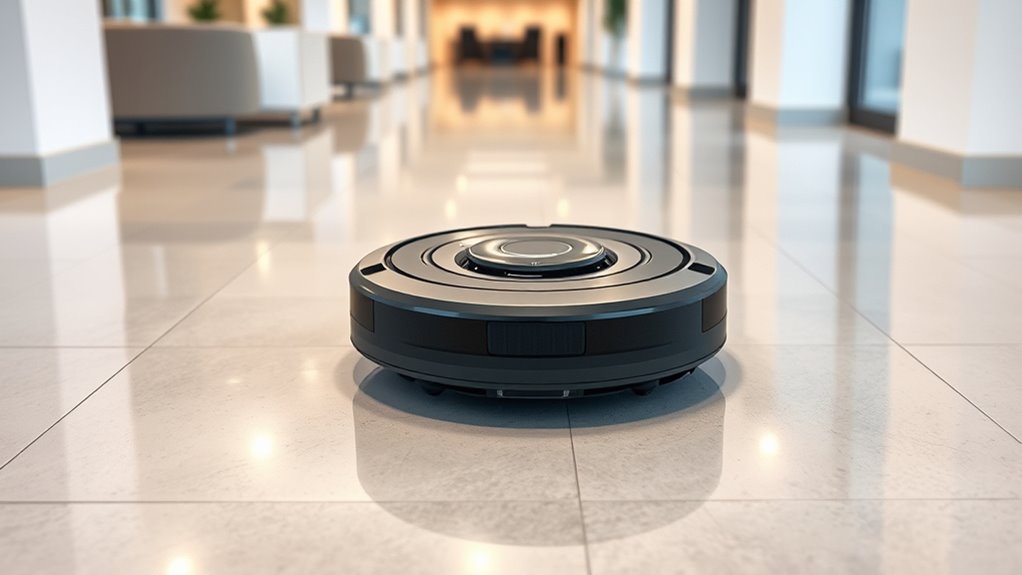
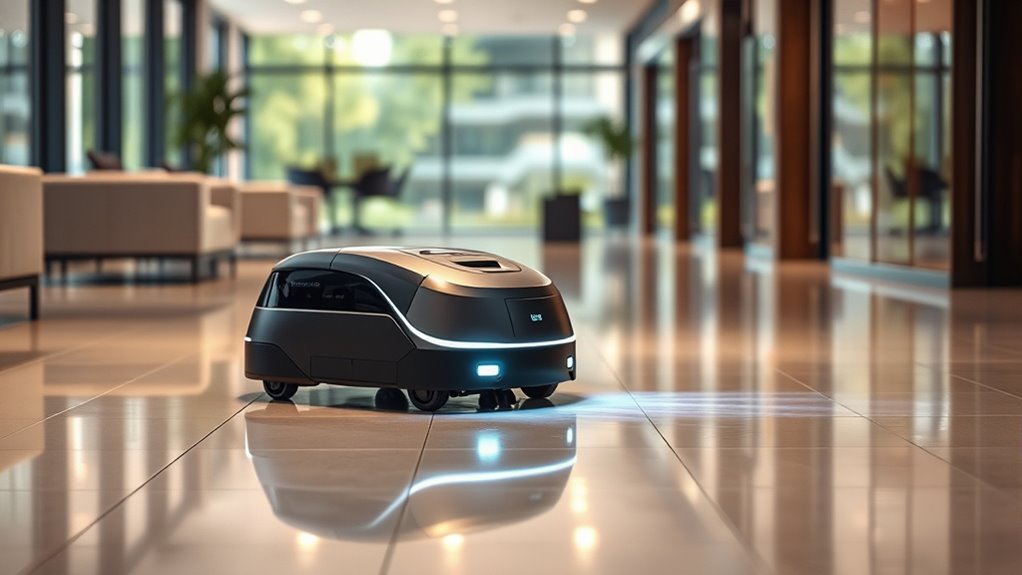
Sweeper movement patterns are essential for optimizing cleaning efficiency and coverage. When you choose the right patterns, your robotic sweeper can clean more area in less time, saving you both effort and energy. One of the key components in achieving this is robot path optimization, which involves programming the robot to follow the most efficient route through a space. Instead of random movements that can cause unnecessary overlaps and missed spots, optimized paths ensure every inch gets cleaned systematically. This strategic approach minimizes redundant passes and helps you reach cleaning goals faster. Additionally, incorporating mapping technology allows the robot to better understand and adapt to the layout of your space for enhanced efficiency. Alongside robot path optimization, obstacle avoidance plays a vital role in maintaining efficiency. Modern robotic sweepers are equipped with sensors that detect furniture, walls, and other obstacles. When these are identified early, the robot adjusts its route seamlessly, avoiding collisions or getting stuck. This prevents interruptions and reduces the need for manual intervention, keeping your cleaning cycle smooth and uninterrupted. Proper obstacle avoidance also helps protect your furniture and belongings from accidental bumps or damage. The most effective movement patterns typically combine systematic routes with intelligent obstacle avoidance algorithms. For example, a spiral or linear pattern might be used in open spaces, allowing the robot to cover the entire area methodically. When obstacles are detected, the robot recalculates its route, often using real-time data to create a new, optimized path. This adaptability ensures no spots are missed, even in cluttered environments. By intelligently maneuvering around obstacles, the robot maintains high coverage without wasting time navigating around furniture or tight corners. Implementing these movement patterns requires some initial setup, but the long-term benefits are worth it. Many robotic sweepers now come with customizable maps or learning capabilities that adapt to your space over time. As the robot “learns” the layout, it becomes better at avoiding obstacles and optimizing its route. This continual improvement means cleaning becomes faster and more thorough with each session.
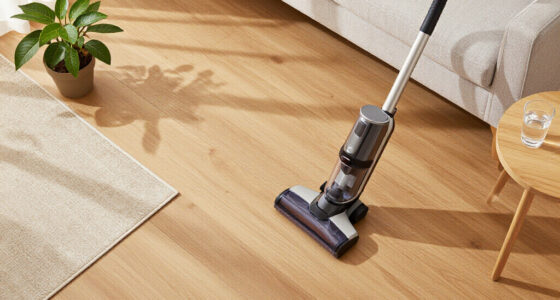
robot vacuum with mapping technology
As an affiliate, we earn on qualifying purchases.
As an affiliate, we earn on qualifying purchases.
Frequently Asked Questions
How Do Different Floor Types Affect Navigation Efficiency?
Different floor types considerably impact navigation efficiency because of floor compatibility and surface adaptability. You’ll find that smooth surfaces like hardwood or tile allow your cleaner to move quickly and efficiently, while carpets may slow it down due to their texture. By understanding these differences, you can optimize your sweeping pattern, ensuring your device adapts well to each surface, ultimately saving time and improving overall cleaning performance.
What Maintenance Is Required for Optimal Pattern Performance?
To keep your sweeper’s navigation patterns performing efficiently, you need to regularly calibrate sensors and install software updates. Sensor calibration ensures the device accurately detects obstacles and map boundaries, preventing missed spots or collisions. Software updates improve navigation algorithms, fix bugs, and enhance overall efficiency. Schedule these maintenance tasks weekly or after any major changes to your environment. Consistent upkeep guarantees your sweeper continues to cut cleaning time by 30%.
Can These Patterns Adapt to Obstacle Layouts?
Imagine your cleaner as a dancer mastering every stage. With obstacle customization, it learns to sidestep furniture and walls, showcasing pattern flexibility. You can program or update its navigation to adapt to your home’s unique layout, ensuring efficient cleaning without missing spots. This flexibility makes your device more responsive, turning obstacles into part of its rhythm, so it keeps dancing smoothly, no matter the layout challenges.
Are There Safety Concerns With Advanced Navigation Systems?
When considering advanced navigation systems, safety concerns are vital. You should be aware of liability concerns if the system malfunctions and causes damage or injury. Additionally, privacy implications arise since these systems often collect data about your home layout and routines. It’s imperative to choose reliable technology, understand the data privacy policies, and guarantee the system is properly maintained to minimize risks and protect your safety and privacy.
How Do User Preferences Influence Pattern Selection?
Imagine your home as a canvas; your preferences paint the perfect cleaning pattern. Your choices influence pattern customization, ensuring the sweeper navigates efficiently around your furniture and clutter. By tailoring these patterns, you make cleaning more personal and effective. User preferences directly shape how the robot plans its route, so you get a customized clean that suits your lifestyle, saving time and making maintenance feel effortless.
Conclusion
By adopting efficient sweeper navigation patterns, you streamline your cleaning process, save valuable time, and boost productivity. You plan your routes precisely, cover every corner confidently, and avoid unnecessary overlaps. You move smoothly, clean thoroughly, and finish faster. With these strategies, you transform your cleaning routine into a seamless, effective task. Embrace smarter navigation, optimize your efforts, and enjoy a cleaner space in less time—because when you work smarter, everything else falls into place.
Fall Picks
fall essentials
As an affiliate, we earn on qualifying purchases.