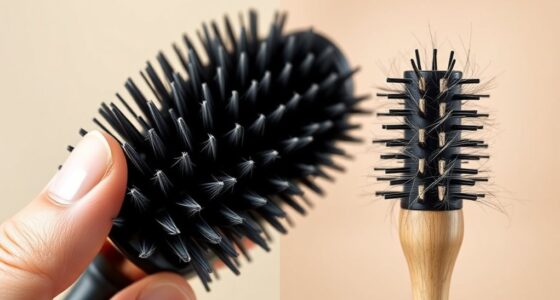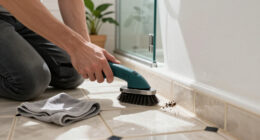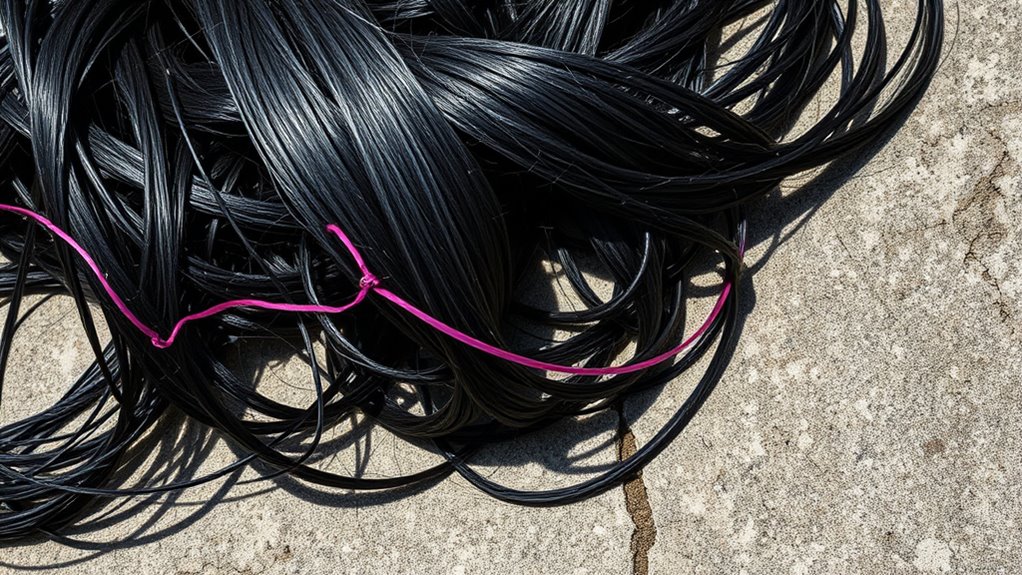

To remove hair and string from concrete floors without causing jams, use a vacuum with sturdy brushes and perform slow, deliberate passes to loosen debris effectively. Use a hose attachment for tight corners and employ tweezers or a rubber squeegee for stubborn strands. Gentle, careful techniques prevent pushing debris further in or causing surface damage. For thorough cleaning tips and preventive tricks, you’ll find more ways to keep your floors spotless and jam-free.

Get cleaning gear delivered free with Prime
- Fast, free delivery on millions of items
- Prime Video, Amazon Music and more included
- Member-only deals all year
Key Takeaways
- Use a vacuum with sturdy brushes and slow, deliberate passes to loosen and remove hair and string effectively.
- Employ a rubber squeegee or tweezers to lift stubborn strands without damaging the concrete surface.
- Apply a mild detergent solution and gently scrub with a soft brush to break down and loosen stuck hair or string.
- Use a hose attachment to reach tight corners and crevices where debris tends to hide.
- Regularly vacuum and promptly clean to prevent buildup and maintain a debris-free concrete floor.

Concrete floors often seem like a blank canvas, but they can quickly become cluttered with stray hair and string. When that happens, it’s easy to feel overwhelmed about how to clean them efficiently. The key is using the right vacuum techniques to pick up loose debris without spreading the mess or causing damage. Start by selecting a vacuum with a sturdy brush or beater bar, as this helps loosen hair and string from the uneven surface of concrete. Use slow, deliberate passes to ensure you catch every strand, especially in cracks and crevices. If your vacuum has a hose attachment, utilize it to reach tight corners and edges where debris tends to hide. Avoid rushing, as quick movements might push hair and string further into the surface or scatter it around.
Once loose debris is removed, you might notice stains or residual grime. For stain removal, avoid harsh chemicals that can damage your concrete or make cleaning more difficult. Instead, opt for a mild detergent mixed with water or a specialized concrete cleaner. Apply it with a soft-bristled scrub brush or mop, and work in small sections to prevent spreading dirt. Rinse thoroughly with clean water and dry with a microfiber cloth or mop to prevent water spots or streaks. If stubborn stains persist, a poultice formulation or a commercial concrete stain remover designed for deep cleaning can be effective. Always follow the manufacturer’s instructions, and test on a small, inconspicuous area first to prevent discoloration. Additionally, using appropriate air purifier technology can help reduce airborne dust and allergens that settle on concrete floors over time.
When dealing with hair and string, patience is your best tool. Use gentle vacuuming techniques first to lift the debris from the surface. Avoid using harsh brushes or aggressive scrubbing at this stage, as it can push the debris further into the concrete or cause scratches. For stubborn strands, tweezers or a rubber squeegee can be helpful for lifting them out without damaging the surface. Regular maintenance, like routine vacuuming and prompt stain removal, keeps your concrete floors looking pristine and prevents build-up over time.
vacuum cleaner with sturdy brush for concrete floors
As an affiliate, we earn on qualifying purchases.
As an affiliate, we earn on qualifying purchases.
Frequently Asked Questions
Can I Use Household Vinegar to Remove Hair and String?
Yes, you can use household vinegar to remove hair and string, but keep vinegar safety in mind. Vinegar is an effective alternative cleaning agent because it breaks down residue without harsh chemicals. To use, soak a cloth in vinegar and gently lift the hair or string from the concrete. Just avoid prolonged contact or high concentrations, and always test a small area first to prevent any surface damage.
What Tools Are Best for Deep Cleaning Embedded Fibers?
A stitch in time saves nine, so use the right tools for deep cleaning embedded fibers. You should grab vacuum attachments like crevice tools to loosen fibers, then apply adhesive removers designed for tough residues. These tools help break bonds and lift fibers effectively, preventing damage. Combining suction power with gentle chemical solutions guarantees you remove stubborn hair and string without harming your concrete surface.
How Long Should I Wait Before Reapplying Cleaning Solutions?
You should wait at least 15 to 30 minutes before reapplying cleaning solutions, allowing the initial product to work effectively. Incorporate this into your cleaning schedule to guarantee thorough stain prevention. Rushing the process can cause residues to set or fibers to embed further. Patience helps break down stubborn hair and string on concrete floors, making removal easier and preventing future buildup. Always follow product instructions for best results.
Is There a Risk of Damaging the Concrete During Removal?
Coincidences often reveal hidden risks, and when removing hair or string from a concrete surface, there’s a small chance of potential damage if you use harsh tools or chemicals. You should be cautious and avoid abrasive scrapers or strong acids, as they can etch or chip the concrete. Instead, opt for gentle methods to protect your surface, ensuring you don’t unintentionally cause any harm during the removal process.
Can This Method Be Used on Outdoor or Sealed Concrete Surfaces?
Yes, you can use this method on outdoor or sealed concrete surfaces, but you should consider outdoor durability and sealed surface considerations first. For outdoor surfaces, verify the method won’t cause erosion or damage due to weather exposure. When working on sealed surfaces, confirm that the sealant won’t be compromised or stained. Always test a small area first, and adjust your approach for maximum results without harming the surface.
Conclusion
Removing hair and string from concrete floors is quick and simple if you follow these steps. Think of it like peeling a sticker off a surface—you just need the right tools and a little patience. With a bit of effort, you’ll make your floor look as good as new. Don’t let stubborn debris dull your space; a swift cleanup restores its shine, much like a fresh coat of paint revitalizes a room.
Fall Picks
fall essentials
As an affiliate, we earn on qualifying purchases.