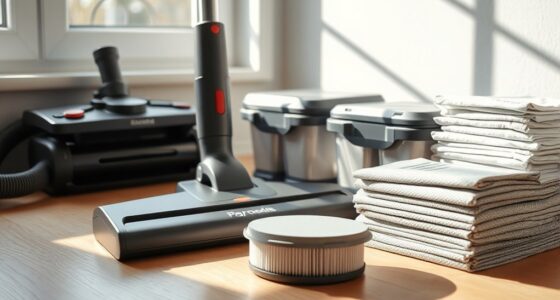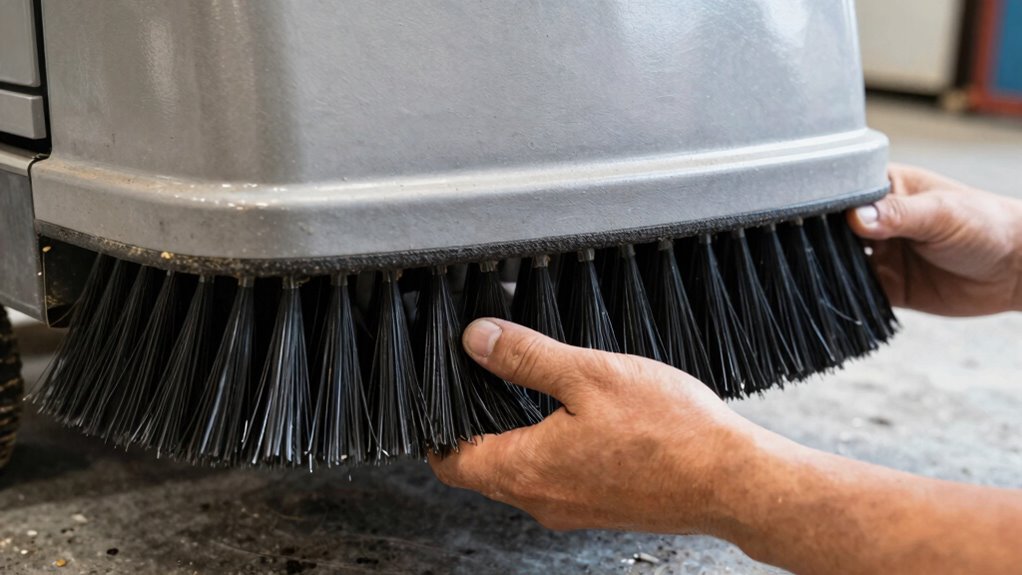

Before each shift, inspect your sweeper by checking brushes or rollers for debris, wear, or damage, and replace if needed. Test safety guards, shields, and emergency stops to guarantee they’re secure and operational. Examine belts, hoses, and electrical connections for cracks or corrosion. Listen for unusual noises and confirm controls and warning signals work properly. Regularly review tire conditions and keep filters, vents, and collection hoppers clean. For more detailed steps, you’ll find useful tips to keep your sweeper running smoothly.

Get cleaning gear delivered free with Prime
- Fast, free delivery on millions of items
- Prime Video, Amazon Music and more included
- Member-only deals all year
Key Takeaways
- Check and clean brushes or rollers for debris, wear, and proper alignment.
- Inspect belts, hoses, and suction system components for damage or blockages.
- Test safety features, including emergency stop, guards, and warning signals.
- Verify controls, gauges, lights, and warning indicators function correctly.
- Examine tires or tracks for proper inflation, wear, and overall condition.
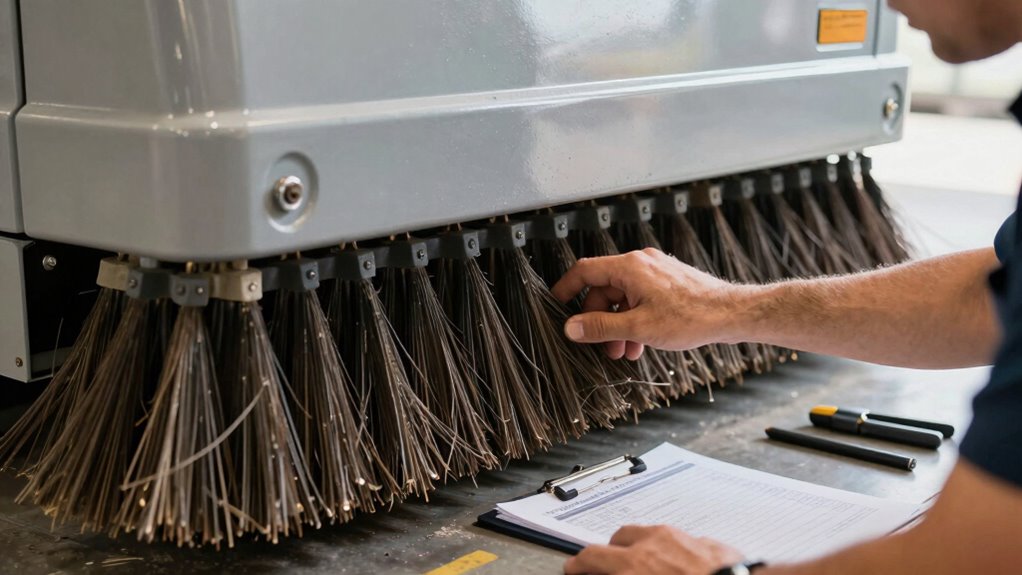
Have you ever wondered whether your sweeper is operating at its best? Before each shift, it’s essential to perform a quick yet thorough inspection to guarantee top performance and safety. Start by checking the maintenance checklist, which helps you identify potential issues before they escalate. Begin with the brushes or rollers; make sure they’re clean, free of debris, and worn evenly. Worn brushes reduce cleaning efficiency, so replace them if they’re noticeably frayed or damaged. Inspect the belts and hoses for cracks, tears, or looseness, as these can cause malfunctions during operation.
Regularly inspect brushes, belts, and hoses for wear and damage to ensure optimal sweeper performance.
Next, examine the suction system or vacuum components. Confirm that filters are clean and properly installed, since clogged filters hinder suction power. Check for any blockages in the intake or exhaust vents, clearing them if necessary. While you’re at it, examine the collection hopper or debris container—empty it if it’s full, and inspect for cracks or damage that could cause leaks or reduce capacity. Making sure these parts are in good condition helps maintain consistent cleaning performance. Also, inspecting the components of the suction system ensures optimal functionality. Regularly inspecting home appliances and equipment can prevent unexpected breakdowns and extend their lifespan.
When it comes to safety precautions, you need to pay close attention. Before starting the sweeper, make sure all safety guards and shields are in place and secure. Check the emergency stop button or switch to confirm it’s functioning correctly. Inspect the battery or power connections for corrosion, loose wires, or damage, and ensure they’re secure to prevent electrical issues. Always wear appropriate personal protective equipment—gloves, goggles, and hearing protection if required—and be cautious around moving parts. If you notice any damaged or missing safety features, address these issues immediately before operating the machine. Performing safety inspections regularly is essential for a safe working environment.
While inspecting, listen for unusual noises or vibrations when you turn on the sweeper. Unusual sounds can be early signs of mechanical problems, so don’t ignore them. Testing the controls and steering to ensure they respond smoothly without hesitation is essential, and proper calibration can help maintain accuracy. Examine the tires or tracks for proper inflation or wear, as this affects maneuverability and safety. Confirm that all lights, warning signals, and gauges are working correctly to keep you informed during operation. Performing these checks consistently not only prolongs your sweeper’s lifespan but also guarantees a safer working environment. Regular preventive maintenance can help catch issues early and keep the equipment running smoothly.
As an affiliate, we earn on qualifying purchases.
Frequently Asked Questions
What Tools Are Needed for Sweeper Inspection?
You’ll need basic tools like a wrench, screwdriver, and possibly a torque wrench for precise tool calibration. Safety gear such as gloves, safety glasses, and a dust mask is vital to protect yourself during inspection. Use the tools to check for loose bolts, worn belts, and proper fluid levels. Make certain all parts are functioning correctly, and replace or tighten components as needed to keep the sweeper operating safely and efficiently.
How Often Should Filters Be Replaced?
You should replace filters as part of your regular filter maintenance schedule, typically every 3 to 6 months, depending on usage and environment. Follow your sweeper’s replacement schedule to guarantee maximum performance. Regularly inspecting filters for dirt and wear helps you determine if they need replacing sooner. By sticking to this schedule, you prevent clogging, maintain suction power, and extend the lifespan of your sweeper.
Can I Inspect the Sweeper While It’s Running?
You shouldn’t inspect the sweeper while it’s running; it’s best to prioritize safety precautions first. Always turn off the machine before using your inspection checklist. This helps prevent accidents and allows you to see all parts clearly. Performing a thorough, stationary inspection guarantees you catch any issues early. Remember, safety always comes first—taking that moment to turn off the sweeper protects both you and the equipment.
What Are Common Signs of a Malfunction?
You’ll notice common signs of a malfunction, like uneven brush wear or decreased cleaning efficiency. Keep an eye out for hydraulic leaks, which often appear as fluid pooling or dripping. If the brushes are worn unevenly, it indicates misalignment or excessive wear. Hydraulic leaks can cause power loss or strange noises. Address these issues promptly to prevent further damage and guarantee your sweeper operates smoothly and effectively.
How Do I Troubleshoot Uneven Sweeping Results?
If your sweeper’s results are uneven, you’re likely battling a stubborn issue that’s as tricky as a fox in a henhouse. Check the sweeper blade for wear or damage, ensuring it’s aligned properly. Also, verify dust suppression systems are working correctly, as poor dust control can impact sweeping consistency. Regularly inspect and clean these components, and you’ll restore even, effective sweeping in no time.
Conclusion
Now that you know how to inspect your sweeper before every shift, think of it as giving your vehicle a quick health check-up—it keeps everything running smoothly. Regular inspections are your best defense against unexpected breakdowns and guarantee the job gets done efficiently. Just like tuning a guitar keeps music playing in harmony, taking a few moments to check your sweeper keeps your workday on track. Stay vigilant, and your sweeper will serve you reliably, shift after shift.
Fall Picks
fall essentials
As an affiliate, we earn on qualifying purchases.