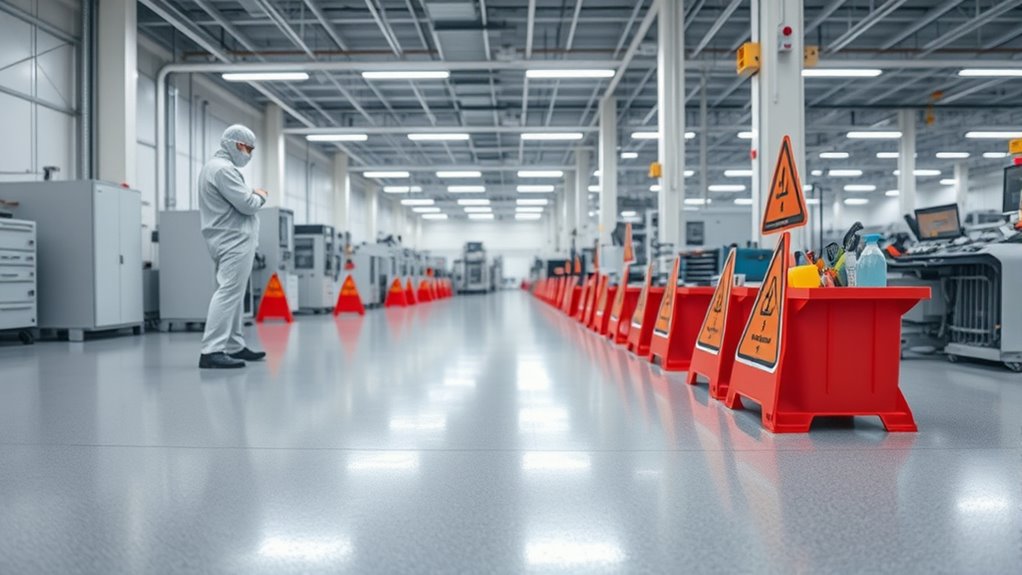

To prevent FOD on manufacturing floors, you should implement a thorough approach that emphasizes employee training, clear safety signage, and fostering a strong safety culture. Encourage your team to stay vigilant by identifying and disposing of debris properly, and use visible signs as constant reminders of safety routines. Maintaining cleanliness and promoting ongoing awareness reduces risks of costly equipment damage and injuries. Keep confronting these practices to discover more effective strategies for FOD prevention.
Key Takeaways
- Conduct regular employee training to identify and properly dispose of potential FOD items.
- Use clear, strategically placed safety signage to remind staff of FOD prevention protocols.
- Maintain organized workspaces with designated tool storage and debris containment zones.
- Implement routine inspections and reporting systems to catch and address FOD risks promptly.
- Foster a safety-first culture emphasizing continuous vigilance and accountability among all personnel.
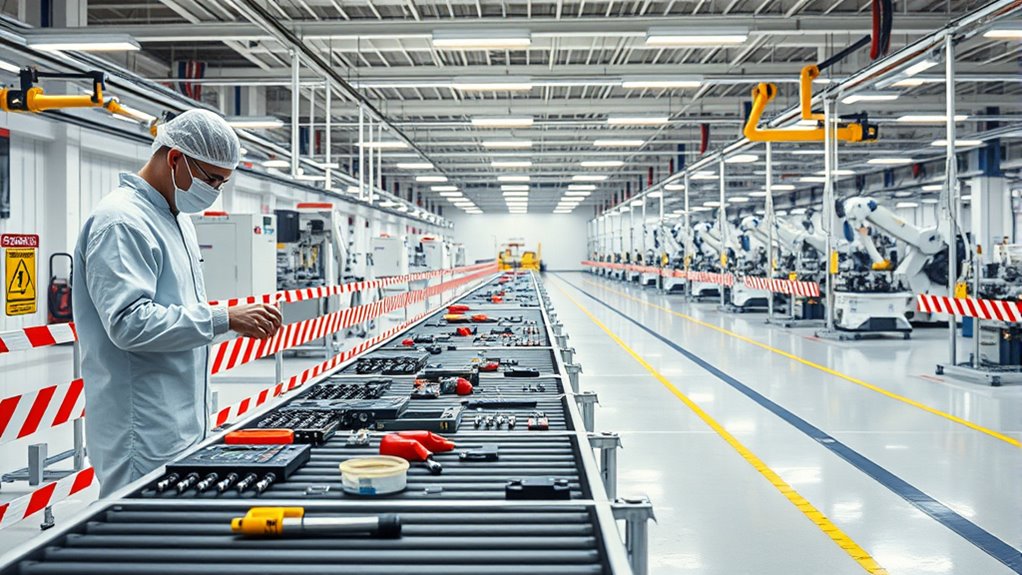
Have you ever considered how foreign object debris (FOD) can disrupt manufacturing processes and compromise safety? FOD, which includes loose tools, parts, packaging materials, or any debris that can accidentally enter production lines, poses a serious threat. Not only can it cause costly damage to machinery, but it also endangers your team’s well-being. To effectively prevent FOD, you need an all-encompassing approach that emphasizes employee training and clear safety signage. These elements work together to create a vigilant environment where FOD risks are minimized.
Prevent FOD with employee training and clear safety signage to ensure a safer, more efficient manufacturing environment.
Employee training is your first line of defense. When your staff understands the importance of FOD prevention, they become proactive in maintaining a clean workspace. Training sessions should cover identifying potential debris, proper handling and disposal of materials, and the critical role each person plays in safety. Reinforcing these practices regularly ensures that everyone stays alert and committed. For example, employees should be taught to inspect their work areas before and after shifts, ensuring tools and parts are accounted for and properly stored. Additionally, training should include procedures for reporting any FOD concerns immediately, so issues are addressed before they escalate. When your team is well-educated on FOD risks and prevention measures, it reduces the likelihood of debris entering the production line, ultimately safeguarding your equipment and personnel. Self Watering Plant Pots can serve as a metaphor for maintaining a consistent and reliable safety environment—just as these planters provide steady moisture, consistent safety practices provide steady protection.
Safety signage also plays an essential role in FOD prevention. Clear, visible signs serve as constant reminders of safe practices and the importance of maintaining a debris-free environment. Strategically placing signage near high-risk areas, such as tool stations, loading zones, and machine entrances, helps reinforce vigilance. These signs can include instructions on proper tool storage, reminders to clean workspaces regularly, and warnings about the dangers of leaving debris behind. Well-designed safety signage not only promotes awareness but also encourages accountability. When your team sees consistent messages about FOD prevention, it becomes ingrained in their daily routines. This visual cueing supports training efforts and keeps safety top of mind, reducing the chance of debris being overlooked or ignored.
Together, employee training and safety signage create a culture of safety and cleanliness. By empowering your team with knowledge and providing constant visual reminders, you foster an environment where FOD is less likely to accumulate. This proactive approach minimizes downtime, prevents costly equipment repairs, and most importantly, keeps everyone safe. Remember, preventing FOD isn’t a one-time effort but an ongoing process that requires your commitment to education and clear communication. When your manufacturing floor is a clean, organized space with informed staff and visible safety cues, you markedly reduce the risk of FOD-related incidents and ensure smoother, safer operations.
Frequently Asked Questions
How Often Should FOD Training Sessions Be Conducted?
You should conduct FOD training sessions at least quarterly to guarantee employee awareness remains high. Regular training keeps everyone updated on best practices and reinforces the importance of preventing foreign object debris. Consistent training frequency helps identify new risks and maintains a proactive safety culture. By scheduling these sessions often, you ensure your team stays vigilant and prepared, reducing the likelihood of FOD incidents on your manufacturing floors.
What Specific Tools Can Help Detect FOD?
Did you know that 85% of FOD incidents are caught early with proper detection tools? You can use inspection tools like magnifying glasses and flashlights to manually check for debris. Detection devices such as metal detectors and X-ray scanners also play a vital role in identifying small foreign objects. These tools help you quickly spot FOD, reducing risks and ensuring a safer manufacturing environment.
Are There Industry Standards for FOD Prevention?
Yes, there are industry standards for FOD prevention. You should follow established inspection protocols and conduct regular safety audits to identify potential FOD hazards. These standards emphasize maintaining clean work areas, proper tool management, and employee training. By adhering to these protocols, you guarantee a safer environment, reduce FOD risks, and meet industry requirements, ultimately preventing costly damage and safety incidents on manufacturing floors.
How Does FOD Impact Overall Manufacturing Safety?
FOD markedly impacts manufacturing safety by increasing the risk of accidents and equipment damage. When worker awareness is high, you’re more likely to spot potential hazards early. Regular equipment maintenance reduces the chance of loose parts or debris that could become FOD. By staying vigilant and maintaining your equipment, you enhance safety, prevent costly downtime, and protect everyone on the floor from preventable incidents.
What Are Effective Ways to Monitor FOD During Shifts?
During shifts, you can effectively monitor FOD by conducting regular visual inspections of the manufacturing floor. Encourage employee awareness by training staff to identify and report potential FOD items immediately. Implement checklists and designated zones for FOD collection, and assign specific personnel to oversee these tasks. This proactive approach guarantees FOD is detected early, maintaining a safer work environment and minimizing the risk of damage or accidents.
Conclusion
By consistently following these FOD prevention measures, you create a safer, more efficient manufacturing environment. Notably, some experts believe that even tiny, overlooked objects can cause major equipment failures or accidents. While this might seem exaggerated, studies show that most FOD incidents originate from small debris. So, stay vigilant, keep your floors clean, and remember—what you don’t see can truly hurt your operation. Prevention is your best defense against costly FOD-related issues.