
Choosing between ride-on and walk-behind sweepers depends on your facility size and cleaning needs. Ride-on sweepers suit large areas with demand for faster coverage, offering longer battery life but higher costs. Walk-behind models work well for tight, cluttered spaces and have simpler maintenance. Consider your budget, size, and frequency of cleaning to find the best fit. If you’re interested in understanding which option maximizes your efficiency, keep exploring the key differences.
Prime for Young Adults — start your free trial
Fast free delivery, streaming and member deals for eligible 18–24 year olds.
As an affiliate, we earn on qualifying purchases.
Key Takeaways
- Ride-on sweepers are ideal for large, open areas with high cleaning demands, while walk-behind models suit confined or cluttered spaces.
- Larger batteries in ride-on sweepers support extended operation, reducing downtime during long shifts.
- Walk-behind sweepers generally have lower purchase and maintenance costs, making them cost-effective for smaller tasks.
- Maintenance complexity is higher for ride-on sweepers due to larger components; walk-behind models are simpler to service.
- Operational ease and productivity depend on facility size and space, with ride-on models offering faster coverage and walk-behinds providing maneuverability.
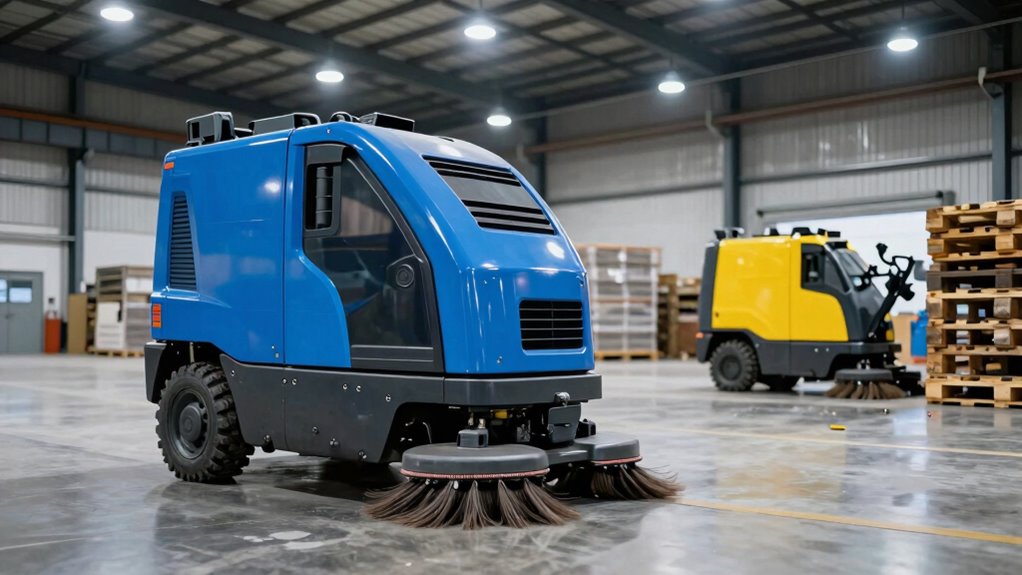
Are you searching for an efficient way to keep your industrial facility spotless? Choosing between ride-on and walk-behind sweepers can significantly impact your cleaning routine, especially when considering factors like battery life and maintenance costs. Ride-on sweepers are designed for larger areas, allowing you to cover ground quickly and comfortably. With their larger batteries, they tend to have longer battery life, meaning fewer interruptions for recharging during extended cleaning shifts. This advantage can boost productivity, reduce downtime, and ensure your facility stays consistently clean. However, it’s essential to consider maintenance costs; ride-on sweepers often require more intensive upkeep due to their complex systems and larger components. Regular maintenance, including battery checks and mechanical inspections, can add to your expenses but is crucial for optimal performance and longevity.
Ride-on sweepers offer longer battery life and faster coverage for large, demanding cleaning areas.
On the other hand, walk-behind sweepers are more maneuverable and easier to store, making them ideal for tight spaces or areas with clutter. They’re generally more affordable upfront, and their smaller size typically translates to lower maintenance costs. You may find that batteries in walk-behind models are simpler to replace or service, which further reduces ongoing expenses. While their battery life might be shorter than ride-on models, they’re still effective for smaller or less frequently cleaned zones. Plus, because they’re lighter and less complex, the maintenance process tends to be straightforward and less costly, which benefits your budget over time. Additionally, the battery capacity of these sweepers plays a crucial role in their overall efficiency. Additionally, advancements in battery technology continue to improve battery performance, making even smaller sweepers more capable than before. Moreover, choosing the right type of sweeper also involves considering the ease of operation, which can influence overall productivity.
Furthermore, understanding the long-term costs associated with each type of sweeper can help in planning your maintenance budget effectively. When deciding, think about the size of your facility and the frequency of cleaning required. If you operate a large warehouse or manufacturing plant that demands frequent, extensive cleaning, a ride-on sweeper’s longer battery life and faster coverage can save you time and effort. Conversely, if your space is more confined, or you only need to clean specific areas occasionally, a walk-behind sweeper might be more practical and economical. It’s also worth considering how often you’ll need maintenance — ride-on sweepers, while durable, may incur higher costs due to their complexity, so regular upkeep is a must.
Ultimately, your choice hinges on balancing efficiency, cost-effectiveness, and the specific demands of your facility. Both options have their merits, but understanding battery life and maintenance costs helps you make an informed decision that keeps your space clean without draining your resources.
As an affiliate, we earn on qualifying purchases.
Frequently Asked Questions
Which Sweeper Type Is More Cost-Effective Long-Term?
A ride-on sweeper is generally more cost-effective long-term because it offers better efficiency, especially for large areas. Conduct a thorough cost comparison and efficiency analysis; ride-ons reduce labor costs and increase productivity, saving you money over time. While walk-behind sweepers may have lower initial costs, their slower operation can lead to higher expenses. In the long run, a ride-on sweeper often provides better value for industrial facility cleaning needs.
How Do Maintenance Requirements Differ Between Ride-On and Walk-Behind Models?
Coincidentally, maintaining ride-on sweepers usually involves more complex tasks. You’ll need to focus on battery maintenance, ensuring batteries stay charged and in good condition, and provide operator training for safe, efficient use. Walk-behind models tend to have simpler maintenance routines, often requiring less attention to batteries and easier operator handling. With ride-ons, expect regular checks on electrical systems, while walk-behinds demand less technical upkeep, making maintenance more straightforward.
Can These Sweepers Handle Outdoor Industrial Environments?
Yes, these sweepers can handle outdoor industrial environments, thanks to their outdoor durability and weather resistance. Ride-on models often have robust construction and higher power, making them suitable for larger, tougher outdoor areas. Walk-behind sweepers are also designed with weather resistance features, allowing them to operate effectively in various outdoor conditions. Both types are built to withstand exposure to elements like rain, dust, and debris, ensuring reliable performance outdoors.
Are There Any Safety Concerns With Ride-On Sweepers?
Sure, ride-on sweepers seem like a breeze, but don’t forget the safety concerns. You might think operator safety is guaranteed, yet accidents can happen if you overlook proper training or safety protocols. Ironically, these machines are designed for efficiency, but without vigilant accident prevention measures, they could pose risks. Always guarantee your operators are well-trained, wear protective gear, and follow safety procedures to keep everyone safe.
What Is the Typical Lifespan of Each Type of Sweeper?
Typically, ride-on sweepers last around 5 to 10 years, depending on usage, battery life, and maintenance. Walk-behind sweepers often have a shorter lifespan of 3 to 7 years. Proper operator training helps maximize equipment longevity by ensuring correct use and routine maintenance. Regularly checking the battery life and servicing components extend each sweeper’s lifespan, whether you choose ride-on or walk-behind models.
Conclusion
Choosing between ride-on and walk-behind sweepers depends on your facility’s size and specific needs. If you think a ride-on might be too costly or unnecessary, remember that it can boost efficiency and reduce labor costs over time. Don’t let initial expenses hold you back—investing in the right sweeper guarantees cleaner, safer environments and saves you money in the long run. Ultimately, the right choice streamlines your operations and keeps your facility spotless.
NFL season / tailgating Picks
team gear
As an affiliate, we earn on qualifying purchases.