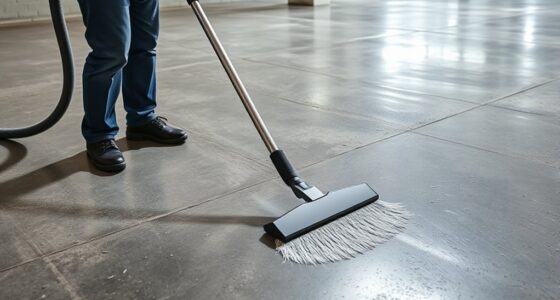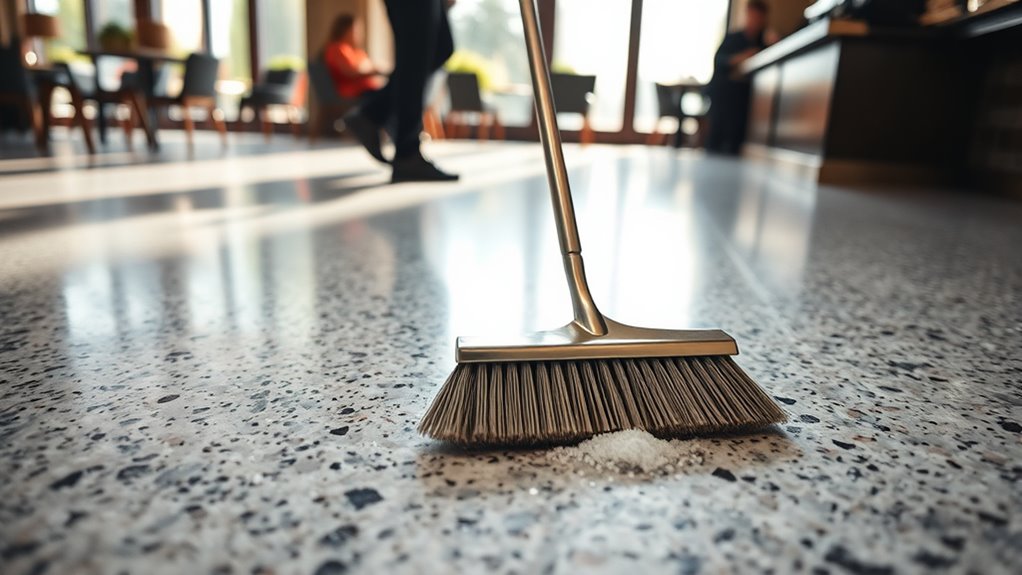
To keep your café’s outdoor surfaces scratch-free when dealing with sand and salt, use soft-bristled brooms and sweep carefully at a gentle angle. Focus on corners and edges, and lift debris instead of dragging it across the surface. Follow up with a damp cloth or mop to remove residual salt and dust. Consistently practicing these gentle techniques helps protect your flooring and maintain a welcoming environment. Discover more tips to ensure a safe, clean outdoor space.
Key Takeaways
- Use soft-bristled brooms or brushes to gently lift sand and salt without scratching surfaces.
- Sweep slowly and at an angle to dislodge stubborn debris safely.
- Follow up with a damp mop or cloth to remove residual salt and dust.
- Educate staff on proper sweeping techniques emphasizing debris lifting over dragging.
- Regularly inspect outdoor areas for damage or debris buildup, addressing issues promptly.

Have you ever noticed tiny grains of sand or specks of salt on your cafe table? These small particles often sneak in from the outdoors, especially during winter when debris like snow melt, ice melt residues, and road salt get tracked inside. Managing this winter debris is essential to maintaining outdoor cleanliness and creating a welcoming environment for your customers. The challenge lies in removing these tiny, abrasive particles without damaging your delicate flooring or scratching surfaces. A scratch-free sweeping routine is your best solution to keep your cafe spotless while preserving its appearance.
When it snows or freezes, your outdoor area becomes a magnet for debris. Customers walking in and out drag in snow melt residues, salt, and dirt that stick to shoes and get transferred onto tables, floors, and counters. This winter debris can accumulate quickly, making the space look dirty and unkempt. Regular sweeping becomes critical, but it’s not just about speed; it’s about doing it carefully to avoid scratches on your flooring. Using soft-bristled brooms or brushes designed specifically for outdoor surfaces helps lift away the debris gently. These tools trap particles without scratching, ensuring your floors stay pristine.
An effective outdoor cleanliness strategy involves sweeping frequently, especially after busy periods or storms. Start by sweeping at an angle to dislodge stubborn debris. Pay special attention to corners and edges where dirt tends to settle. For areas with salt or ice melt, consider using a broom with softer bristles to prevent damage from abrasive particles. If you notice salt residues that have hardened, sweep slowly and methodically to avoid scratching the surface beneath. You can also follow up with a damp mop or cloth to pick up residual dust and salt, but avoid using harsh chemicals that could harm your flooring material. Additionally, choosing appropriate cleaning tools tailored for outdoor surfaces can help minimize damage and keep the flooring looking new.
You should also educate staff on proper sweeping techniques. Encourage them to lift debris rather than dragging it across surfaces, which can cause scratches. Regularly inspect your outdoor furniture and flooring for signs of damage or excessive debris buildup. By maintaining a routine that emphasizes gentle sweeping, you’ll extend the lifespan of your flooring and keep your outdoor space looking inviting. Remember, outdoor cleanliness during winter isn’t just about aesthetics—it’s about safety too. Slippery salt residues can pose hazards for customers and staff alike, so prompt removal is key.
In the end, a scratch-free sweeping routine isn’t complicated; it’s about choosing the right tools, being consistent, and handling debris with care. This proactive approach ensures your cafe remains clean, attractive, and ready for customers, no matter the season.

Oreck Commercial Orbiter Hard Floor Cleaner Machine, Multi-Purpose Floor Cleaning, Random Orbital Drive, Wide Cleaning Path, 50-Foot Long Cord, ORB550MC, Gray/Red
MULTI-PURPOSE CLEANING: Commercial grade cleaner and effective on all types of flooring surfaces. Sand, refinish, strip, scrub, wax,...
As an affiliate, we earn on qualifying purchases.
Frequently Asked Questions
How Often Should Sand and Salt Be Replenished in Cafes?
You should replenish sand and salt in cafes regularly during seasonal maintenance, especially after storms or heavy snowfall. Check the walkways daily to guarantee they’re adequately stocked, as low levels can compromise customer safety. Consistent replenishment helps prevent slips and falls, maintaining a safe environment. By staying proactive, you protect your customers and keep your cafe’s exterior looking tidy and welcoming throughout the winter months.
Are There Eco-Friendly Options for Sand and Salt?
Yes, there are eco-friendly options for sand and salt. You can use eco-friendly de-icers and biodegradable salts, which are safer for the environment and less harmful to plants and animals. These alternatives melt ice effectively without introducing harmful chemicals into your cafe’s surroundings. Switching to biodegradable salts and eco-friendly de-icers helps you maintain safety while reducing your ecological footprint, making your cafe more sustainable and responsible.
What Tools Are Best for Sweeping Sand and Salt?
You should choose a sturdy, soft-bristled broom or dustpan with a dust control feature to effectively sweep sand and salt without scratching surfaces. Opt for brushes with natural or synthetic fibers designed for gentle cleaning, ensuring you avoid stiff or metal bristles that can cause damage. Proper brush selection helps you sweep efficiently while maintaining a scratch-free environment, making your routine eco-friendly and effective.
How Do Sand and Salt Affect Indoor Air Quality?
Imagine sand and salt as tiny invaders sneaking into your space. They contribute to indoor air pollution by releasing fine particles that linger in the air, making it harder to breathe. These particles can clog your HVAC filters, reducing their effectiveness. Proper particulate filtration becomes essential to trap these particles, ensuring cleaner air. By controlling sand and salt, you protect your indoor environment and improve overall air quality.
Can These Routines Be Automated or Are They Manual?
You can automate sweeping routines for sand and salt, thanks to modern technology. Automated systems like robotic sweepers have high automation potential and can consistently remove debris, reducing manual effort. However, manual effectiveness remains valuable for detailed cleaning and troubleshooting. While automation can handle routine sweeping efficiently, combining both methods guarantees the best results in maintaining a scratch-free environment.

MR.SIGA Heavy Duty Grout Scrub Brush with Long Handle, Shower Floor Scrubber for Cleaning, Tile Scrub Brush with Stiff Bristles
HEAVY DUTY & LONG LASTING - MR.SIGA grout brush is built with durable plastic and sturdy steel pole,...
As an affiliate, we earn on qualifying purchases.
Conclusion
Now that you’ve mastered the scratch-free sweeping routine, imagine what’s next—unexpected challenges lurking around the corner. Will your new method stand the test of time, or will subtle grains and salt threaten to undo your efforts? Keep your eyes open and stay vigilant, because the tiniest particles can cause the biggest surprises. The secret to maintaining a pristine café floor isn’t just in today’s routine, but in how you adapt tomorrow. Are you ready for what’s coming?

Floor Scrub Brush with Long Handle, 3 in 1 Scrape and Heavy-Duty Stiff Bristle Scrubber Brush for Cleaning Shower Bathroom, Patio, Pool, Garage, Kitchen, Wall and Deck (White, 1 Pack)
【Innovative 3-in-1 Floor Scrub Brush】: Our floor scrub brush is a game-changer! Combining a dual-sided scrub brush and...
As an affiliate, we earn on qualifying purchases.

SetSail Floor Scrub Brush with 51-Inch Long Adjustable Handle 2 in 1 Scrape Brush Stiff Bristle Floor Scrubber for Cleaning Shower Bathroom Garage Kitchen Wall Deck Tub Tile
2-IN-1 SCRUB BRUSH: Scrub brush and scraper integrated design, you can clean the floor with the brush, then...
As an affiliate, we earn on qualifying purchases.