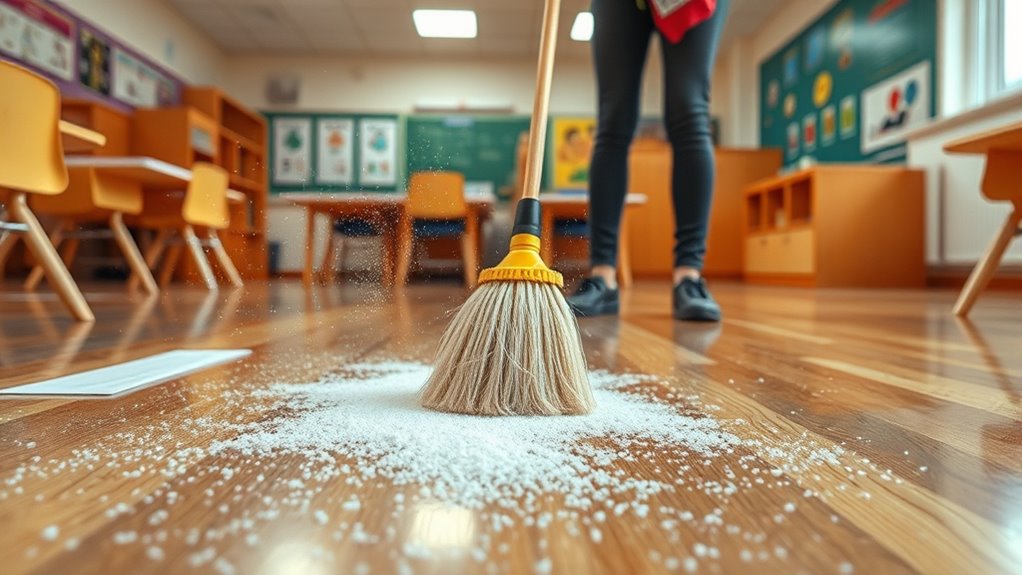
To keep your classroom floor scratch-free, establish a daily sweeping routine, especially at entry points, using soft-bristled brooms. Encourage students to wipe their feet and place mats outside and inside doors to reduce dirt, salt, and sand entering the space. Sweep regularly, paying attention to high-traffic areas, and follow up with damp mops to pick up residual debris. Staying consistent will help protect your floors and create a cleaner, safer environment—learn more about effective techniques next.
Key Takeaways
- Sweep daily with soft-bristled brooms to remove sand and salt, preventing scratches and buildup on classroom floors.
- Place entry mats inside and outside doorways to trap dirt, sand, and salt before they reach the floors.
- Use damp mops after sweeping to pick up residual particles that could cause damage.
- Encourage students to wipe their feet and minimize outdoor debris tracked into the classroom.
- Regularly inspect and clean high-traffic areas to maintain a safe, scratch-free environment.
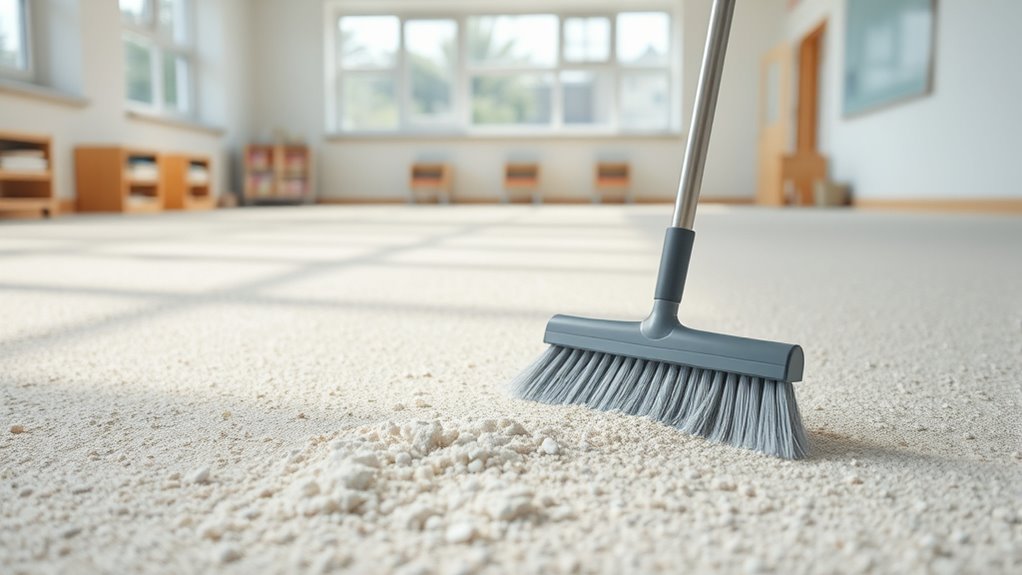
Have you ever wondered why some classrooms have patches of sand or salt on the floors? It might seem strange at first, but it’s often a practical solution for certain school environments. When students walk in from snowy or muddy outdoor conditions, they carry in dirt, sand, or salt that can quickly turn into a mess if not managed. This is where effective sand mitigation and maintaining classroom cleanliness become essential. You want to prevent dirt from spreading, minimize damage to floors, and keep the environment safe and hygienic for everyone.
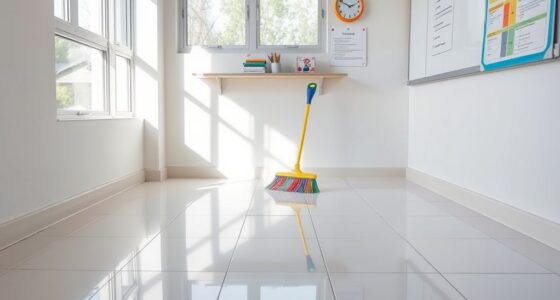
Implementing a scratch-free sweeping routine is one of the best ways to keep these surfaces in top shape. Regular sweeping not only removes visible debris but also helps prevent the buildup of dirt that can scratch or damage flooring over time. When you sweep carefully and consistently, you’re reducing the risk of scratches caused by small, gritty particles. Using a soft-bristled broom designed for delicate floors ensures you don’t harm the surface while sweeping up sand and salt. This routine becomes more effective when you focus on the high-traffic areas, entry points, and corners where debris tends to accumulate.
Regular gentle sweeping with a soft broom prevents floor scratches and keeps high-traffic areas clean.
To enhance classroom cleanliness, it’s a good idea to establish a routine that includes sweeping at least once daily, especially during winter months or after outdoor activities. Encourage students to wipe their feet at the entrance to reduce the amount of sand and salt brought inside. Placing mats both outside and inside the doorway can trap dirt before it spreads across the room. These mats act as first-line sand mitigation tools, and they’re simple yet effective. Remember, the key is consistency—skipping routine cleaning leads to dirt settling into the flooring, making it harder to remove and increasing potential damage.
Vacuuming can complement sweeping, especially for carpets or textured flooring, but for hard surfaces, a gentle sweep usually does the trick. If you notice stubborn spots or areas with a lot of grit, consider using a damp mop after sweeping to pick up residual particles. This not only improves classroom cleanliness but also helps maintain the integrity of the flooring. Properly managing the influx of outdoor debris through these routines reduces the wear and tear caused by abrasive particles. Additionally, choosing appropriate cleaning tools can make the process more efficient and less damaging to delicate surfaces.
In the end, your goal is to create a safe, clean, and scratch-free environment. Regularly sweeping and practicing good sand mitigation techniques protect your floors and promote a healthy classroom. When students see a tidy space, they’re more likely to take pride in keeping it that way, reinforcing good habits for everyone involved.

Angle Broom for Hardwood Floors – Soft Bristled Kitchen Broom, Indoor & Office Use (Off White)
Multi-purpose cleaning:Brooms for sweeping indoor are suitable for various floors, including wood flooring, tile, marble, and concrete, and…
As an affiliate, we earn on qualifying purchases.
As an affiliate, we earn on qualifying purchases.
Frequently Asked Questions
How Often Should Sand and Salt Be Replenished in Classrooms?
You should replenish sand and salt in classrooms based on your maintenance schedule, typically every two to four weeks. Replenishment frequency depends on usage, foot traffic, and how quickly the materials get displaced. Regularly check the levels, especially after heavy activity or cleaning, to make certain the surfaces remain effective and scratch-free. Staying consistent with your maintenance schedule helps maintain a safe, clean environment and extends the lifespan of the flooring.
Are There Environmentally Friendly Alternatives to Traditional Sand and Salt?
You can definitely choose eco-friendly options like biodegradable materials instead of traditional sand and salt. Imagine a sweeping routine that leaves no toxic footprints, just gentle, earth-hugging solutions. These alternatives break down naturally, reducing environmental harm and creating a healthier classroom. By switching to biodegradable materials, you’re not only protecting the planet but also ensuring a safer, cleaner space for everyone. It’s a small change with a giant, positive impact!
What Safety Precautions Are Recommended When Handling Sand and Salt?
When handling sand and salt, you should always wear personal protective equipment like gloves and masks to prevent skin and inhalation issues. Follow spill cleanup procedures promptly to prevent slips and contamination. Guarantee proper ventilation in the area, and keep materials stored securely. Regularly inspect your workspace, and wash hands thoroughly after handling. These precautions help keep you safe while managing these materials responsibly.
How Do Sand and Salt Affect Classroom Flooring Over Time?
Sand and salt are like tiny abrasive agents that wear down your floor surface over time. As you sweep, you might notice increased floor surface wear, leading to scratches and dullness. Salt can cause stains if it sits too long, making stain prevention essential. Regular cleaning and using mats or sealants help protect your flooring, keeping it looking fresh and extending its lifespan despite daily exposure to these abrasive particles.
Can Sand and Salt Be Used in Classrooms With Allergies or Sensitivities?
Yes, you can use sand and salt in classrooms with allergy concerns or sensitivities, but you should take sensitivity precautions. Consider using hypoallergenic or low-dust alternatives, and guarantee proper ventilation during and after application. Regularly clean to reduce airborne particles, and inform staff and students about the materials used. This way, you minimize allergy risks while maintaining safety in your classroom environment.

Doormat Non Slip Front Door Mat Amazing Thing Happen Here, Love Classroom, Classroom Decor, Cool Zone for Students, Gift for Teacher, Back to School, Gift for Class 17×30 Inch
PRENIUM MATERIAL: Our Frontdoor mats are made of 5% polyester and 95% rubber, which is recyclable,odorless,durable for multiple…
As an affiliate, we earn on qualifying purchases.
As an affiliate, we earn on qualifying purchases.
Conclusion
Now that you know the importance of a scratch-free sweeping routine, you might wonder what surprises await when you implement these simple steps. Will your classroom finally stay spotless? Could this routine transform your daily cleaning habits forever? The answers lie just ahead—stay tuned and prepare for a cleaner, safer space. Your next sweep might be more powerful than you ever imagined, revealing a new level of cleanliness you’ve yet to discover.

CLEANHOME Mops for Floor Cleaning with 3 Different Washable Pads and Extendable 55” Long Handle, Multifunction Dust Mop for Hardwood,Marble,Tile Floor Mopping,Orange
Economical and durable mop: This microfiber dust mop with 3 pieces reusable refill mop pads, the chenille microfiber…
As an affiliate, we earn on qualifying purchases.
As an affiliate, we earn on qualifying purchases.
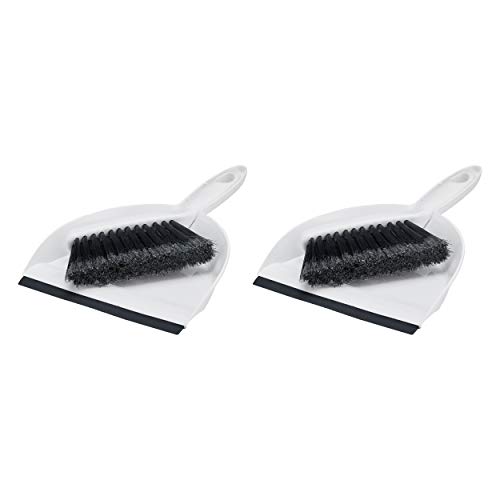
Amazon Basics Small Portable Mini Dustpan and Brush Set for Indoor Outdoor Floor Cleaning, Gray, Pack of 2
2-pack of mini dustpan and brush sets for hand-sweeping dust and debris from surfaces
As an affiliate, we earn on qualifying purchases.
As an affiliate, we earn on qualifying purchases.