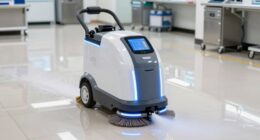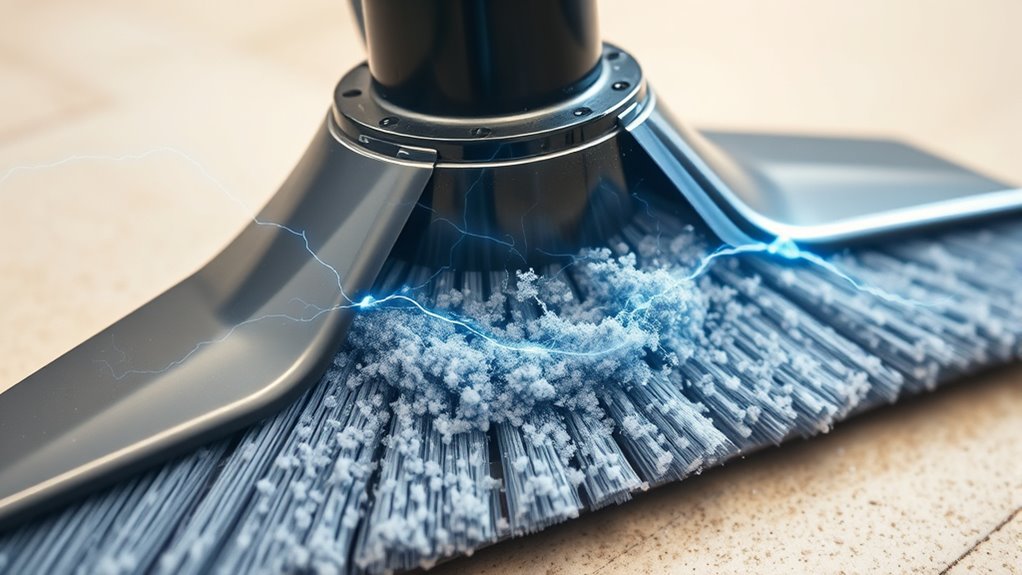

In your business, static electricity boosts sweeper efficiency by attracting lightweight poly dust particles through electrostatic charges generated during cleaning. As the sweeper moves, friction creates static that helps dust stick more firmly to brushes, reducing the need for mechanical effort. Surfaces and materials play a big role in static buildup, improving overall cleanliness and reducing dust resettling. Keep exploring how this invisible force can help you optimize your cleaning tools and outcomes.
Key Takeaways
- Static electricity generated by sweeper components enhances dust particle adhesion, especially for lightweight poly dust particles.
- Electrostatic forces attract and retain poly dust more effectively than mechanical cleaning alone.
- Material choices in brushes influence static buildup, impacting sweeper efficiency with poly dust.
- Surface properties like carpets promote static buildup, improving dust removal via electrostatic attraction.
- Understanding electrostatic interactions guides the design of more effective sweepers and cleaning surfaces.
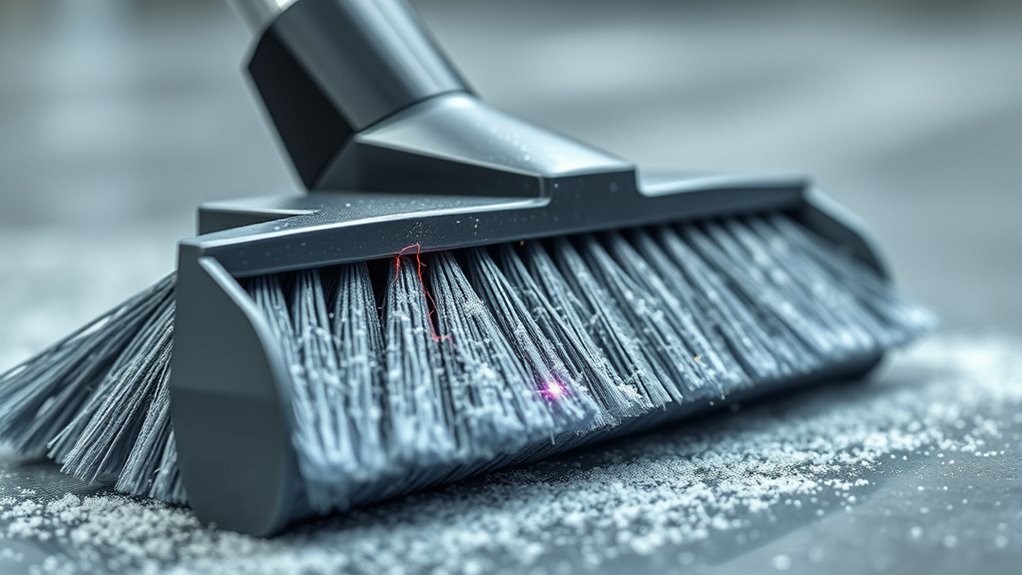
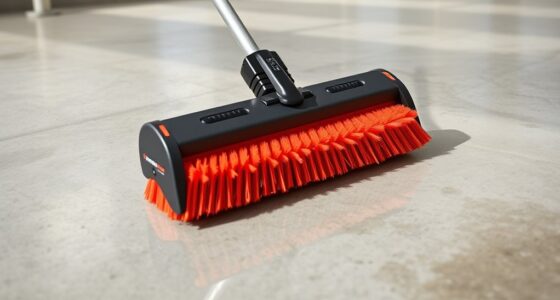
Static electricity plays a surprising role in how sweepers pick up dust and debris, especially when it comes to poly dust particles. When your sweeper moves across a surface, it generates an electrostatic charge that influences how effectively it can attract and retain dust. This electrostatic charge, created by friction between the sweeper’s components and the dust particles, causes a phenomenon known as dust particle adhesion. Fundamentally, the charge causes the dust particles—particularly the tiny poly dust particles—to become attracted to the sweeper’s brushes or pads, making cleanup more efficient. Additionally, the material composition of the brushes can significantly impact the amount of static electricity generated during use. Poly dust particles are particularly tricky because of their lightweight and smooth surface. They tend to resist traditional mechanical cleaning methods, bouncing off or slipping past bristles. However, static electricity changes the game. As the sweeper’s bristles rub against the surface, they acquire an opposite electrostatic charge to that of the dust particles. This difference in charge creates a strong electrostatic attraction, pulling the poly dust towards the brush or vacuum in a process driven by electrostatic forces rather than relying solely on physical contact. The greater the electrostatic charge, the stronger the dust particle adhesion becomes, allowing the sweeper to lift even the most stubborn, lightweight particles. You might notice that certain sweepers seem more effective in environments laden with poly dust, and that’s partly because they generate a more significant electrostatic charge during operation. Some models are designed with materials that optimize static buildup, enhancing dust particle adhesion without requiring additional chemicals or electrostatic sprays. This natural attraction not only improves cleaning efficiency but also reduces the likelihood of dust resettling in the air or settling elsewhere. Understanding the role of electrostatic charge in sweepers also helps explain why some surfaces are easier to clean than others. Surfaces that promote static buildup, such as carpets or textured flooring, can enhance dust particle adhesion, making sweepers more effective. Conversely, surfaces that dissipate static charges quickly might require more passes or different cleaning methods. Overall, static electricity isn’t just an incidental byproduct of cleaning—it’s a key factor in how sweepers effectively gather poly dust particles, leveraging electrostatic forces to improve dust particle adhesion and achieve cleaner environments. Recognizing the impact of electrostatic forces can guide the development of more efficient cleaning tools and surface designs.

CLEANHOME Mops for Floor Cleaning with 3 Different Washable Pads and Extendable 55” Long Handle, Multifunction Dust Mop for Hardwood,Marble,Tile Floor Mopping,Orange
Economical and durable mop: This microfiber dust mop with 3 pieces reusable refill mop pads, the chenille microfiber…
As an affiliate, we earn on qualifying purchases.
As an affiliate, we earn on qualifying purchases.
Frequently Asked Questions
How Does Static Electricity Affect the Safety of Sweeper Operators?
Static electricity can pose grounding hazards for sweeper operators, increasing the risk of electric shocks or sparks. You should always use proper personal protective equipment to minimize these risks. Ensuring the equipment is properly grounded and regularly inspected helps prevent static buildup. By taking these precautions, you reduce the chance of accidents, keeping yourself safe while operating sweepers and maintaining a secure working environment.
Can Static Buildup Damage Electronic Components in Sweepers?
Imagine static buildup quietly lurking, ready to strike. When static discharge occurs, it can cause sudden electronic interference in your sweeper’s components. This unexpected jolt might seem harmless but can actually damage delicate electronics, leading to costly repairs. You need to understand how static discharge risks your equipment’s integrity, so staying proactive against static buildup isn’t just smart—it’s essential to protect your sweeper’s performance and longevity.
What Are the Environmental Impacts of Poly Dust Emissions?
You should be aware that poly dust emissions can notably impact air quality, as they release tiny particles into the atmosphere. These particles pose poly dust toxicity risks, potentially harming respiratory health in communities nearby. Reducing poly dust emissions helps protect the environment and public health, ensuring cleaner air. Implementing proper dust control measures in your operations can make a real difference in minimizing these environmental impacts.
Are There Regulations Governing Static Electricity Management in Sweepers?
Oh, regulations on static electricity in sweepers? Surprisingly, yes. You’ll find regulation standards and safety protocols designed to mitigate static risks. While it might seem overcautious, these rules help prevent static buildup that could cause sparks or fires. You’re expected to follow these guidelines to ensure safe operation, demonstrating that even in sweeping, safety isn’t optional but a regulated necessity.
How Can Operators Reduce Static Electricity During Sweeping Operations?
To reduce static electricity during sweeping, you should use proper grounding techniques by ensuring the sweeper is connected to a grounded source. Applying antistatic sprays to the brushes and dust collection systems can also help dissipate static buildup. Regularly inspecting and maintaining equipment, avoiding dry environments, and staying aware of static-prone conditions enable you to minimize static risks effectively.

FEPPO Mattress Vacuum Cleaner, 16Kpa Bed Vacuum Cleaner with 253.7nm UV-C Light, 140°F Heat, HEPA Filter & Ultrasonic, Versatile Handheld Vacuums for Bed, Sofa, Couch, Crib(Corded, 500W)
【High-Efficiency Deep Cleaning】Our UV mattress vacuum cleaner features a powerful 500W motor, providing 16kPa of strong suction and…
As an affiliate, we earn on qualifying purchases.
As an affiliate, we earn on qualifying purchases.
Conclusion
Now that you know how static electricity and poly dust turn sweepers into tiny, invisible monsters, you can’t unsee it! Every sweep you take release a storm of microscopic chaos, threatening your health and your home’s cleanliness. So, next time you’re pushing that broom, remember—you’re battling an unstoppable force of nature itself. Stay vigilant, because static and dust are more powerful than you ever imagined—ready to conquer your space in an epic showdown!

Handmade,Natural Grass Asian, Whisk Broom Thai, Handle Bamboo, Soft Brush Mini with Solid Wood Handle Retro Nature No Static Electricity Sweeping 13in
REDUCE YOUR CLEANING TIME Extra thick bristle brush head makes dusting effortless both indoor or outdoors. 100% natural…
As an affiliate, we earn on qualifying purchases.
As an affiliate, we earn on qualifying purchases.

MED PRIDE Anti-Fog Lens and Screen Cleaning Wipes for Eyeglasses, Touch Screens, Premoistened, Anti-Static, Quick-Dry (200 200 Count (Pack of 1))
ANTI-FOG WIPES: Experience the anti-fog lens wipes from MED PRIDE and discover the power of convenience. Not just…
As an affiliate, we earn on qualifying purchases.
As an affiliate, we earn on qualifying purchases.