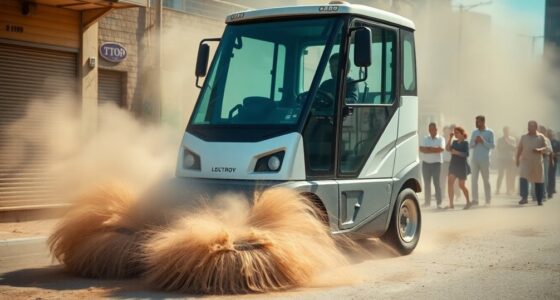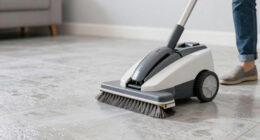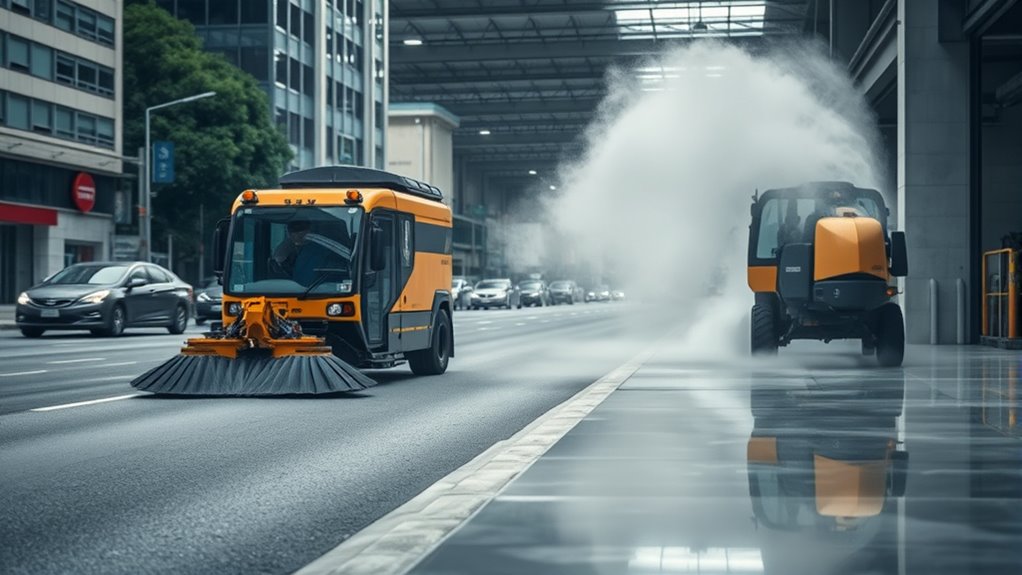

Street sweepers are larger, complex machines designed to handle outdoor messes like large debris, dust, and dirt, often in public spaces, and they require more maintenance and emit controlled pollution. Facility sweepers are smaller, simpler, and meant for indoor environments such as warehouses, focusing on dust and small debris with lower costs and minimal upkeep. Understanding these differences helps you choose the right equipment for each environment—keep exploring to learn more details.
Key Takeaways
- Street sweepers are larger, more complex, and designed for outdoor debris, while facility sweepers are smaller and suited for indoor environments.
- Street sweepers handle larger debris, dust, and dirt outdoors; facility sweepers focus on dust and small debris indoors.
- Maintenance costs for street sweepers are higher due to their size, complexity, and outdoor exposure; facility sweepers are easier and cheaper to maintain.
- Street sweepers improve public health by controlling pollution; indoor sweepers enhance safety and air quality inside buildings.
- Street sweepers often use fuel-powered engines; indoor facility sweepers are usually electric, quieter, and emission-free.
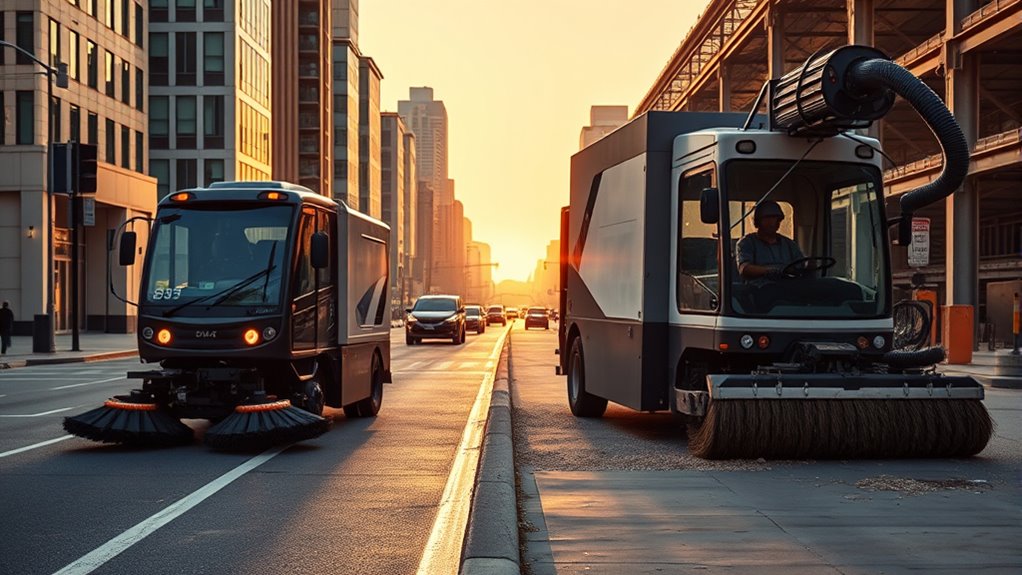
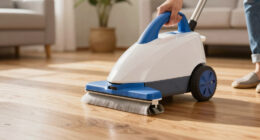
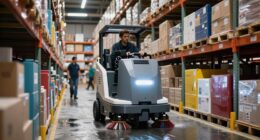
When it comes to keeping our communities clean, street sweepers and facility sweepers play essential roles, but they serve different purposes and operate in distinct environments. As someone responsible for maintaining cleanliness, understanding these differences helps you choose the right equipment for each task. Street sweepers are designed to clean public roads, parking lots, and urban spaces. They handle large volumes of debris, dust, and dirt, making them indispensable for municipal maintenance and public health. Facility sweepers, on the other hand, are typically used indoors or in controlled environments like warehouses, factories, or commercial buildings. They focus on keeping indoor spaces free of dust, dirt, and small debris, which directly impacts safety and hygiene.
One of the key considerations in selecting between these sweepers is maintenance costs. Street sweepers tend to be larger, more complex machines with multiple moving parts and specialized systems to handle outdoor conditions. This complexity often results in higher maintenance expenses, including regular servicing, parts replacement, and fuel costs. Facility sweepers are generally smaller, simpler machines that require less upkeep, making them more cost-effective for indoor use. Their maintenance routines are usually quicker and less expensive, especially since they operate in cleaner environments with fewer external elements that cause wear and tear.
Another crucial aspect to consider is environmental impact. Street sweepers can substantially reduce air and water pollution by capturing dust and debris before they become airborne or wash into storm drains. Modern models often incorporate environmentally friendly features, like low-emission engines or electric power sources, to minimize their ecological footprint. Facility sweepers also contribute positively by reducing dust in indoor environments, which can improve air quality and protect workers’ health. Many indoor sweepers are designed to be quiet and emission-free, aligning with sustainability goals and indoor air quality standards.

Bissell BigGreen BGFS5000 Portable Two Brush Floor Scrubber & Polisher, Polypropylene, 13"" W x 7"" D x 44"" H, White & Green
A small portable scrubbing machine that is perfect for cleaning brick, carpet, ceramic, concrete, cork, hard wood, laminate,...
As an affiliate, we earn on qualifying purchases.
Frequently Asked Questions
What Environmental Impacts Do Different Sweeper Types Have?
You’ll find that different sweeper types impact the environment differently. Street sweepers often emit more pollutants, but newer models focus on emission reduction. Facility sweepers tend to use less water, minimizing water usage concerns. By choosing sweepers with advanced emission controls and water-efficient designs, you can reduce your environmental footprint. This helps lower pollution and conserves water, making your cleaning practices more sustainable and eco-friendly.
How Do Maintenance Costs Compare Between Street and Facility Sweepers?
You’ll find that maintenance costs vary between street and facility sweepers, impacting cost efficiency. Street sweepers typically require more frequent maintenance due to harsher outdoor conditions, leading to higher ongoing costs. Facility sweepers usually have lower maintenance frequency because they operate in controlled environments. If you want to optimize your budget, consider how often each type needs service and how that affects your overall maintenance expenses and operational efficiency.
Can Sweepers Operate Effectively in All Weather Conditions?
Think of sweepers as weather warriors—most can handle various conditions, but their effectiveness varies. With good weather adaptability, they perform well in rain, snow, or shine, ensuring dust suppression and cleanliness. However, extreme weather like heavy snow or torrential rain can reduce their efficiency. Always check your specific model’s capabilities to make certain it’s suited to your climate, so you don’t get caught in a cleaning storm unprepared.
What Safety Features Are Unique to Each Sweeper Type?
You’ll find that street sweepers often feature advanced safety technology like hazard detection sensors that alert you to obstacles and pedestrians, reducing accidents on busy roads. Facility sweepers, on the other hand, emphasize safety features such as ergonomic controls and spill containment systems to protect operators indoors. Both types prioritize safety but tailor their hazard detection and technology to their specific environments, ensuring safer operation tailored to each setting.
How Do Operational Efficiencies Vary Between Street and Facility Sweepers?
You’ll find street sweepers excel in urban congestion, covering large areas quickly with high mobility, while facility sweepers focus on precision, steering through tight spaces efficiently. Street sweepers prioritize speed and fuel efficiency to handle extensive outdoor routes, whereas facility sweepers optimize for thoroughness and maneuverability indoors. Both enhance operational efficiency by reducing manual labor, but their effectiveness depends on the environment—urban streets demand rapid coverage, and facilities need detailed cleaning.

SetSail Floor Scrub Brush with 51-Inch Long Adjustable Handle 2 in 1 Scrape Brush Stiff Bristle Floor Scrubber for Cleaning Shower Bathroom Garage Kitchen Wall Deck Tub Tile
2-IN-1 SCRUB BRUSH: Scrub brush and scraper integrated design, you can clean the floor with the brush, then...
As an affiliate, we earn on qualifying purchases.
Conclusion
In the dance of cleanliness, street and facility sweepers each have their own rhythm. Streets are like wild, sprawling canvases that need bold strokes, while facilities are cozy corners requiring gentle touches. Understanding their differences helps you choose the right partner for the job. When you sync their strengths, you create a symphony of spotless surfaces. So, pick your sweeper wisely, and watch your space transform from chaos to clarity—like magic unfolding before your eyes.

Battery Powered Walk Behind Mini Automatic Floor Scrubber Machine – Compact & Portable, 15” Cleaning Width, 90-Minute Runtime, 170 RPM – Ideal for Small Commercial Spaces, Offices, Retail & More
Compact & Efficient Cleaning – Designed for small commercial spaces, this mini automatic floor scrubber features a 15-inch...
As an affiliate, we earn on qualifying purchases.

HHQ Commercial Floor Scrubber Machine with Brushes and Pads, Heavy Duty Floor Cleaner Polisher and Buffer- Deep Cleaning Tile and Grout, Hardwood Floors and Carpets without Getting on Hands and Knees
Kit Included: 1 Orbital Floor Buffer & Scrubber Machine, 2 Polishing/ Stripping Pads, 3 Scrub Brushes, 1 Microfiber...
As an affiliate, we earn on qualifying purchases.