A sweeper operator training checklist helps you understand key components like brushes, vacuum systems, and controls, ensuring you can spot early signs of wear and perform routine maintenance properly. It emphasizes safety protocols such as PPE, safe start-up, and emergency procedures, along with proper documentation of inspections and repairs. Staying vigilant during operation prevents accidents and equipment damage. Keep going, and you’ll discover detailed steps to maintain safety, efficiency, and your equipment’s lifespan.
Key Takeaways
- Review sweeper parts, functions, and signs of wear to ensure proper operation and early issue detection.
- Follow routine maintenance tasks like fluid checks, filter cleaning, and component inspections for safety and longevity.
- Adhere to safety protocols, including PPE use, emergency procedures, and awareness of surroundings during operation.
- Keep detailed records of maintenance, inspections, and safety checks to monitor equipment condition.
- Conduct daily inspections and respond promptly to problems to maintain safe and efficient sweeping operations.
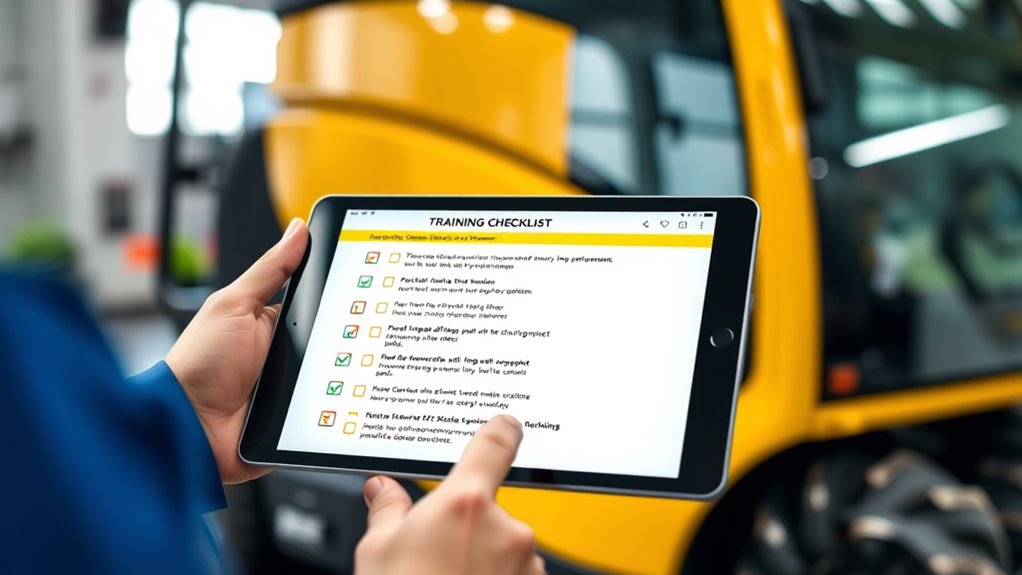
A thorough sweeper operator training checklist is essential to guarantee safety, efficiency, and proper equipment handling. When you’re starting out, it’s imperative to understand the importance of maintenance procedures and safety protocols. Proper maintenance ensures your equipment runs smoothly and reduces the risk of breakdowns, while strict safety protocols protect you and others around you. Your training should focus on mastering these areas from the beginning, so you develop good habits that promote a safe working environment.
First, familiarize yourself with the sweeper’s basic components, including the brushes, vacuum system, hopper, and controls. Knowing how each part functions helps you identify potential issues early on, preventing costly repairs or dangerous situations. During training, you’ll learn how to perform routine maintenance procedures, such as checking fluid levels, inspecting brushes for wear, and cleaning filters. These maintenance tasks are essential for keeping the sweeper in prime condition and extending its lifespan. Your trainer will emphasize that regular upkeep isn’t just about equipment longevity; it’s also about safety. For example, inspecting hoses and belts for damage can prevent leaks or failures that might cause accidents or operational delays.
Familiarize yourself with sweeper components and perform routine maintenance to ensure safety and extend equipment lifespan.
Safety protocols are fundamental to your training. You’ll be instructed on how to operate the sweeper safely, including proper start-up and shutdown procedures. Always wear the recommended personal protective equipment (PPE), such as gloves, safety glasses, and hearing protection, and be aware of your surroundings. This includes avoiding obstacles, pedestrians, and other vehicles, especially in busy areas. Your training will also cover emergency procedures—what to do if a component malfunctions or if an accident occurs. Learning how to safely shut down the equipment in emergencies is critical to prevent injuries and damage. Additionally, understanding the significance of contrast ratio can help you assess the visual indicators on the equipment’s displays and gauges to monitor operational status effectively.
Furthermore, your training will guide you through the importance of documenting maintenance procedures and safety checks. Keeping detailed records helps track the sweeper’s condition, schedules future repairs, and ensures compliance with safety standards. You’ll also learn about daily inspection routines, which should be part of your routine before operating the machine. These inspections catch minor issues before they escalate, avoiding unsafe situations.
Top picks for "sweeper operator train"
Open Amazon search results for this keyword.
As an affiliate, we earn on qualifying purchases.
Frequently Asked Questions
How Often Should Sweeper Operators Undergo Refresher Training?
You should undergo a refresher course at least annually to maintain your skills and stay updated on safety procedures. Regular training frequency guarantees you’re confident operating the equipment efficiently and safely. Even if you’ve been working for a while, refresher training helps prevent complacency and addresses any changes in regulations or technology. Staying current with training frequency is essential for safe, effective operation and compliance with workplace standards.
What Certifications Are Required for Sweeper Operators?
You need to hold a valid commercial driver’s license (CDL) to operate a sweeper legally, ensuring you’re qualified and safe. Additionally, completing specialized training on equipment durability and safety protocols is essential to handle the machinery properly. Some regions also require certifications in hazardous material handling or environmental safety, depending on your work environment. Stay current with local regulations to keep your certification valid and maintain safety standards.
How Do Weather Conditions Affect Sweeper Operation Safety?
Weather conditions greatly impact sweeper operation safety. You should be alert to weather hazards like rain, snow, or fog, which can reduce visibility issues and make surfaces slippery. These conditions increase the risk of accidents, so it’s essential to slow down, use appropriate lighting, and perform extra safety checks. Adjust your operations accordingly to guarantee safety for yourself and others, especially during adverse weather.
Are There Age Restrictions for Sweeper Operator Training?
You might think age restrictions limit your training eligibility, but most programs are open to adults of all ages. Usually, there’s no strict age limit, just that you meet safety and health requirements. If you’re over 18 and can handle the physical demands, you’re likely eligible for sweeper operator training. Don’t let age hold you back—focus on your skills and readiness to learn, not just your age.
What Maintenance Checks Are Essential Before Starting a Shift?
Before starting your shift, perform a thorough pre-operation inspection to guarantee the sweeper is in good working condition. Check the safety gear checklist to confirm you have all necessary safety equipment, like gloves and eye protection. Inspect the brushes, hoses, and fluid levels, and verify that controls and lights function properly. Address any issues before operating to prevent accidents and ensure efficient, safe cleaning during your shift.
Conclusion
By mastering this sweeper operator training checklist, you’ll become an unstoppable cleaning superhero, capable of conquering even the dirtiest messes with ease. Imagine wielding your equipment like a mighty sword, leaving floors spotless in seconds and transforming chaos into pristine perfection. Follow these steps diligently, and you’ll not only impress everyone around you but also become the legend of cleanliness the world desperately needs. Get ready to sweep your way to greatness—nothing can stand in your path!