
To keep your food facility sanitary, develop a customized sweeping schedule that targets high-traffic and hard-to-reach areas regularly. Use sanitized tools, sweep systematically to avoid spreading debris into food zones, and follow up with mopping or vacuuming for fine particles. Proper documentation of your cleaning routines guarantees compliance with safety regulations. Focusing on thoroughness and tool maintenance helps prevent bacteria and pests, and mastering these tips will support your ongoing sanitation efforts.

Get cleaning gear delivered free with Prime
- Fast, free delivery on millions of items
- Prime Video, Amazon Music and more included
- Member-only deals all year
Key Takeaways
- Use sanitized, food-safe brooms and dustpans to prevent cross-contamination during sweeping.
- Sweep systematically from clean to dirty areas, avoiding debris transfer into food contact zones.
- Prioritize high-traffic and food processing areas for more frequent cleaning to maintain sanitation.
- Incorporate daily, weekly, and monthly sweeping schedules tailored to facility layout and activity levels.
- Record all cleaning activities to ensure regulatory compliance and facilitate inspections.
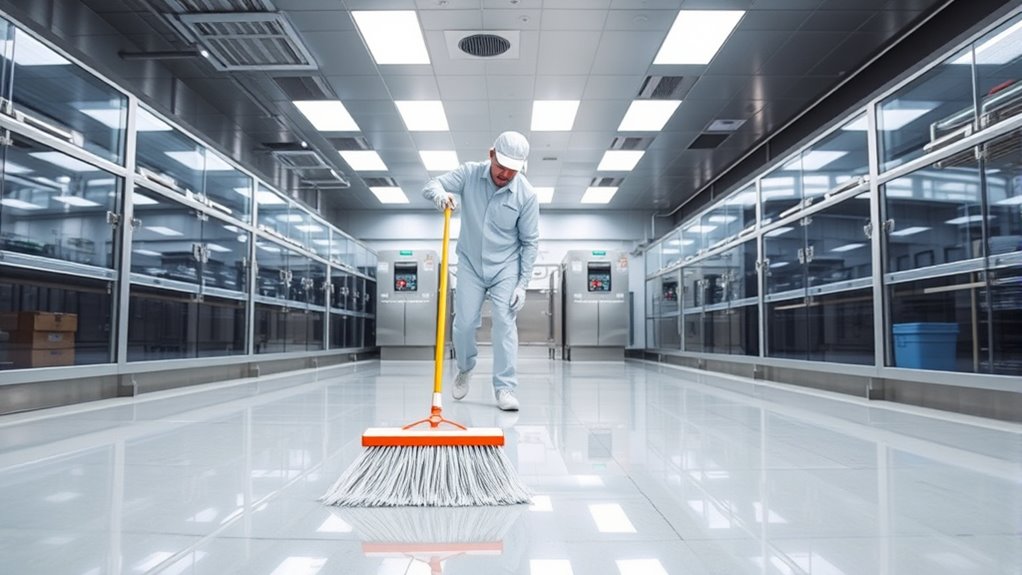
Maintaining clean and sanitary conditions in food facilities is essential for ensuring food safety and preventing contamination. One of the most fundamental steps in achieving this is establishing effective cleaning routines, particularly when it comes to sweeping. Regular sweeping not only keeps floors spotless but also helps reduce the buildup of debris, dust, and potential contaminants that can compromise food safety. To do this effectively, you need to follow food safety regulations, which often specify cleaning standards, frequency, and methods. These regulations are designed to minimize risks and ensure that your facility maintains a safe environment for both employees and consumers. Implementing detailed cleaning schedules is critical — they act as a roadmap for when and how to sweep, ensuring consistency and thoroughness.
Effective cleaning routines, including regular sweeping, are essential for food safety and regulatory compliance.
Your cleaning schedule should be tailored to your facility’s specific needs, considering factors like foot traffic, type of food processing, and equipment placement. For example, high-traffic areas, such as entrances and aisles, require more frequent sweeping than storage rooms or less accessed zones. When creating your schedule, incorporate daily, weekly, and monthly tasks to keep all areas consistently clean. Daily sweeping can remove loose debris and prevent accumulation, while weekly deep-cleaning ensures that stubborn grime or sticky residues don’t develop over time. Monthly or quarterly thorough sweeps can focus on corners, under equipment, and hard-to-reach spots that often harbor dirt and pests. Additionally, understanding the importance of vertical storage solutions can help optimize space and reduce clutter, making sweeping more efficient.
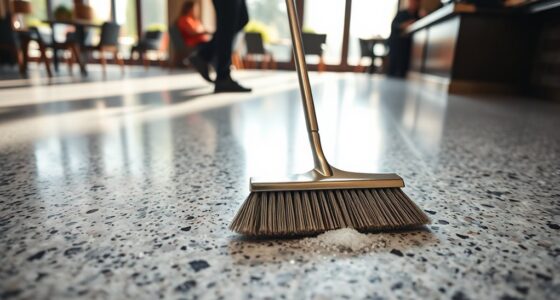
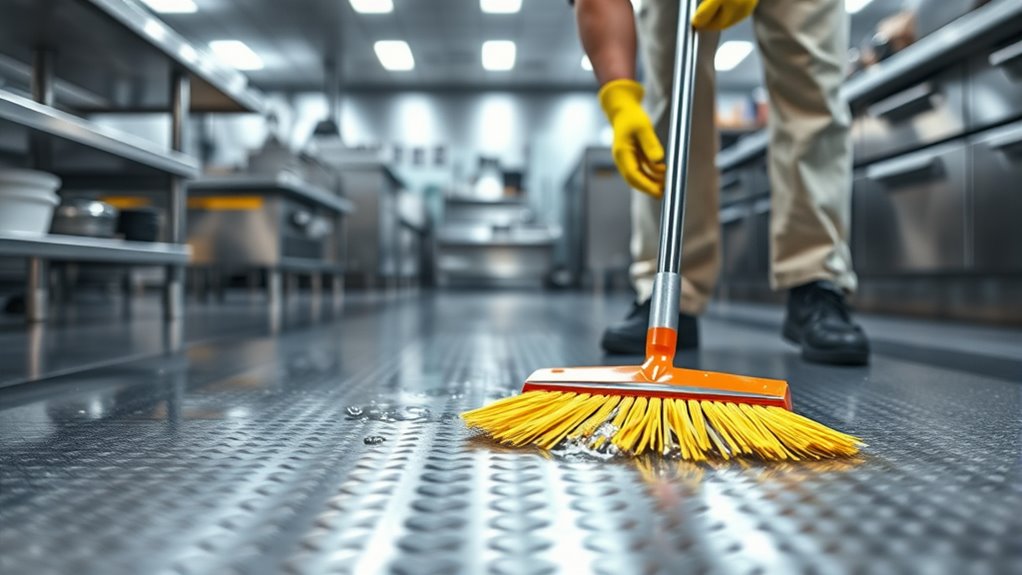
It’s important to use the right tools and techniques. Use brooms and dustpans designed for commercial use, and ensure they’re kept clean themselves to prevent cross-contamination. When sweeping, work systematically from one end of the room to the other, so no spots are missed. Be cautious around food prep areas—avoid sweeping dust or debris into food contact zones. After sweeping, consider following up with mopping or vacuuming if needed, to pick up finer particles that sweeping alone might miss. Remember, dust and debris can harbor bacteria or pests, so thoroughness is key.
Adhering to your cleaning schedule isn’t just about cleanliness; it’s a legal requirement. Food safety regulations often specify the frequency and methods of cleaning, including sweeping, to ensure compliance. Regular inspections and record keeping of your cleaning activities demonstrate that your facility takes sanitation seriously. This documentation can be invaluable during audits or inspections, showing you’re committed to maintaining a safe, hygienic environment. Ultimately, consistent sweeping, guided by a well-planned schedule and awareness of regulations, forms the backbone of your sanitation efforts—helping you protect your products, your reputation, and your customers’ health.
food-safe commercial broom and dustpan set
As an affiliate, we earn on qualifying purchases.
As an affiliate, we earn on qualifying purchases.
Frequently Asked Questions
How Often Should Food Facility Floors Be Swept?
You should sweep your food facility floors daily to maintain proper floor maintenance and prevent pest control issues. Regular sweeping removes crumbs, spills, and debris that attract pests and compromise sanitation. Consistent floor cleaning helps you stay compliant with health regulations, reduces the risk of contamination, and keeps your facility safe for staff and customers. Make sweeping a routine part of your sanitation practices to guarantee a clean, pest-free environment.
What Types of Brooms Are Best for Food Facilities?
You should choose brooms with soft, durable bristles made from natural or synthetic materials like polypropylene, which are gentle yet effective. Some might think stiff brooms are better, but they can spread contamination. Use proper sweeping techniques—start from the far corner and work toward the exit—to avoid cross-contamination. This approach guarantees thorough cleaning while maintaining food safety standards, making your facility cleaner and safer.
Can Sweeping Spread Bacteria if Not Done Properly?
Yes, improper sweeping can spread bacteria transfer and increase contamination risk. If you don’t use the right techniques, dirt and germs can become airborne or move to clean areas. To avoid this, make sure you sweep in one direction, regularly clean your broom, and dispose of debris properly. This reduces bacteria transfer and helps maintain a sanitary environment in your food facility.
Are There Eco-Friendly Sweeping Options Available?
Are eco-friendly sweeping options really effective? Absolutely! You can opt for biodegradable sweepers that break down naturally, reducing environmental impact. Reusable cleaning tools also cut down on waste and save you money over time. By choosing these sustainable options, you’re not only maintaining a clean facility but also supporting eco-conscious practices. Isn’t it time to make your cleaning routine more environmentally friendly? Switch to biodegradable sweepers and reusable tools today!
How to Dispose of Debris Safely After Sweeping?
After sweeping, you should immediately contain the debris in designated containers to prevent contamination. Use proper disposal methods by sealing waste bags tightly and labeling them if necessary. Verify debris is disposed of in designated waste dumpsters that are regularly emptied and sanitized. This helps maintain sanitation standards, prevents pest attraction, and protects food safety. Always follow your facility’s protocols for debris containment and disposal to keep the environment clean and compliant.
Conclusion
Remember, proper sweeping and sanitation are essential to keeping your food facility safe. Did you know that 60% of foodborne illnesses are linked to poor cleaning practices? By following these sanitation tips, you can markedly reduce risks and protect your customers. Regularly maintain your cleaning routines, use the right tools, and stay vigilant. Staying committed to cleanliness not only ensures compliance but also builds trust in your brand’s safety and quality.
Halloween Picks
halloween
As an affiliate, we earn on qualifying purchases.