Balancing sweeping speed and debris pick-up is key to warehouse safety and efficiency. Moving too fast may leave debris behind, posing hazards, while sweeping too slowly slows operations. Improving equipment setup, maintaining tools, and training operators help find that perfect middle ground. It’s also essential to monitor operator fatigue, as tired workers can miss debris or make errors. Keep this balance in mind, and you’ll keep your warehouse clean and productive—discover more ways to optimize your process below.
Key Takeaways
- Balance sweeping speed with thorough debris removal to maintain safety and cleanliness standards.
- Proper equipment setup and regular maintenance ensure efficient cleaning without sacrificing speed.
- Well-trained operators can optimize sweeping techniques, reducing time while enhancing debris pick-up.
- Implementing scheduled breaks prevents operator fatigue, maintaining performance and safety during sweeping tasks.
- Developing a structured workflow combining speed and thoroughness improves overall cleaning efficiency and workplace safety.
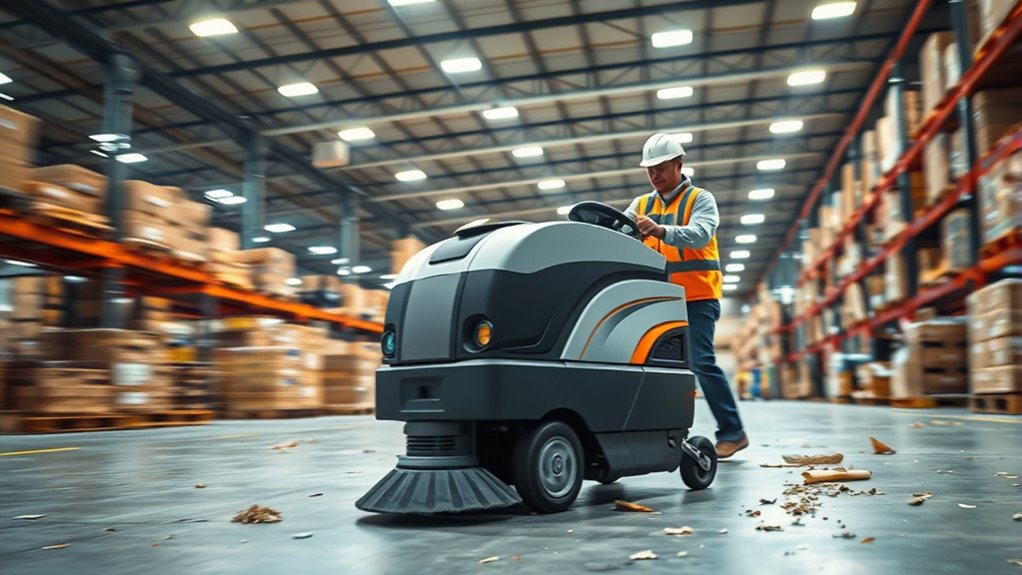
When choosing a sweeping method for your warehouse, balancing speed and pick-up efficiency is crucial. You want to complete cleaning tasks quickly without sacrificing the thoroughness needed to keep your space safe and organized. Achieving this balance requires understanding how machine efficiency impacts your operations and how operator fatigue can influence overall performance. When you prioritize speed, you risk rushing the process, which can lead to subpar cleaning and potential safety hazards. Conversely, focusing too much on thorough pick-up can slow down your workflow, reducing productivity and increasing downtime.
To maximize your sweeping strategy, you need equipment that enhances machine efficiency. Modern sweepers are designed to cover large areas rapidly, but if they’re not set up correctly or if the operator isn’t trained well, their speed can work against you. A machine that isn’t operating at peak efficiency might leave debris behind or require multiple passes, which wastes time and energy. When your equipment runs smoothly, you can maintain a higher pace without compromising the quality of your cleaning. This means selecting the right sweeper for your warehouse size and debris type, ensuring it’s properly maintained, and training operators to use it effectively. Properly adjusted brushes, correct suction settings, and ideal bin capacity all contribute to quick, effective cleaning.
Operator fatigue is another critical factor to consider. When you push your staff to sweep faster, they tend to tire more quickly, which can lead to mistakes, missed spots, or even safety incidents like slips or falls. Fatigued operators have slower reaction times and less attention to detail, which ultimately hampers both speed and pick-up quality. To prevent this, you should implement regular breaks, rotate tasks among staff, and ensure ergonomic equipment that reduces physical strain. Encouraging a sustainable pace not only maintains high machine efficiency but also keeps operators alert and engaged, reducing errors and fatigue-related accidents. Additionally, proper training on detecting passive voice can help operators communicate more effectively and maintain focus during tasks.
Finding the sweet spot between speed and pick-up efficiency isn’t just about choosing the fastest equipment; it’s about creating a workflow that considers both machine performance and operator well-being. When your machinery runs efficiently and your team isn’t overworked, you’ll see a noticeable improvement in overall cleaning quality and productivity. Striking this balance ensures your warehouse stays clean without sacrificing safety or efficiency, ultimately supporting smoother operations and better workplace morale.
Frequently Asked Questions
How Do Different Floor Types Affect Sweeping Speed?
Different floor surfaces greatly impact your sweeping speed. Smooth, hard surfaces like concrete allow you to use larger sweeping equipment, increasing your pace. Conversely, uneven or textured floor surfaces require more careful maneuvering, slowing you down. Selecting appropriate sweeping equipment for each floor type ensures efficient cleaning without sacrificing quality. Adjust your approach based on the floor surface to find the right balance between speed and thoroughness in your warehouse sweeping.
What Safety Considerations Impact Sweeping Pace?
Safety first, so you should pause for proper precautions. Dust accumulation can cause slipping and inhalation issues, slowing you down and risking accidents. Always assess slip hazards and wear appropriate footwear, while adjusting your sweeping pace accordingly. Rushing can increase risks, so prioritize safety by maintaining a steady, controlled speed. Taking time to clear dust and address hazards guarantees efficient, safe sweeping, ultimately protecting both you and your warehouse workspace.
How Can Technology Optimize Sweeping Efficiency?
You can optimize sweeping efficiency by leveraging robotic automation and dust detection technology. Automated sweepers equipped with sensors ensure thorough cleaning while maintaining consistent speed, reducing manual effort. Dust detection systems alert you to areas needing extra attention, preventing buildup and improving air quality. By integrating these technologies, you streamline your workflow, enhance safety, and achieve a more effective, efficient cleaning process without compromising safety or quality.
What Training Improves Sweeping Speed Without Sacrificing Quality?
To improve sweeping speed without sacrificing quality, you should train your staff in ergonomic techniques that reduce fatigue and increase efficiency. Motivating your team through positive reinforcement and clear goals keeps them engaged and focused on maintaining high standards. Regular practice sessions help build speed and precision, while emphasizing ergonomics guarantees they work comfortably. Combining these strategies creates a balanced approach that boosts performance without compromising cleanliness.
How Does Warehouse Layout Influence Sweeping Strategies?
Your warehouse layout substantially influences sweeping strategies. With effective layout planning, you can create clear pathways and designated zones, making sweeping more efficient. Incorporate storage optimization to reduce clutter and obstacles, allowing you to clean quickly without missing spots. By understanding your space and designing it thoughtfully, you streamline sweeping routines, save time, and maintain a cleaner environment, ultimately boosting overall warehouse productivity.
Conclusion
Finding the perfect balance between speed and pick-up might seem tricky, but it’s all about knowing your warehouse’s unique needs. When you optimize both, you’ll keep your space clean without sacrificing efficiency. Are you ready to fine-tune your sweeping strategy and boost productivity? Remember, it’s not just about rushing through the job—it’s about doing it right. So, why settle for less when you can sweep smarter and faster?