
TL;DR

Get cleaning gear delivered free with Prime
- Fast, free delivery on millions of items
- Prime Video, Amazon Music and more included
- Member-only deals all year
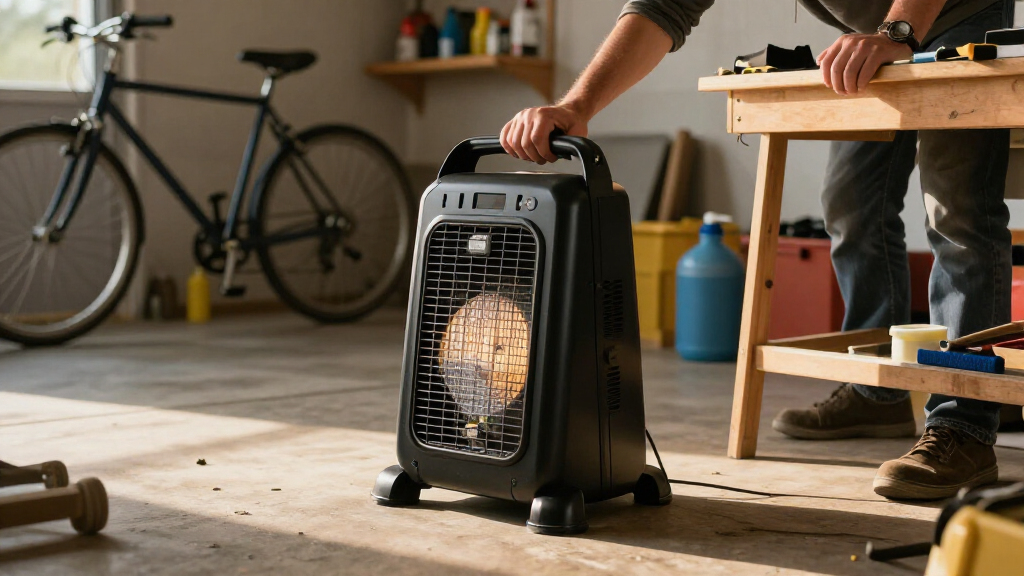
A Hunker report points to the Cadet 4,000-watt portable electric garage heater as an option sold through Lowe’s for heating a garage workspace. The unit can be wall- or ceiling-mounted and includes temperature-related safety features, but it requires a 240-volt, 20-amp outlet and may need new wiring.
A Hunker report has highlighted the Cadet 4,000-watt portable electric garage heater, described as an option available through Lowe’s for people who want heat while working in a garage during winter. The unit can be mounted on a wall or ceiling and produces more than 13,500 British thermal units (BTUs), but its power demand means installation may require a dedicated 240-volt outlet and new wiring.
According to Hunker, the heater comes with a bracket for wall or ceiling mounting, keeping it off the floor and out of the way in a workspace. Its fan-delay feature waits for the heating element to reach operating temperature before turning the fan on, then keeps the fan running until the element cools after the heater is switched off. The product also has a corrosion-resistant powder coating, a temperature safety shutoff and a red indicator light for overheating.
The article gives the unit’s electrical draw as 4,000 watts at about 16.7 amps. It says the heater needs a 240-volt outlet rated at 20 amps, a setup that many garages may not already have. Hunker notes that older or unused 240-volt circuits could be available in some homes, but says new wiring may be needed in many cases.
Hunker estimates the heater can warm 400 to 600 square feet of insulated space, while warning that this figure may not translate to poorly insulated or drafty garages. The report does not provide independent performance testing, current Lowe’s pricing, or confirmation of local stock. Its description of the product’s features and coverage should be understood as information from the report, not a guarantee for every garage.
The Outlet May Shape the Decision
The product’s practical appeal is not only its stated heat output. Mounting it above the floor can free up room for vehicles, tools and projects, while the fan-delay and over-temperature features address everyday operation. Those details may matter to people who use a garage as a winter workspace rather than simply for storage.
But the electrical requirement could be a significant cost and planning factor. A 240-volt, 20-amp circuit is not interchangeable with a standard household outlet, and the heater’s 4,000-watt draw means buyers should not treat it as a low-cost way to heat a space. The cost of electricity, how often the heater runs, the garage’s insulation and air leakage, and any electrician’s work all affect the total expense. The source provides no operating-cost estimate.
That makes the article’s coverage estimate especially conditional. Hunker places the rated use at 400 to 600 square feet of insulated space, but garages can lose heat through gaps and weak insulation. A buyer whose garage is drafty or larger than the stated range may not get the same comfort as someone working in a smaller, better-sealed space.
Products Worth Considering

Philips Hue Secure Wired Video Doorbell, 2K, Black

Roborock RockNeo Q110H Wire-Free Robot Lawn Mower

Ring Battery Doorbell Plus (2nd Gen) and Indoor Cam Plus Bundle, Nickel Silver and White
As an affiliate, we earn on qualifying purchases.
How Garage Conditions Affect Heat
Hunker frames the heater as a way to keep a garage workspace usable in cold weather, when low temperatures can interrupt hands-on tasks. The report contrasts the Cadet’s mounted design with larger or freestanding heaters often used in construction settings. It does not establish that the Cadet is suitable for every construction site or every garage layout.
The report also notes a safety distinction: because the Cadet is intended for wall or ceiling mounting, it does not have the anti-tip feature common on floor-standing portable heaters. Its stated safeguards instead include automatic shutoff tied to temperature and an over-temperature light. The source does not discuss all installation clearances, local electrical rules, or whether a particular garage is appropriate for this heater.
Electrical work is part of the product decision, not a minor accessory. Hunker says an existing unused 240-volt circuit might help in some homes, but many owners may need a new circuit. The article points out that exposed conduit can be a workable visual choice in some unfinished garages; it does not provide installation instructions or substitute for an assessment by a licensed electrician.
“The Cadet produces over 13,500 BTUs”
— Hunker report
Price, Availability and Fit
The source material does not give a current Lowe’s price, stock status, warranty terms, or a publication date for the report. It also does not establish whether the heater’s coverage estimate has been independently tested, how quickly it warms a garage, or what it costs to run under different electricity rates.
Whether the unit will heat a particular garage depends on factors the report does not quantify, including ceiling height, insulation, air leaks, outdoor temperatures and how the space is used. The electrical setup is also home-specific: the source does not confirm that a suitable circuit is available in any given garage. Buyers should check the product listing and manual and have a licensed electrician assess the circuit and installation requirements.
Check the Circuit Before Buying
People considering the heater should first confirm current product availability and specifications with Lowe’s, then compare the stated coverage with their garage’s size and insulation. They should also check whether a 240-volt, 20-amp outlet is available and suitable for the load. If new wiring or outlet installation is required, a licensed electrician should assess the work and applicable local code requirements; the Hunker report does not supply installation instructions.
Before operating any heater, users should follow the manufacturer’s clearance and mounting directions, keep combustible materials away from the unit, and use it only as approved for the space. The next practical step is a site-specific check of electrical capacity, mounting location and heat loss. The source gives no announced product launch, price change or other upcoming milestone.
Key Questions
What heater does the report discuss?
It discusses the Cadet 4,000-watt portable electric garage heater, described by Hunker as an option available through Lowe’s.
How much space can the Cadet heater cover?
Hunker estimates 400 to 600 square feet of insulated space. That estimate may not apply to a drafty or poorly insulated garage, and the report does not describe independent testing.
What electrical setup does it require?
The report states that the heater draws 4,000 watts at about 16.7 amps and requires a 240-volt outlet rated at 20 amps. A licensed electrician can determine whether an existing circuit is appropriate or new wiring is needed.
Does it have an anti-tip feature?
No anti-tip feature is listed. Hunker says the heater is designed for wall or ceiling mounting and instead has a temperature safety shutoff and red over-temperature light.
Is the heater currently in stock, and how much does it cost?
The source material does not provide a current price or inventory information. Check Lowe’s current listing or contact a local store for availability and pricing.
Source: rss