
TL;DR

Get cleaning gear delivered free with Prime
- Fast, free delivery on millions of items
- Prime Video, Amazon Music and more included
- Member-only deals all year
A Hunker report says videos posted by YouTube users show carpenter bees dying after direct exposure to WD-40. The report finds little evidence that the spray repels bees or prevents them from returning, and recommends proven insecticides and sealing holes after confirming the bees are gone.
A Hunker report says videos shared by YouTube users show carpenter bees dying after WD-40 is sprayed directly into their nesting holes, but the evidence does not establish that the product repels bees or prevents further damage. The distinction matters to homeowners looking for a quick fix: killing an exposed bee is not the same as stopping a nest from being used or new holes from being drilled.
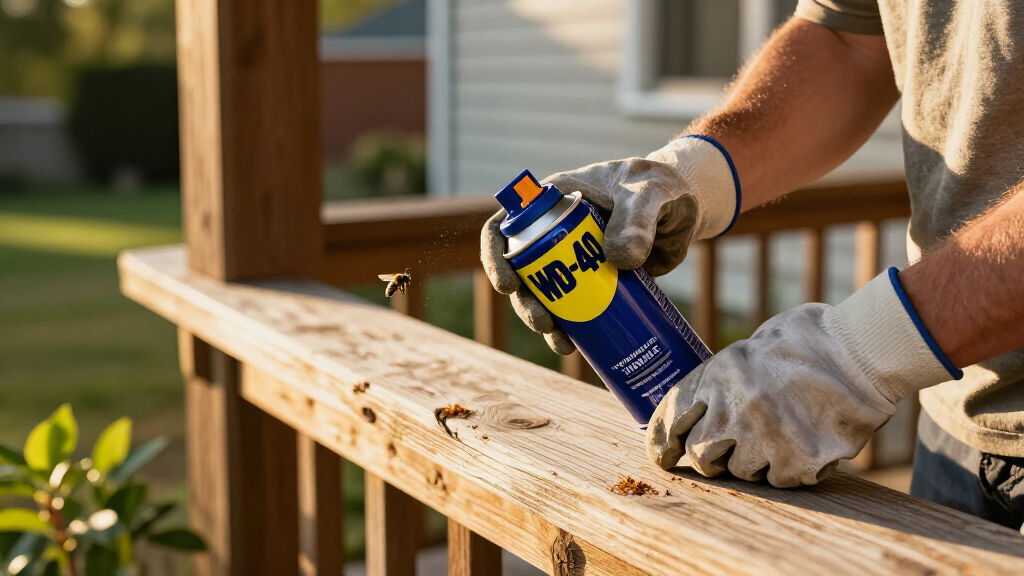
The report cites demonstrations by YouTube users motofun and PineyGroveHomestead. In the videos, people spray WD-40 into holes containing live bees; the bees emerge coated in the spray and die. These examples are anecdotal demonstrations, not controlled tests, and they show direct exposure rather than whether bees deeper in a tunnel would be affected.
Hunker says there is little evidence for using WD-40 as an insecticide. It notes that the product is intended to loosen stuck metal parts and dissolve rust, not to control insects. The report suggests that petroleum-based oils in the spray may explain why a bee dies after being saturated, and points to research on direct contact with petroleum-based oils and their effects on insects. It does not identify a specific study testing WD-40 against carpenter bees.
The report also says there is little evidence that WD-40 keeps carpenter bees away when sprayed into their holes. It recommends using an insecticide with demonstrated effectiveness if treatment is needed, while cautioning that even powerful insecticides may keep bees out of a hole for only three or four weeks. For longer-term prevention, Hunker says to confirm the bees have left, then fill the holes with a hard material such as two-part wood filler. Painting bare wood can also discourage drilling.
A Bee’s Death Does Not Seal Its Nest
The practical issue for homeowners is whether a treatment addresses the bee, the occupied tunnel, and the risk of further drilling. The videos described by Hunker address only the first point: bees directly covered by the spray died. They do not establish that spraying a hole clears every bee inside, prevents a surviving bee from returning, or protects the surrounding wood.
That distinction can affect both the repair and the choice of treatment. A homeowner who relies on an unproven repellent could leave an entry hole open and see the problem continue. Hunker’s account instead points to confirming the bees are gone and physically filling the holes as a lasting step, with painting bare wood as a preventive measure. The article does not provide a tested treatment protocol or guarantee that these measures will prevent every future infestation.
Carpenter bees make tunnels in wood to shelter and rear young, according to the report. Their nesting behavior can be unwelcome when they choose wooden buildings and other human-made structures. The article’s central caution is that a product appearing to kill an exposed insect should not be treated as a proven long-term solution to a wood-boring pest.
Products Worth Considering

Google Nest Learning Thermostat (4th Gen) with Nest Temperature Sensor (2nd Gen), Obsidian

Bose SoundLink Flex Bluetooth Speaker (2nd Gen), Waterproof, Dustproof, USB‑C, Up to 12 hr Battery, Black

TCL 65-Inch T7 Series 4K QLED Smart Google TV, 144Hz (65T7)
As an affiliate, we earn on qualifying purchases.
What The WD-40 Demonstrations Show
Hunker frames WD-40 as a possible household alternative for someone who does not have insecticide available. The article refers to two YouTube demonstrations in which the spray is directed into a hole where a live bee is present. The bees later emerge coated and die, according to the report’s description of the footage.
The article distinguishes this visible, direct-contact outcome from two untested questions: whether the spray affects bees that do not touch it and whether residue deters later activity. It says the videos do not answer those questions. Hunker also notes research on the effects of direct contact with petroleum-based oils on insects, describing the effects as a range of cellular disruptions rather than oxygen depletion. The supplied material does not give the research title, authors, or a specific finding for carpenter bees.
As an alternative, Hunker says proven insecticides may provide temporary control, but estimates that their effect on keeping bees out of holes may last at most three or four weeks. Its longer-term suggestion is to seal a hole with a hard filler after confirming the bees have left; otherwise, trapped bees could drill their way out. The report also identifies painting bare wood as a deterrent to drilling.
“There’s little evidence that WD-40 can be used as an insecticide.”
— Hunker
Repellent Effects Remain Untested
The supplied report does not describe controlled testing of WD-40 against carpenter bees. It remains unclear whether the spray kills bees without direct contact, whether residue has any repellent effect, and how long such an effect might last. The two videos cited involve bees that were visibly coated, so they cannot settle those questions.
Hunker also does not provide details about the petroleum-oil research it references, such as its methods or whether it tested WD-40 itself. The source does not give a publication date, product-specific safety guidance, or a quantified comparison between WD-40 and a particular insecticide. Its stated three-to-four-week period concerns the temporary control it attributes to even powerful insecticides; it should not be read as a measured duration for WD-40.
The report therefore supports a limited conclusion: the cited footage appears to show bees dying after direct spraying, but it does not verify WD-40 as a reliable or lasting carpenter-bee treatment. The actual outcome for any particular nest may depend on whether bees remain inside and whether the entry points are sealed after they are gone.
Confirm Nest Clearance Before Repairs
For homeowners considering a response, Hunker’s suggested sequence is to confirm that the bees have left the tunnel before filling it with two-part wood filler or another hard material. Sealing an occupied hole could leave bees inside; the report warns that trapped bees may drill their way out. Painting bare wood is another preventive measure it recommends.
If treatment is required, the article advises choosing an insecticide with a record of effectiveness rather than assuming WD-40 will work as a repellent. Its account suggests that insecticide effects on keeping bees out may be temporary, so homeowners should check whether activity continues and address open holes once clear. The report does not specify a product, application method, or a follow-up schedule.
No follow-up test or official guidance on WD-40’s effectiveness is included in the supplied source. The key unresolved development is whether controlled testing will show any repellent benefit beyond the contact deaths depicted in the videos.
Key Questions
Does WD-40 kill carpenter bees?
Hunker cites videos in which bees died after being sprayed directly. The report treats this as anecdotal evidence, not proof from controlled testing.
Does WD-40 repel carpenter bees from their holes?
The report says there is little evidence either way. The cited videos do not show whether residue deters bees from returning or affects bees that do not contact the spray.
What does Hunker suggest for a longer-term fix?
It recommends confirming the bees have left and then filling the holes with a hard material, such as two-part wood filler. Painting bare wood may also discourage drilling.
Can insecticide keep carpenter bees away permanently?
Not according to the report: it says even powerful insecticides may keep bees out of their holes for only three or four weeks at most. It presents sealing cleared holes as a longer-term measure.
Source: rss