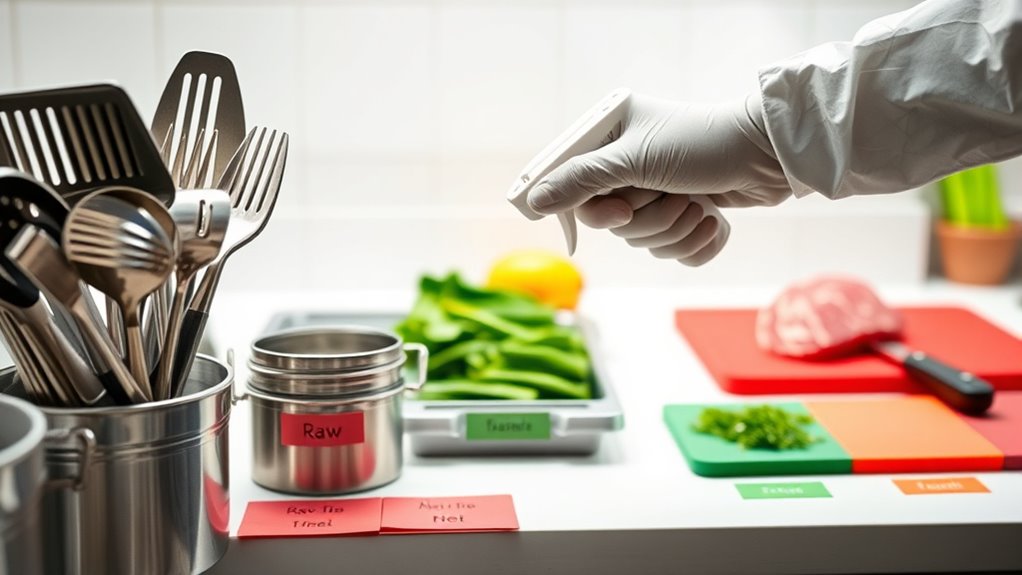

To avoid cross-contamination between zones, you should consistently sanitize all surfaces, utensils, and equipment between tasks. Clearly separate work areas for raw and cooked foods, using designated zones and color-coded tools to prevent mix-ups. Always wash your hands and change gloves when switching tasks or zones. Proper storage, such as keeping raw meats below ready-to-eat items, also helps. Paying close attention to these steps makes certain safety—more tips will help you master the process.
Key Takeaways
- Assign separate designated zones for raw and cooked foods to prevent cross-contact.
- Use distinct, color-coded tools and utensils for each zone to avoid cross-contamination.
- Change gloves and wash hands thoroughly when moving between different zones or tasks.
- Store raw meats below ready-to-eat foods to prevent drips and accidental contact.
- Regularly clean and sanitize surfaces, equipment, and storage areas between zone transitions.

Cross-contamination can quickly turn a simple meal into a health hazard if you’re not careful. To prevent this, maintaining proper sanitation practices is essential. You need to ensure that all surfaces, utensils, and equipment are thoroughly cleaned and sanitized between tasks. This means regularly disinfecting cutting boards, countertops, and knives, especially when switching from raw meats to ready-to-eat foods. Using separate tools for different zones minimizes the risk of bacteria transfer. Remember, a clean workspace is the foundation of food safety, and neglecting sanitation can lead to cross-contamination that might cause foodborne illnesses. Incorporating hygienic practices into daily routines further reduces risks and promotes a safer environment. Equally important is staff training. When your team understands the importance of proper sanitation and how cross-contamination occurs, they’re more likely to follow best practices diligently. Training should include techniques for cleaning and sanitizing equipment properly, as well as protocols for handling raw versus cooked foods. Educate your staff on the significance of hand hygiene—regular handwashing with soap and water, especially after handling raw ingredients or touching contaminated surfaces. Making sure everyone knows the “why” behind these procedures encourages compliance and creates a culture of safety. Creating physical barriers between zones is another essential step. Assign separate workstations for raw and cooked foods, and clearly mark these areas. Train staff to avoid moving between zones with contaminated tools or gloves, and to change gloves or wash hands when switching between tasks. Implementing color-coded utensils or cutting boards for different zones can make this process more intuitive and reduce accidental cross-contact. Staff training should emphasize these visual cues and procedures so everyone understands their role in preventing contamination. You also need to establish strict protocols for storing ingredients. Keep raw meats separate from ready-to-eat foods, ideally on lower shelves or in designated containers. Train your team to follow these storage rules consistently, and regularly check for proper organization. Proper sanitation extends to cleaning storage areas, which should be disinfected frequently to prevent bacteria buildup. Finally, ongoing staff training sessions are essential. Food safety isn’t a one-time effort; it requires continuous reinforcement. Regularly review procedures, update training materials, and conduct assessments to make certain everyone remains vigilant. When your team understands the importance of proper sanitation and adheres to established protocols, you considerably reduce the risk of cross-contamination between zones. This proactive approach not only safeguards your customers’ health but also upholds the integrity of your operation, fostering confidence and trust in your food safety practices.
Frequently Asked Questions
How Often Should Cleaning Protocols Be Reviewed for Effectiveness?
You should review your cleaning protocols at least quarterly to guarantee their effectiveness. Regularly updating your cleaning schedules and protocol updates helps identify gaps and adapt to new challenges. By consistently evaluating and refining your procedures, you prevent cross-contamination between zones and maintain a safe environment. Stay proactive—scheduled reviews ensure your cleaning practices remain current, efficient, and aligned with best practices for safety and hygiene standards.
What Are the Best Materials for Zone Separation Barriers?
You might think choosing flimsy plastic or cheap materials is fine, but for zone separation barriers, durable materials are essential. Opt for stainless steel, high-density polyethylene, or tempered glass—these materials offer superior barrier durability and resistance to wear and tear. Proper material selection guarantees your zones stay clearly separated, preventing cross-contamination. Remember, investing in robust barriers today saves you from costly breaches tomorrow.
How Can Staff Be Trained to Prevent Zone Cross-Over?
You should implement extensive staff training focused on zone protocols, emphasizing the importance of strict adherence to designated areas. Use hands-on demonstrations and regular refresher sessions to reinforce proper procedures. Encourage staff to ask questions and clarify doubts, ensuring everyone understands the risks of zone cross-over. Consistent monitoring and feedback help maintain discipline, making it easier for staff to prevent cross-contamination and uphold safety standards effectively.
Are There Specific Signs or Labels to Indicate Zone Boundaries?
Wouldn’t you agree clear zone boundary signage is essential? Yes, using specific signs and labels that follow strict labeling standards helps you instantly recognize zone boundaries. These signs should be visible, color-coded, and include clear instructions to minimize confusion. Proper signage acts as a visual cue, reminding you and your team to stay within designated areas, preventing cross-contamination and maintaining a safe, organized environment.
What Technology Aids Can Help Monitor Zone Integrity?
You can use sensor technology like RFID or motion sensors to monitor zone integrity continuously. Barrier materials, such as specialized curtains or sliding doors, act as physical safeguards. These tools help you detect breaches promptly, ensuring zones remain isolated. By integrating sensor alerts with barrier systems, you stay proactive in preventing cross-contamination, maintaining a safe environment and ensuring compliance with safety protocols.
Conclusion
Picture your workspace as a busy highway, with each zone like a separate lane. When you avoid cross-contamination, you’re like a skilled driver, steering clear of accidents and spills. Keep tools and ingredients in their designated areas, and don’t let traffic mingle. By maintaining clear boundaries, you create a safe, smooth flow, preventing chaos and contamination. Stay vigilant, and your zones stay pristine, ensuring everyone’s safety and your peace of mind.