
To build an ROI case for new floor cleaning machines, start by comparing the upfront purchase costs with ongoing expenses like maintenance, parts, and energy use. Evaluate how much time and labor you’ll save through increased efficiency and better cleaning quality, which can lower re-cleaning and repair costs. Factor in utility savings and long-term durability to see the full financial picture. If you keep exploring, you’ll find detailed strategies to strengthen your investment analysis.

Get cleaning gear delivered free with Prime
- Fast, free delivery on millions of items
- Prime Video, Amazon Music and more included
- Member-only deals all year
Key Takeaways
- Conduct a comprehensive cost analysis comparing initial purchase, maintenance, and operational expenses over the machine’s lifespan.
- Quantify productivity and efficiency gains by estimating time saved and translating it into labor cost reductions.
- Assess cleaning quality, durability, and their impact on re-cleaning, floor longevity, and overall environment health.
- Evaluate utility and environmental savings through energy and water efficiency, incorporating these into the ROI calculation.
- Integrate all factors—costs, savings, productivity, and environmental benefits—into a detailed financial model for informed decision-making.
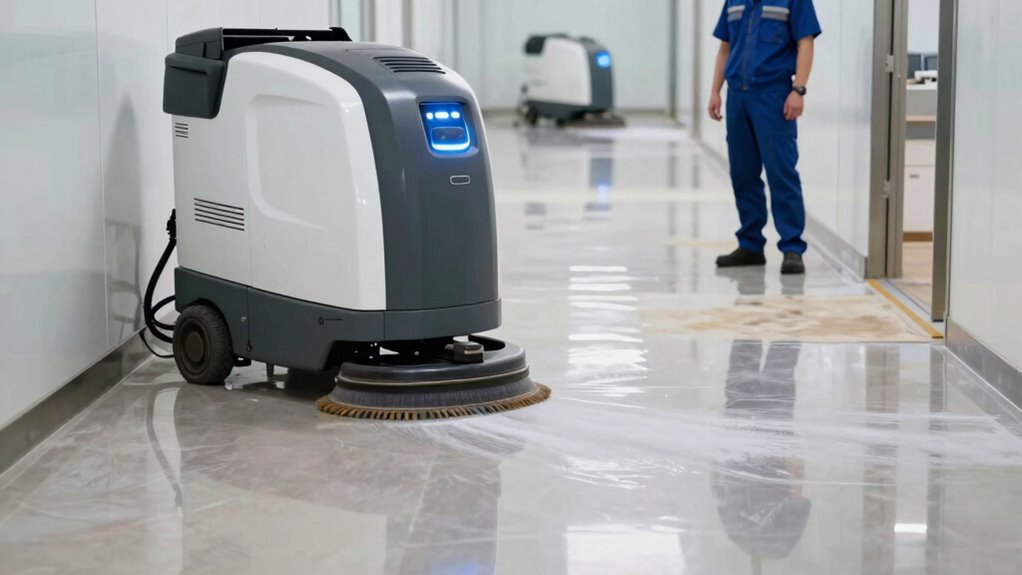
When you’re considering investing in floor cleaning machines, building a solid ROI case is essential to justify the expense. You need to understand how these machines will impact your operations, costs, and overall efficiency. Start with a detailed cost analysis, comparing the upfront purchase price against the ongoing expenses. Factor in the initial investment, but don’t forget to account for maintenance costs, which can considerably influence your long-term savings. Maintenance might include parts replacement, servicing, and repairs, so it’s important to get an accurate estimate based on the machine’s specifications and your usage frequency. This extensive cost analysis helps you see whether the investment makes financial sense over time.
Building a strong ROI for floor cleaning machines requires comprehensive cost and efficiency analysis.
Next, look at how these machines can boost productivity. Manual cleaning takes more time and effort, often leading to inconsistent results. Automated floor cleaning machines can cover larger areas faster and with less manpower, meaning your team can focus on other tasks or handle more space in less time. Quantify this benefit by estimating hours saved per week or month, then translate those hours into labor cost savings. When you add these efficiencies to your cost analysis, you get a clearer picture of how quickly the investment can pay off. Additionally, understanding the economic benefits of automation can help you better communicate the value of this investment to stakeholders. Understanding the cost-benefit analysis involved in choosing the right equipment is also key to making an informed decision. Moreover, evaluating the long-term savings potential is crucial as it reflects the overall financial impact over the machine’s lifespan. Incorporating operational efficiencies into your evaluation can further underscore the total value gained from automation.
Another critical aspect is the quality of cleaning. Better cleaning results reduce the need for re-cleaning, prevent damage to floors, and create a healthier environment. These improvements can lower costs associated with floor repairs, replacements, and health-related downtime. When building your ROI case, include these potential savings. Also, consider the durability of the machines—more robust models might have higher initial costs but often come with lower maintenance costs over their lifespan, further enhancing your ROI. Additionally, understanding the importance of biodiversity in your environment can motivate the adoption of eco-friendly cleaning solutions that support sustainable practices.
Finally, think about energy consumption and water usage. Modern floor cleaning machines are designed to be energy-efficient, which can decrease utility bills. Compare the energy and water costs of your current cleaning methods with those of new machines. Over time, this can lead to substantial savings, strengthening your case. By analyzing all these factors—initial investment, maintenance costs, productivity gains, cleaning quality, and utility savings—you build a thorough ROI model that clearly demonstrates whether the new floor cleaning machines are a smart financial move for your operation.
commercial floor cleaning machine
As an affiliate, we earn on qualifying purchases.
As an affiliate, we earn on qualifying purchases.
Frequently Asked Questions
How Do I Calculate the Actual Operational Costs of Cleaning Machines?
To calculate operational costs, start by reviewing your cleaning schedules to determine usage frequency. Track expenses like water, electricity, and cleaning supplies. Consider equipment lifespan to estimate depreciation costs over time. Include maintenance and repair costs, and factor in labor time. By analyzing these elements, you can accurately assess the true operational costs of your cleaning machines, helping you make informed decisions about replacements or upgrades.
What Maintenance Costs Should I Anticipate for New Machines?
You should anticipate maintenance costs like routine inspections, replacing spare parts, and servicing to guarantee peak equipment lifespan. Regularly check components such as brushes, filters, and belts, and budget for unexpected repairs. Preventative maintenance helps extend the lifespan of your machines, reducing long-term costs. Keep a detailed record of maintenance activities to predict future expenses and maintain efficiency, ultimately maximizing your investment.
How Can Employee Training Impact ROI With New Equipment?
Think of employee training like planting seeds; well-trained staff nurture your investment, boosting ROI. When you focus on employee engagement and guarantee training effectiveness, your team operates new cleaning machines more efficiently, reducing downtime and maintenance costs. I saw a team cut cleaning time by 30% after targeted training, proving that investing in your staff maximizes equipment performance and financial returns. Proper training turns machinery into a powerful, cost-effective asset.
Are There Any Industry Benchmarks for Cleaning Machine Efficiency?
Yes, industry standards and efficiency benchmarks help you gauge cleaning machine performance. Generally, these benchmarks measure operational speed, coverage rate, and energy consumption. You should compare your equipment’s efficiency to these standards to identify areas for improvement. By aligning your machines with industry benchmarks, you guarantee peak performance, reduce costs, and boost your ROI. Regularly reviewing these benchmarks keeps your cleaning operations competitive and efficient.
How Do I Compare Different Brands and Models Effectively?
Don’t put all your eggs in one basket. To compare brands and models effectively, you should analyze key features like durability, cleaning efficiency, and ease of use. Conduct a brand comparison by researching customer reviews, warranties, and support services. Focus on model features such as battery life, maneuverability, and maintenance needs. This approach helps you choose a machine that maximizes ROI and fits your specific cleaning requirements.
Conclusion
By building a solid ROI case, you’re planting seeds that grow into a lush, thriving garden of clean floors and cost savings. When you showcase the tangible benefits, you’re painting a clear roadmap through a foggy forest, guiding decision-makers to see the shining pathway ahead. With each data point and projection, you’re weaving a strong tapestry of value that turns skepticism into confidence, transforming your cleaning investment into a flourishing, fruitful venture.
Halloween Picks
halloween
As an affiliate, we earn on qualifying purchases.