
To clean around forklift traffic without disruption, schedule cleaning during low-activity times like shift changes or breaks. Identify high-traffic zones and use barriers or warning signs to keep workers safe. Assign specific areas away from main pathways and guarantee clear communication with forklift operators about schedules. Use quick, effective cleaning methods with lightweight equipment, and verify floors are dry before resuming work. Staying organized and mindful of safety protocols helps keep operations smooth—you’ll discover more tips as you explore further.

Get cleaning gear delivered free with Prime
- Fast, free delivery on millions of items
- Prime Video, Amazon Music and more included
- Member-only deals all year
Key Takeaways
- Schedule cleaning during low-traffic periods like shift changes or breaks to minimize operational disruption.
- Designate specific cleaning zones away from main forklift pathways and use barriers or warning signs during cleaning.
- Use lightweight, quick-drying cleaning equipment to efficiently clean floors without obstructing traffic.
- Communicate regularly with forklift operators about cleaning schedules and safety protocols to prevent interference.
- Ensure floors are dry and debris-free before forklifts resume work, using visual cues to alert operators.
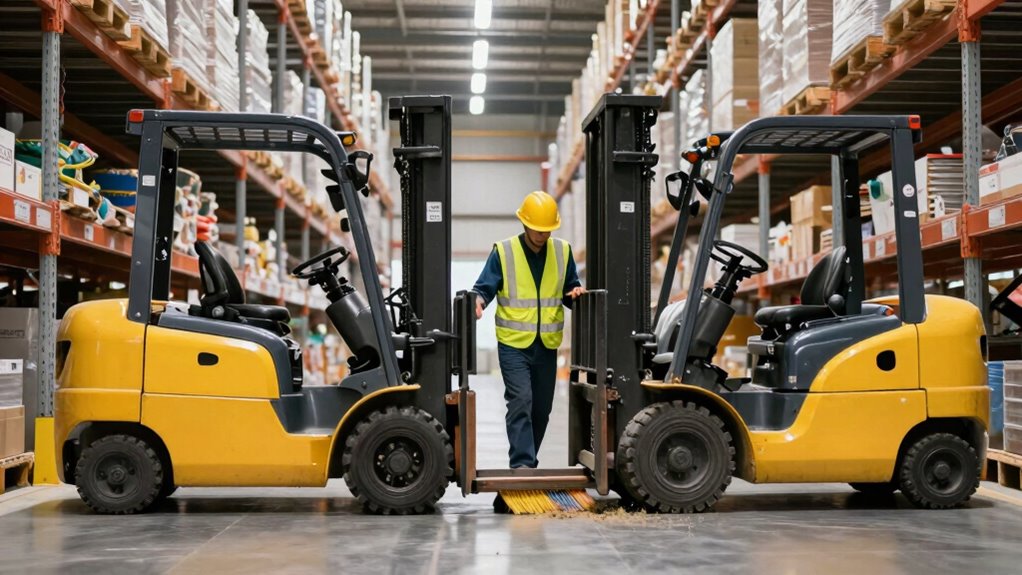
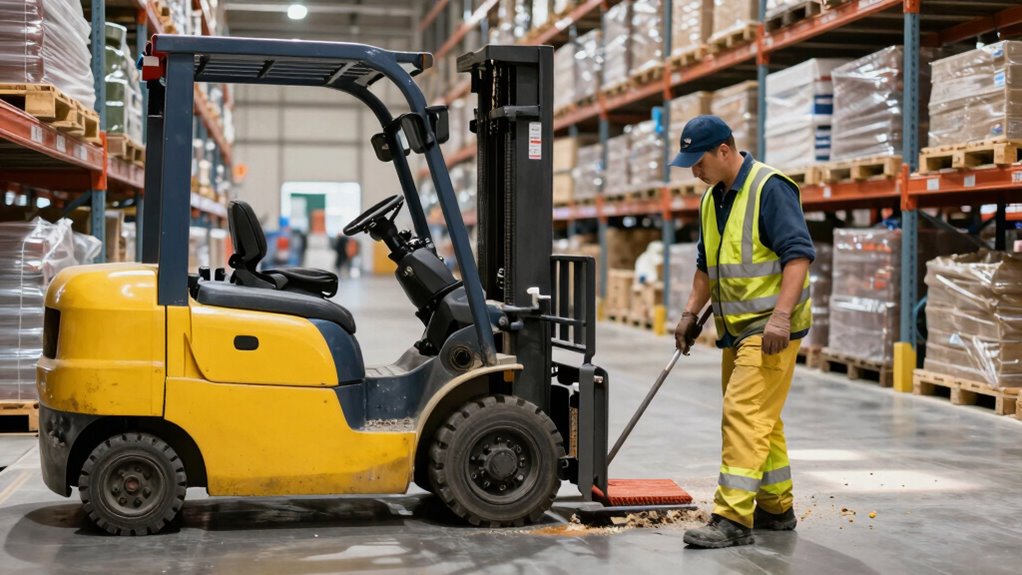
Start by analyzing the flow of forklift traffic in your facility. Identify high-traffic zones and times when forklifts are most active. Scheduling cleaning tasks during periods of low activity, such as shift changes or breaks, guarantees you don’t interfere with daily operations. This approach helps keep aisles clear for forklifts, reducing the risk of collisions or injuries. Regular communication with forklift operators can also inform you about their schedules and any areas that require extra caution during cleaning.
Analyze forklift traffic patterns to schedule cleaning during low-activity periods and enhance safety.
Incorporate designated cleaning zones away from main forklift pathways whenever possible. For example, assign specific areas for sweeping, mopping, or trash removal that are temporarily off-limits during peak traffic times. Using barriers or warning signs during cleaning sessions further alerts forklift drivers to exercise caution, reinforcing forklift safety. When cleaning near active pathways is unavoidable, always proceed with heightened awareness, and consider using portable barriers or cones to delineate safe zones. Establishing clear safety protocols can also help ensure everyone understands best practices during these operations.
Cleaning schedules should be flexible yet consistent. Regularly review and adjust them based on operational needs and observed safety concerns. For instance, if spills or debris tend to accumulate in certain spots, increase cleaning frequency in those areas. Consistent cleaning routines help prevent slips, trips, and falls—common hazards in warehouse environments—and keep floors clear of obstructions that could impede forklift movement. Implementing dust-proofing solutions can also help reduce debris buildup and maintain a safer environment. Additionally, utilizing proper cleaning equipment ensures faster and more efficient cleaning processes.
Furthermore, prioritize quick, effective cleaning methods that don’t require lengthy shutdowns. Using lightweight equipment or quick-drying solutions can speed up the process, allowing you to maintain cleanliness without *considerably* disrupting forklift traffic. Always ensure that floors are dry and free of debris before forklifts resume work, and verify that any cleaning residues are promptly removed to prevent slipping hazards. Incorporating safety protocols related to cleaning procedures can further enhance overall operational safety.
lightweight floor cleaning equipment
As an affiliate, we earn on qualifying purchases.
As an affiliate, we earn on qualifying purchases.
Frequently Asked Questions
How Often Should Cleaning Around Forklift Areas Be Scheduled?
You should schedule cleaning around forklift areas at least daily to maintain safety and efficiency. Regular cleaning guarantees debris doesn’t interfere with forklift operations, reducing accidents. Incorporate cleaning schedules into your safety protocols to keep the workspace safe and organized. By doing this consistently, you minimize disruptions and promote a safer environment for your team. Always review and adjust cleaning frequency based on traffic levels and specific operational needs.
What Safety Precautions Are Necessary During Cleaning?
Imagine maneuvering a busy warehouse like a tightrope walk—safety is your lifeline. During cleaning, you must wear PPE to protect against slip hazards and potential injuries. Always guarantee floors are clear of debris and wet spots, and mark cleaning zones clearly. Follow proper PPE requirements, like gloves and high-vis vests, to keep everyone safe. Staying vigilant minimizes risks, making sure your workspace remains secure for all.
Which Cleaning Products Are Safest Near Forklift Traffic?
You should choose cleaning products labeled as low in chemical hazards and non-slip. Avoid harsh chemicals that could pose risks or create slippery surfaces. Use biodegradable, non-toxic disinfectants that dry quickly, reducing slip hazards. Regularly clean and dry high-traffic areas to prevent slips and falls. By selecting safe cleaning products and maintaining dry, non-slip surfaces, you guarantee forklift traffic remains safe and efficient without disruption.
How to Train Staff for Safe Cleaning Near Moving Forklifts?
Think of your staff as the orchestra, each playing in harmony. To train them for safe cleaning near moving forklifts, emphasize clear forklift operator communication, ensuring everyone understands signals and alerts. Use cleaning zone signage to designate safe areas and designated paths. Conduct regular safety drills and briefings, reinforcing the importance of staying alert and respecting each other’s space, so the workspace stays in tune without any disruptive dissonance.
What Are the Best Tools for Cleaning in High-Traffic Forklift Zones?
You should use lightweight, quick-drying tools like microfiber mops and dusters to clean high-traffic forklift zones efficiently. Employ handheld vacuum cleaners for tight spots and guarantee you have bright warehouse signage to alert staff of cleaning activities. Regular forklift maintenance helps prevent debris buildup, making cleaning easier. Combining these tools with clear signage minimizes disruptions, keeping your workspace safe and organized while maintaining productivity.
Conclusion
By keeping a clear, organized space around forklift traffic, you create a smooth, safe corridor where wheels can glide effortlessly without obstacles. Imagine the crisp sound of a broom sweeping away debris, the gentle glide of a mop over shiny floors, and the calm rhythm of workers moving seamlessly through a clutter-free zone. When you prioritize cleaning without disruption, you’re not just maintaining a tidy space—you’re fostering an environment where productivity flows effortlessly and safety feels second nature.
Halloween Picks
halloween
As an affiliate, we earn on qualifying purchases.