To clean grout lines with a scrubber, start by removing loose dirt with a dry brush or vacuum. Apply a cleaning solution, like baking soda mixed with water or a store-bought grout cleaner, along the lines and let it sit for a few minutes. Use a stiff-bristled scrubber to gently work the solution into the grout with back-and-forth motions. Rinse with clean water and wipe dry. For deeper stains, learn tips that make this process even easier.
Key Takeaways
- Remove loose debris and dust from grout lines before scrubbing with a vacuum or dry cloth.
- Apply a suitable cleaning solution, such as baking soda paste or vinegar mixture, and let it sit for a few minutes.
- Use a stiff-bristled scrubber to apply steady pressure and scrub grout lines in a back-and-forth motion.
- Rinse thoroughly with clean water to remove residue and dirt from the grout.
- Consider sealing the grout after cleaning to protect against future stains and buildup.
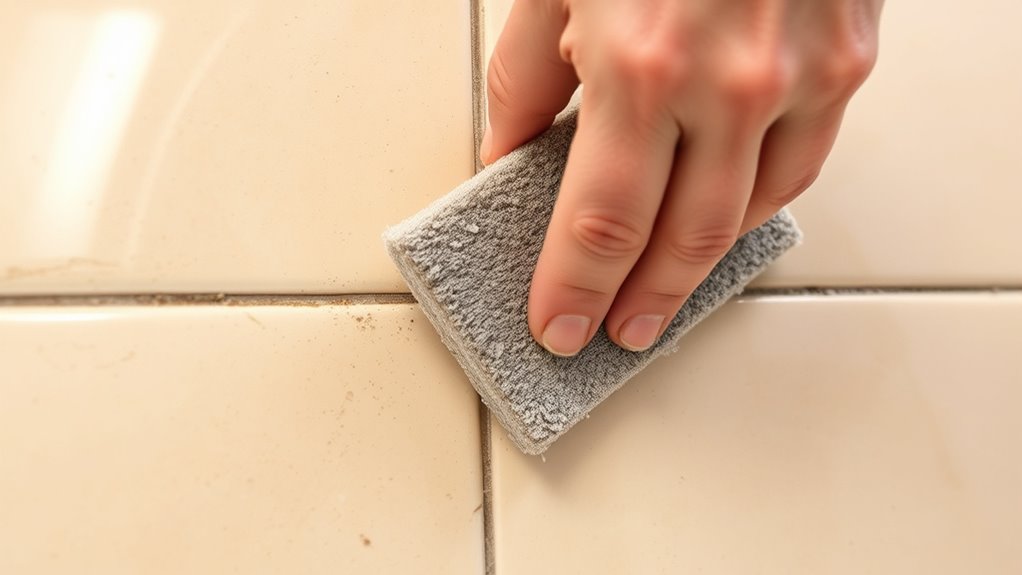
Keeping grout lines clean can considerably improve the appearance of your tiles and prevent mold and mildew buildup. When you focus on maintaining your grout, you not only enhance the overall look but also extend the lifespan of your tiles. One of the most effective ways to do this is by using a scrubber to clean the grout lines. A good scrubber helps loosen dirt, grime, and stains, making it easier to keep your grout looking fresh and new. Regular cleaning is essential, but don’t forget about grout sealing, which acts as a protective barrier against moisture and stains. Sealing your grout prevents dirt from penetrating deeply, making stain removal much simpler over time.
To start, choose the right scrubber for your needs. A stiff-bristled brush works well for heavily stained or textured grout, while a softer brush might be better for delicate tiles. Before you begin scrubbing, it’s a good idea to remove loose debris and dust with a vacuum or dry cloth. Next, prepare your cleaning solution—either a commercial grout cleaner or a homemade mixture of baking soda and water, or vinegar and water. Apply the solution generously along the grout lines, allowing it to sit for a few minutes. This soaking time helps break down stubborn stains and loosens grime, making your scrubbing more effective.
As you scrub, apply steady pressure and work along the length of each grout line. Use a back-and-forth motion to lift dirt and stains from deep within the pores of the grout. For particularly tough stains, you might need to repeat this process or let the cleaning solution sit longer. Once you’ve scrubbed thoroughly, rinse the area with clean water to remove any residue. Use a damp cloth or mop to wipe away leftover dirt and cleaning solution, revealing brighter, cleaner grout.
After cleaning, it’s important to consider grout sealing if you haven’t sealed your grout recently. Sealing helps prevent future stains and makes stain removal easier next time. You should reseal your grout every one to two years, depending on usage and the type of sealant used. Proper grout sealing creates a surface that resists moisture and dirt, reducing the effort needed to keep your tiles looking their best. Regular cleaning with a scrubber combined with periodic sealing ensures your grout stays bright, clean, and free from mold or mildew buildup. Additionally, understanding the importance of self-watering plant pots can inspire you to incorporate moisture-efficient solutions into your home, which can also help reduce excess humidity that fosters mold growth. With consistent effort, you can maintain a pristine, attractive tiled surface for years to come.

Oreck Commercial Orbiter Hard Floor Cleaner Machine, Multi-Purpose Floor Cleaning, Random Orbital Drive, Wide Cleaning Path, 50-Foot Long Cord, ORB550MC, Gray/Red
MULTI-PURPOSE CLEANING: Commercial grade cleaner and effective on all types of flooring surfaces. Sand, refinish, strip, scrub, wax,...
As an affiliate, we earn on qualifying purchases.
Frequently Asked Questions
Can I Use a Power Scrubber on Delicate Tile Surfaces?
Yes, you can use a power scrubber on delicate tiles, but you need to be cautious. Choose a gentle brush attachment and set the power scrubber to a low or medium setting. Test it on a small, hidden area first to guarantee it doesn’t damage the surface. Using a power scrubber carefully helps you clean grout lines effectively without harming your delicate tiles.
How Often Should I Deep Clean Grout Lines?
Imagine your grout lines, silently collecting dirt and grime with each passing week. To keep your tiles pristine, you should deep clean grout lines every six to twelve months. Proper grout maintenance and cleaning frequency prevent stubborn stains and mold buildup, ensuring your space stays fresh and inviting. Regular deep cleaning not only preserves the look of your tiles but also extends their lifespan, making your home shine brighter with every scrub.
Are Natural Cleaning Solutions Effective for Grout?
Natural cleaning solutions can be quite effective for grout, especially for regular maintenance. DIY solutions like baking soda and vinegar target grime without harsh chemicals, making them safer and eco-friendly. While they may not be as potent as commercial cleaners, their chemical effectiveness is sufficient for light to moderate stains. For tougher dirt, you might need to combine natural methods with stronger products, but overall, natural solutions are a good choice for everyday grout cleaning.
What Precautions Should I Take to Avoid Damaging Tiles?
You should be gentle with your scrubber to avoid damaging tiles or cracking grout. Avoid using harsh abrasives, and check that your grout is sealed with a grout sealant, which helps protect it. Be cautious around edges and corners, and don’t scrub too aggressively. Regularly inspect for signs of tile cracking, and if you notice any, consider resealing the grout or consulting a professional to prevent further damage.
Can I Clean Grout Lines Without Using Harsh Chemicals?
A stitch in time saves nine, so you can clean grout lines without harsh chemicals by using natural solutions like a mixture of baking soda and vinegar. This combo effectively lifts dirt, mold prevention, and keeps your grout sealed without damage. Regular gentle scrubbing with a grout brush or scrubber helps maintain cleanliness and prevents mold buildup, making chemical cleaners unnecessary over time.

Battery Powered Walk Behind Mini Automatic Floor Scrubber Machine – Compact & Portable, 15” Cleaning Width, 90-Minute Runtime, 170 RPM – Ideal for Small Commercial Spaces, Offices, Retail & More
Compact & Efficient Cleaning – Designed for small commercial spaces, this mini automatic floor scrubber features a 15-inch...
As an affiliate, we earn on qualifying purchases.
Conclusion
Now that you know how to clean grout lines with a scrubber, you can keep your tiles looking fresh and new. You’ll remove dirt, stains, and grime with confidence, restore your grout’s original color, and maintain a spotless appearance. You’ll save time, money, and effort by doing it yourself. So, grab your scrubber, follow these simple steps, and enjoy the satisfaction of a beautifully clean space that’s inviting, hygienic, and shining.

Bissell® SpinWave Hard Floor Expert Corded Spin Mop Cleaner with Washable mop Pads for Sealed Hard Floors, 20393
DEEP CLEANING WITHOUT SCRUBBING. Powerful corded spin mop with 100% machine-powered scrubbing pads—removes tough messes effortlessly.
As an affiliate, we earn on qualifying purchases.

qimedo Battery Electric Mop M3, 800RPM Cordless Electric Power Scrubber & Mops for Floor Cleaning, Best Automatic Spin Mops with Smart Display,Rotating Mop with LED Light & Water Spray
【𝐈𝐧𝐧𝐨𝐯𝐚𝐭𝐢𝐯𝐞 𝐇𝐢𝐠𝐡 𝐑𝐏𝐌 𝐄𝐥𝐞𝐜𝐭𝐫𝐢𝐜 𝐌𝐨𝐩 𝟐-𝐢𝐧-𝟏】This is the"ONLY"2-in-1 Electric Mop and Electric Scrubber on the market ! Battery...
As an affiliate, we earn on qualifying purchases.