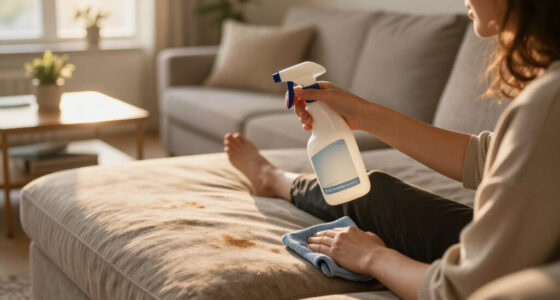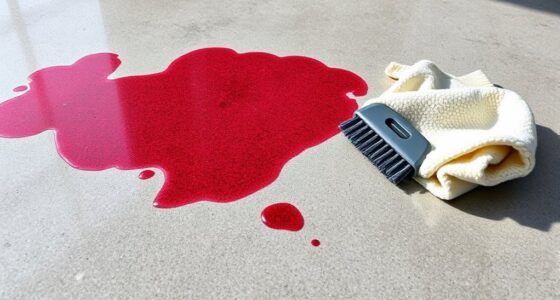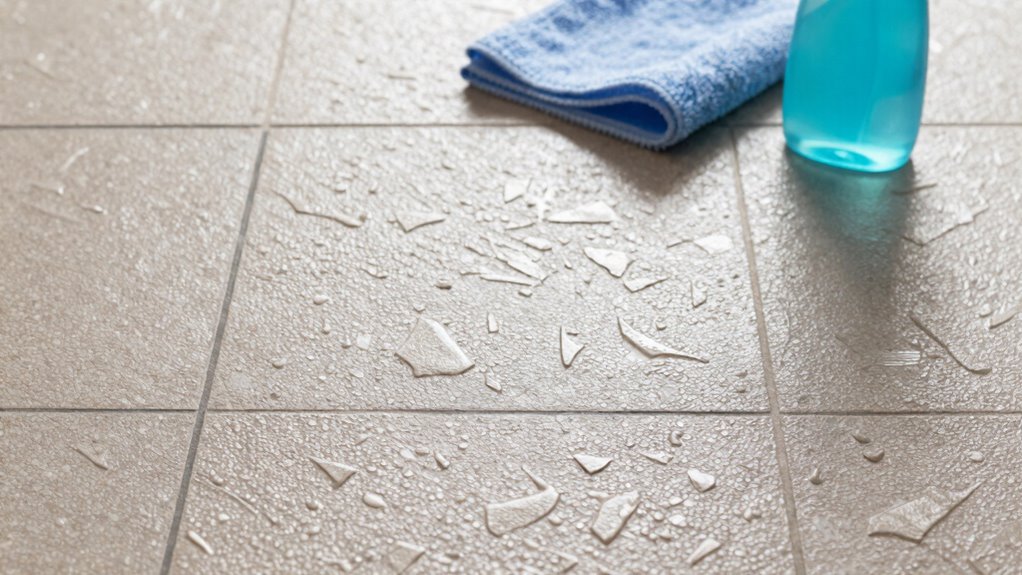

To clean non-slip tile without losing traction, use gentle cleaning methods like warm water mixed with a mild dish soap or pH-neutral cleaner. Avoid harsh chemicals or abrasive brushes that can damage the textured surface. Use soft brushes or microfiber cloths to scrub the grout and tiles carefully, especially in textured areas. Rinse thoroughly and dry with a microfiber cloth to prevent water spots. If you keep exploring, you’ll discover even more tips to keep your tiles safe and pristine.

Get cleaning gear delivered free with Prime
- Fast, free delivery on millions of items
- Prime Video, Amazon Music and more included
- Member-only deals all year
Key Takeaways
- Use pH-neutral cleaners or warm water with mild dish soap to clean without reducing traction.
- Avoid abrasive scrubbers; opt for soft brushes or microfiber cloths to prevent damaging the textured surface.
- Rinse thoroughly to remove residues that could create slipperiness or buildup.
- Dry surfaces completely with microfiber towels to prevent water spots and slipping hazards.
- Regularly inspect and maintain the grout to prevent mold and dirt buildup that can affect traction.
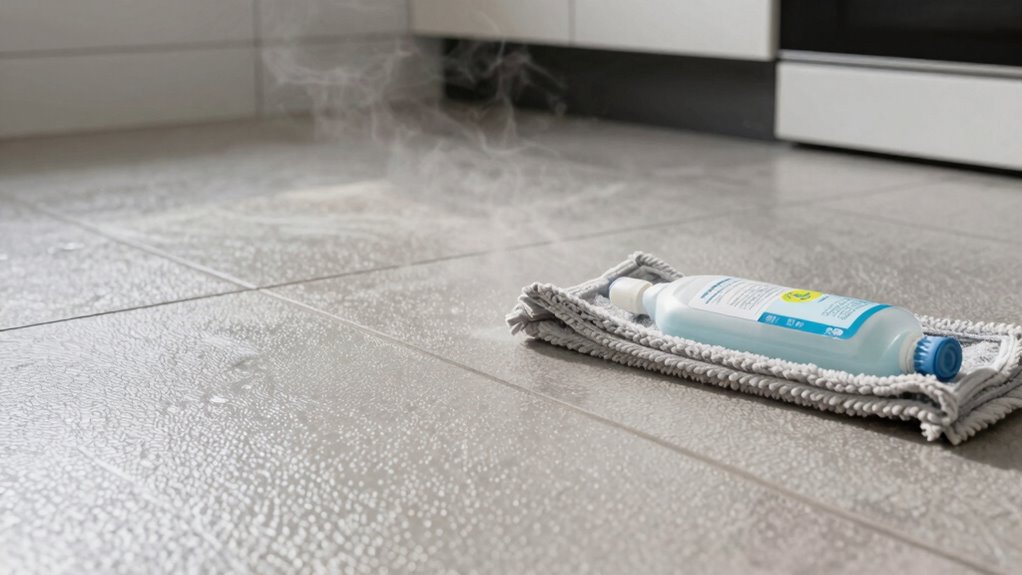
Cleaning non-slip tile is essential to maintain its safety and appearance, especially in high-traffic areas. You want your surfaces to look good and stay safe, which means paying attention to more than just surface dirt. Mold removal becomes a key part of your routine, particularly in damp environments like bathrooms or kitchens. Mold can hide in the grout lines, not only tarnishing the look of your tile but also posing health risks. To keep this at bay, you need to regularly inspect your grout and address any signs of mold promptly. Use a mixture of water and vinegar or a specialized mold cleaner, applying it with a soft brush to scrub away mold without damaging the textured surface of your non-slip tile. Avoid harsh chemicals that could weaken the grout or reduce traction.
Regularly inspect and clean grout with gentle solutions to prevent mold and preserve your non-slip tile’s safety and appearance.
Grout maintenance is equally important because grout lines are prone to dirt buildup. Dirty grout can make your entire tile surface look dull and neglected, but more importantly, it can create a slippery environment if not cleaned properly. To preserve the non-slip qualities, you should avoid overly abrasive cleaning methods that could erode the grout or smooth out its textured surface. Instead, stick to gentle scrubbing with a soft brush or a sponge, combined with a mild cleaning solution. Re-sealing your grout periodically helps prevent stains and mold growth, ensuring that your tiles stay both attractive and safe. Regularly monitoring moisture levels in your environment can also help prevent mold growth and maintain the integrity of your non-slip surface. Additionally, maintaining proper ventilation can significantly reduce indoor humidity, further decreasing the risk of mold development. Proper ventilation is especially important in damp areas to keep moisture at bay. Incorporating dehumidifiers can also be beneficial in maintaining optimal humidity levels. Using a humidistat can help you keep humidity within safe ranges and prevent mold without over-drying the space.
When it comes to cleaning the tile surface itself, always choose cleaning agents that won’t compromise traction. Harsh chemicals or wax-based cleaners may leave residues that make the surface slippery, defeating the purpose of non-slip tiles. Instead, opt for pH-neutral cleaners or a mixture of warm water and a few drops of dish soap. Use a microfiber mop or a soft-bristled brush to clean the surface thoroughly, paying close attention to textured areas where dirt and grime can settle. Rinse well with clean water to remove any residue, then dry the surface with a microfiber cloth to prevent water spots and slips.
Ultimately, maintaining your non-slip tile involves a combination of mold removal, grout maintenance, and careful cleaning practices. Regular attention to these details ensures your surface remains safe, attractive, and functional. By avoiding aggressive scrubbing or harsh chemicals, you preserve the tile’s texture and non-slip qualities, keeping your space both beautiful and secure for everyone who uses it.
As an affiliate, we earn on qualifying purchases.
Frequently Asked Questions
Can I Use Bleach on Non-Slip Tiles?
You can use bleach on non-slip tiles, but you must be cautious about bleach safety. Undiluted or excessive use can damage the tile’s surface and cause discoloration. Always dilute bleach properly and test it on a small area first. If you notice tile discoloration or fading, stop immediately. Using bleach carefully helps you clean effectively without compromising traction or damaging your non-slip surface.
How Often Should I Clean Non-Slip Tiles?
You should clean your non-slip tiles at least once a week to maintain grip and prevent buildup. Regular cleaning helps with grout maintenance, ensuring dirt and grime don’t accumulate in the joints. Use a gentle cleaner and avoid harsh chemicals. Additionally, consider applying a sealant every 1-2 years to protect the grout and surface, helping to keep your tiles clean and safe without compromising traction.
Are Commercial Cleaners Safe for Non-Slip Surfaces?
Commercial cleaners can be safe for non-slip surfaces if you choose products specifically designed for slip prevention and surface safety. Always read labels carefully, avoiding harsh chemicals that might reduce traction. Test the cleaner on a small area first to verify it doesn’t compromise the tile’s slip-resistant properties. Properly selecting and using commercial cleaners helps maintain your tile’s safety, ensuring it stays both clean and slip-free.
What Common Mistakes Should I Avoid During Cleaning?
Avoid common mistakes like using harsh chemicals or excessive water during mopping, which can reduce traction. Don’t forget to stick to proper mopping techniques—use a damp mop, not soaking wet, and clean regularly to prevent buildup. Ignoring cleaning frequency can lead to slippery residues or grime. Stay vigilant, and you’ll keep your non-slip tiles safe and effective, all while maintaining their grip and appearance.
How to Restore Traction After Deep Cleaning?
To restore traction after deep cleaning, start by rinsing the tile thoroughly to remove residue. Use a stiff-bristle brush to scrub the surface gently, focusing on textured areas to enhance slip prevention. Rinse again to eliminate loosened debris. For added traction, consider applying a non-slip treatment or sealant designed for tiles. Regular maintenance and avoiding harsh chemicals will help sustain slip prevention and keep your tile safe.
Conclusion
Keeping your non-slip tiles clean is essential for safety, but you don’t have to sacrifice traction to do so. For example, imagine Jane, who used harsh chemicals on her bathroom tiles and noticed the surface became slick. After switching to gentle, pH-balanced cleaners and regular scrubbing, her tiles remained clean and safe. By following these simple steps, you’ll maintain your tiles’ grip and avoid slips, ensuring your space stays both beautiful and secure.
Fall Picks
fall essentials
As an affiliate, we earn on qualifying purchases.