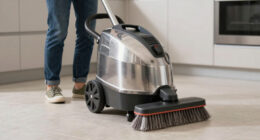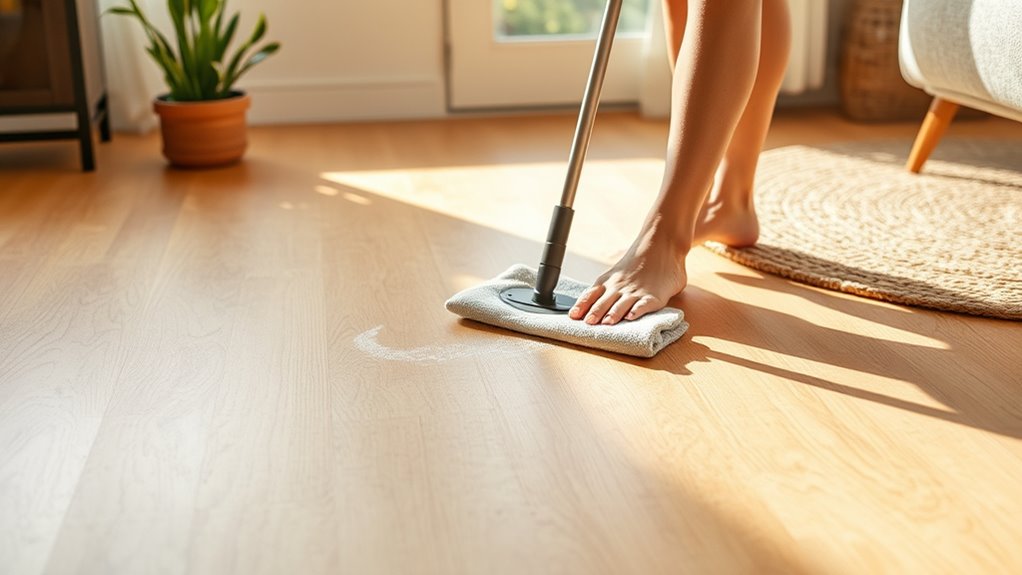

To keep your cork floor looking fresh in just 15 minutes a day, start by sweeping or vacuuming to remove dirt and debris. Then, wipe the surface with a damp mop using a pH-neutral cleaner to lift grime without damaging the finish. Avoid harsh chemicals and excessive water to prevent moisture issues. Regular quick cleanings help maintain its appearance and durability, and if you keep up this routine, you’ll discover more tips for long-lasting beauty.
Key Takeaways
- Sweep or vacuum daily to remove dirt and debris, preventing scratches and damage.
- Use a damp mop with a pH-neutral cleaner to clean without harming the cork finish.
- Wipe up spills immediately to prevent moisture absorption and staining.
- Avoid harsh chemicals; stick to gentle, cork-specific cleaning products.
- Ensure proper ventilation and dryness to prevent mold and maintain floor integrity.
Cork floors offer a natural and sustainable choice for your home, combining durability with eco-friendliness. When you choose cork, you’re not only adding a warm, inviting look to your space but also embracing a material that supports environmental health. Cork is harvested from the bark of cork oak trees, which regenerate naturally, making it a renewable resource. This sustainable benefit means you can enjoy beautiful flooring without guilt, knowing you’re helping preserve forests and reduce your carbon footprint. Plus, cork’s natural properties make it an excellent insulator, keeping your home warmer in winter and cooler in summer, which can lead to energy savings.
Installing cork flooring might seem intimidating at first, but with a few straightforward tips, you can guarantee a smooth process. First, make sure your subfloor is clean, level, and dry. Any debris, bumps, or moisture can cause issues later, so take the time to prepare thoroughly. Acclimate your cork planks by leaving them in the room where they’ll be installed for at least 48 hours. This step helps prevent expansion or contraction after installation, which could cause gaps or buckling. When you’re ready to lay the cork, use a high-quality adhesive designed for cork flooring, and follow the manufacturer’s instructions carefully. During installation, leave a small expansion gap around the perimeter of the room to accommodate natural movement of the material. Understanding AI in Education can also help you stay informed about innovations that might influence future flooring technologies or maintenance tools.
Once installed, maintaining your cork floor is simple. Regular sweeping or vacuuming removes dirt and debris that can scratch the surface. When you need to clean more thoroughly, use a damp mop with a gentle, pH-neutral cleaner—avoid harsh chemicals that can damage the cork or diminish its finish. Cork is naturally resistant to mold and mildew, but keeping it dry and well-ventilated enhances its longevity. For added protection, consider applying a cork-specific sealant periodically, which can help resist scratches and stains, extending the life of your flooring.

Oreck Commercial Orbiter Hard Floor Cleaner Machine, Multi-Purpose Floor Cleaning, Random Orbital Drive, Wide Cleaning Path, 50-Foot Long Cord, ORB550MC, Gray/Red
MULTI-PURPOSE CLEANING: Commercial grade cleaner and effective on all types of flooring surfaces. Sand, refinish, strip, scrub, wax,...
As an affiliate, we earn on qualifying purchases.
Frequently Asked Questions
Are Cork Floors Suitable for High-Traffic Areas?
Yes, cork floors are suitable for high-traffic areas because of their durability, especially when properly sealed and maintained. Cork flooring durability allows it to withstand daily wear, making it a practical choice. Plus, the environmental benefits of cork, like sustainability and renewability, make it an eco-friendly option. Regular cleaning keeps it looking good, and its natural shock absorption adds comfort in busy spaces.
How Do I Prevent Scratches on Cork Flooring?
Think of your cork floor as a delicate flower that needs gentle care. To prevent scratches, always use furniture pads under heavy pieces and place area rugs in high-traffic zones. These simple steps act like shields, protecting your floor from scratches and dents. Regularly check and reposition furniture and rugs to avoid wear spots. With this approach, your cork floor stays beautiful and scratch-free for years to come.
Can Cork Floors Withstand Pet Accidents?
Cork floors can handle pet accidents if you clean up pet stain removal quickly and properly. Applying a cork sealant enhances durability, helping protect against moisture and stains. If your pet has an accident, immediately blot the area, then clean with a gentle, pH-neutral cleaner. Regularly resealing your cork floor guarantees it stays resilient to pet-related spills and maintains its appearance over time.
What Cleaning Products Are Safe for Cork Floors?
Imagine a time when gentle care mattered most. You should use eco-friendly cleaners and DIY cleaning solutions for your cork floors. These products are safe, effective, and free of harsh chemicals that could damage the cork. Look for pH-neutral options, or make your own with vinegar and water. Always test a small area first, and avoid abrasive scrubbing, ensuring your floors stay beautiful and protected for years to come.
How Often Should I Reapply Sealant to Cork Floors?
You should reapply sealant to your cork floors every 1 to 3 years, depending on foot traffic and wear. Regular sealant maintenance is essential to keep the cork protected and looking its best. Keep an eye on scratches, dullness, or water damage, as these signs indicate it’s time for reapplication. Following a consistent reapplication schedule guarantees your cork floors stay durable and beautiful for years.

HHQ Commercial Floor Scrubber Machine with Brushes and Pads, Heavy Duty Floor Cleaner Polisher and Buffer- Deep Cleaning Tile and Grout, Hardwood Floors and Carpets without Getting on Hands and Knees
Kit Included: 1 Orbital Floor Buffer & Scrubber Machine, 2 Polishing/ Stripping Pads, 3 Scrub Brushes, 1 Microfiber...
As an affiliate, we earn on qualifying purchases.
Conclusion
With just a quick, gentle daily touch, you’ll keep your cork floors subtly radiant, preserving their quiet charm for years to come. A simple routine can nurture their warmth and resilience, allowing you to enjoy their understated beauty without fuss. Over time, these small acts become whispers of care that softly uphold the elegance beneath your feet. In the end, your consistent attention gently guarantees your cork floors remain a quiet, welcoming foundation in your home’s story.

Battery Powered Walk Behind Mini Automatic Floor Scrubber Machine – Compact & Portable, 15” Cleaning Width, 90-Minute Runtime, 170 RPM – Ideal for Small Commercial Spaces, Offices, Retail & More
Compact & Efficient Cleaning – Designed for small commercial spaces, this mini automatic floor scrubber features a 15-inch...
As an affiliate, we earn on qualifying purchases.

Bissell BigGreen BGFS5000 Portable Two Brush Floor Scrubber & Polisher, Polypropylene, 13"" W x 7"" D x 44"" H, White & Green
A small portable scrubbing machine that is perfect for cleaning brick, carpet, ceramic, concrete, cork, hard wood, laminate,...
As an affiliate, we earn on qualifying purchases.