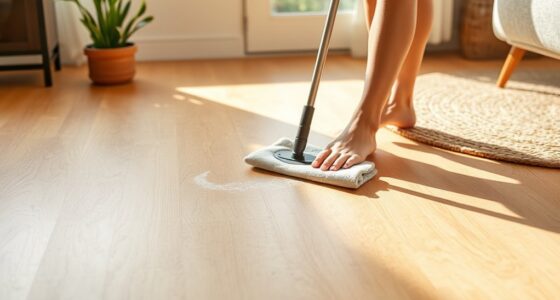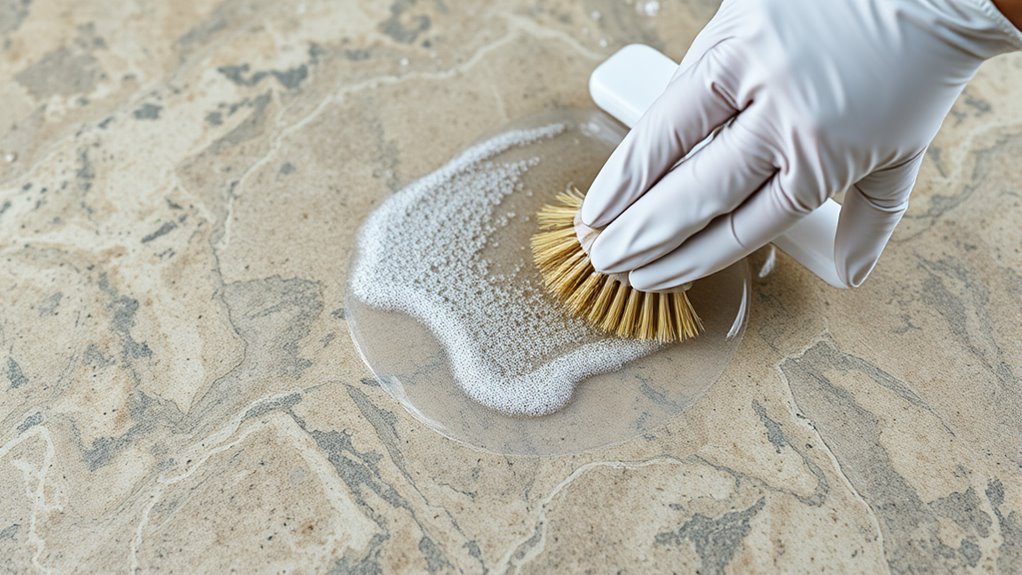

To deep-clean natural stone without causing damage, start by thoroughly cleansing the surface with a pH-neutral stone cleaner and a soft cloth or mop to remove dirt and grime. Avoid harsh acids or bleach. Identify your stone type and choose an appropriate sealer to protect it afterward. For stubborn stains, use gentle poultices or specialized stain removers suited for your stone. If you follow these steps carefully, you’ll restore beauty and longevity—keep exploring to master the details.
Key Takeaways
- Use a pH-neutral stone cleaner and soft cloths for gentle, effective cleaning without damage.
- Remove surface dirt and debris thoroughly before deep cleaning to prevent scratching.
- Apply a suitable poultice or stain remover based on the stain type for safe stain extraction.
- Avoid harsh acids or bleach, opting for gentle cleaning agents to protect the stone’s surface.
- Seal the stone after cleaning and stain removal to prevent future damage and facilitate maintenance.

Are you wondering how to effectively restore the natural beauty of your stone surfaces? The key lies in understanding and applying proper deep-cleaning techniques that protect your stone while bringing out its original luster. Starting with sealing methods is essential to prevent future stains and damage. Sealing creates a protective barrier that repels liquids, dirt, and oils, making stain removal techniques much easier down the line. Before you begin, identify the type of stone you’re working with—marble, granite, limestone, or slate—as each requires specific care. Once you know your stone, choose a high-quality sealer suited to its porosity. Applying the sealer correctly involves cleaning the surface thoroughly beforehand, ensuring no dirt or debris interfere with adhesion. Use a clean cloth or roller to evenly spread the sealer, then let it cure according to the manufacturer’s instructions, typically 24-48 hours. This step is crucial because a well-sealed surface minimizes absorption of stains and simplifies future cleaning.
When it comes to stain removal techniques, start by evaluating the nature of the stain. Organic stains like coffee or food can often be treated with a poultice made from baking soda and water, applied directly to the stain and covered with plastic wrap. For oil-based stains, a solvent like acetone or mineral spirits can be effective, but always test a small area first to avoid damage. For tougher stains, commercial stone-safe stain removers are available and can be applied following the product’s instructions. It’s important to act quickly; the longer a stain sits, the harder it becomes to remove. For general cleaning, avoid harsh acids or bleach that can etch or damage the stone surface. Instead, opt for pH-neutral cleaners designed for natural stone, and use a soft cloth or mop to gently lift dirt and grime.
Deep cleaning also involves regular maintenance to keep your stone surfaces looking their best. Use gentle cleaning methods and avoid abrasive scrubbers that can scratch or dull the surface. When spills occur, wipe them up immediately to prevent staining and to maintain the integrity of your sealing efforts. Remember, the combination of proper sealing methods and effective stain removal techniques will not only restore your stone’s natural beauty but also protect it for years to come. With patience and the right approach, you can enjoy stunning, damage-free natural stone surfaces that truly shine.

Zep Neutral PH Industrial Floor Cleaner – 1 Gallon – ZUNEUT128 – Concentrated Pro Trusted All-Purpose Floor Cleaner
Maintains polish without stripping protective coating
As an affiliate, we earn on qualifying purchases.
As an affiliate, we earn on qualifying purchases.
Frequently Asked Questions
Can I Use Commercial Cleaners on Natural Stone?
You shouldn’t use commercial cleaners on natural stone unless you verify their pH balance and sealant compatibility first. Many commercial cleaners are too harsh and can damage the stone or strip the sealant. Always choose a pH-neutral cleaner specifically designed for natural stone, and test it in a small, hidden area before full use. This ensures safe cleaning without risking damage or compromising the stone’s finish.
How Often Should Natural Stone Be Deep-Cleaned?
Did you know that neglecting natural stone can reduce its lifespan by up to 50%? You should deep-clean your natural stone every 6 to 12 months, depending on usage and wear. Proper natural stone maintenance involves regular cleaning and occasional deep-cleaning to prevent buildup and damage. Keep an eye on high-traffic areas and adjust your cleaning frequency accordingly to preserve its beauty and durability.
Is Steam Cleaning Safe for Natural Stone Surfaces?
Steam cleaning can be safe for natural stone surfaces if you’re careful, but it does carry some risks. The high heat and moisture might damage certain stones or cause discoloration, so you should always check natural stone safety beforehand. To avoid steam cleaning risks, use a gentle setting, keep the steam wand moving, and avoid prolonged exposure. When done properly, steam cleaning can effectively clean without damaging your natural stone surfaces.
What Are Common Mistakes to Avoid During Deep Cleaning?
You should avoid using harsh chemicals or abrasive tools that can damage natural stone during deep cleaning. Skipping proper maintenance tips, like sealing the surface beforehand, can lead to staining or etching. Don’t attempt complex cleaning without professional services if you’re unsure, as improper techniques might cause long-term harm. Always follow recommended procedures and consult experts for guidance to keep your stone looking pristine and damage-free.
How Do I Remove Stubborn Stains Without Damage?
When facing stubborn stains, don’t rush to harsh chemicals; instead, use gentle stain removal techniques with natural remedies. You can try mixing baking soda and water into a paste, applying it softly to the stain, then letting it sit before gently scrubbing. This approach avoids damage while effectively lifting stubborn stains. Patience and natural solutions guarantee your natural stone stays beautiful and intact.

Weiman Granite & Stone Sealer Spray – Protects Kitchen Countertops, Sinks, Showers, Vanities & Floors From Stains – For Granite, Quartz, Marble, Tile, Limestone, Slate – Water Based, 24 oz
SEAL & PROTECT YOUR VALUED STONE SURFACES: Keep your countertops and natural stone surfaces looking like new by…
As an affiliate, we earn on qualifying purchases.
As an affiliate, we earn on qualifying purchases.
Conclusion
Now that you’ve learned how to deep-clean your natural stone safely, you’ve taken a step toward preserving its timeless beauty. Think of it as tending to a cherished masterpiece—each careful movement safeguards its story for generations. With your dedication and gentle touch, your stone will continue to shine like a treasured relic, whispering stories of elegance and resilience. Keep this routine close; your space’s natural beauty depends on it, just as a garden thrives with gentle care.

Stone Care International Stone Stain Remover – 10 Ounce – Stain Remover for Food, Coffee, Red Wine, Ink, Mildew, Oil Stains
Stone Care International Stone Stain Remover – 10 Ounce – Stain Remover for Food, Coffee, Red Wine, Ink,…
As an affiliate, we earn on qualifying purchases.
As an affiliate, we earn on qualifying purchases.

Stone Pro Wet Poultice – Removes Stains From Natural Stone – 1 Pound
SAFE & EFFECTIVE: Non-Acidic formula is perfect for marble, travertine, limestone & other surfaces sensistive to acidity. Wet…
As an affiliate, we earn on qualifying purchases.
As an affiliate, we earn on qualifying purchases.